
Fireplace building is an art that combines aesthetics with functionality to improve your home’s warmth and character. This process isn’t just about stacking bricks or installing a prefabricated unit—it’s about creating a focal point that adds both visual appeal and practical heating to your space. If you’re considering adding a fireplace to your home, here’s a quick snapshot of the essentials:
Our guide will explore different types of fireplaces, the intricate steps of the building process, and essential tips to ensure success in your endeavor. Whether you’re a homeowner looking for a DIY project or planning to hire professionals, this comprehensive guide is designed for you.
When it comes to fireplace building, choosing the right type is crucial. Each fireplace type offers unique benefits and drawbacks suited to different needs and preferences. Let’s explore the three main types: gas, electric, and wood-burning fireplaces.
Gas fireplaces are known for their convenience. With a simple switch, you can have a fire roaring without the need for wood or cleanup. They are efficient and can provide consistent heat, making them a popular choice for modern homes.
Gas fireplaces often use a sealed direct vent unit, which can be vented through a wall, allowing more flexible placement within your home. This feature makes them an excellent choice for those prioritizing convenience and efficiency.
Electric fireplaces are another convenient option. They are easy to install, often just needing a plug into a standard electrical outlet. These fireplaces are energy-efficient and offer a variety of styles to match any décor.
Electric fireplaces are perfect for those who want a hassle-free, stylish fireplace option. They can be installed virtually anywhere in the home, even in apartments where traditional fireplaces aren’t feasible.
For those who love the crackle and aroma of burning wood, wood-burning fireplaces are the way to go. They provide a classic and rustic feel that many homeowners cherish.
Wood-burning fireplaces are ideal for those who want the full traditional fireplace experience and are willing to invest time in maintenance. They offer a unique ambiance that gas and electric fireplaces can’t replicate.
Each type of fireplace has its unique advantages, so consider your priorities—whether it’s convenience, authenticity, or energy efficiency—when choosing the right fireplace for your home.
Building a fireplace is a rewarding endeavor that combines functionality with aesthetic appeal. Let’s break down the fireplace building process into manageable steps: planning and design, building the foundation, constructing the fireplace, and adding the finishing touches.
The first step in any successful fireplace project is careful planning and design. Start by deciding on the location, size, and style of the fireplace. Consider the type of fireplace you want—gas, electric, or wood-burning—as each comes with its own set of requirements.
Key considerations:
Collaborating with a professional can help ensure that your design choices are safe and feasible.
A solid foundation is crucial for supporting the weight of the fireplace and ensuring its longevity. For traditional fireplaces, this involves creating a concrete base.
Foundation steps:
For electric fireplaces, the foundation requirements are less stringent, often requiring only a sturdy wall for mounting.
With the foundation in place, it’s time to construct the fireplace itself. This includes building the firebox and chimney.
Construction highlights:
For gas or electric fireplaces, construction might only involve installing the unit and any necessary venting.
The final step is all about aesthetics and ensuring the fireplace complements the rest of your home.
Finishing ideas:
Don’t forget to add any decorative elements that reflect your personal taste and improve the overall look of your fireplace.
By following these steps, you’ll be well on your way to creating a beautiful and functional fireplace that adds warmth and charm to your home.
When starting on a fireplace building project, understanding the cost implications is crucial. Let’s explore the key components that contribute to the overall expense.
The average cost to build a fireplace can vary significantly based on the type and complexity. Generally, you can expect to spend between $1,900 and $5,600 for a prefabricated gas or wood-burning fireplace. Electric fireplaces tend to be more affordable, often ranging from $700 to $2,500.
Materials play a significant role in the overall cost. Here’s a quick breakdown:
Choosing high-quality materials can impact durability and aesthetics, which might justify the higher expense.
Labor is another major component of the cost. On average, labor costs can be around $35 per hour. For a typical fireplace project requiring about 40 hours of work, this can add up to $1,400. That rates may vary based on region and contractor expertise.
Beyond materials and labor, there are other costs to consider:

Understanding these cost factors will help you budget effectively and avoid surprises. That investing in quality materials and skilled labor can improve the fireplace’s longevity and appeal, making it a worthwhile investment for your home.
Quality Materials
When it comes to fireplace building, the choice of materials is crucial. Using premium materials not only ensures durability but also improves the overall aesthetic appeal. For example, opting for high-quality fire-rated bricks for the firebox can significantly improve the fireplace’s safety and longevity. Similarly, a sturdy and well-constructed chimney flue is essential for effective smoke diversion and air control. As emphasized in the research, “Premium materials result in a robust and attractive fireplace. Don’t skimp on quality—especially with vital components like the firebox bricks and chimney flue.”

Addressing Challenges
Building a fireplace can present several challenges, such as ensuring proper draft, preventing smoke spillage, and maintaining structural integrity. Careful planning and a keen eye for detail can help mitigate these issues. It’s important to anticipate potential problems and address them proactively. For instance, incorrect drafts can often be resolved by adjusting the chimney height or installing a damper. Regular inspections and maintenance are also key to preventing common issues like creosote buildup and chimney blockages.
Client Expectations
Meeting client expectations is paramount in any fireplace building project. Clear and consistent communication with clients helps in understanding their preferences and concerns. It’s essential to involve them in the planning and design phases to ensure the final product aligns with their vision. Tailoring the design to suit the client’s aesthetic taste and functional needs can lead to higher satisfaction. As highlighted in the research, “Consistently communicate with your clients, understand their concerns and preferences, and adapt as necessary.”
By focusing on these aspects, you can create a fireplace that not only meets quality standards but also delights clients with its beauty and functionality.
The cost of fireplace building can vary significantly based on several factors, including the type of fireplace, materials used, and labor costs. On average, constructing a fireplace can range from $1,900 to $5,600 for a prefabricated gas or wood-burning model, as noted by Better Homes & Gardens. For a custom masonry fireplace, the price can be much higher due to the complexity and materials involved.
Installation costs also play a crucial role. Labor can cost around $35 per hour, and a typical project might require about 40 hours of work, depending on the design’s complexity. It’s important to budget for additional expenses like permits and inspections, which can add to the overall cost.
Building your own fireplace is a challenging yet rewarding project. While DIY enthusiasts can construct a fireplace, consider the complexity and safety aspects involved. For those opting for a DIY approach, choosing a simpler design like an electric fireplace might be more manageable.
However, constructing a traditional masonry fireplace requires skills in masonry, understanding of structural integrity, and knowledge of fire safety regulations. As emphasized in the research, “Consulting an experienced fireplace contractor or engineer is advisable to ensure a safe and durable result.”
For those who prefer professional advice, hiring a skilled contractor can ensure the fireplace is built to code and meets safety standards, ultimately providing peace of mind.
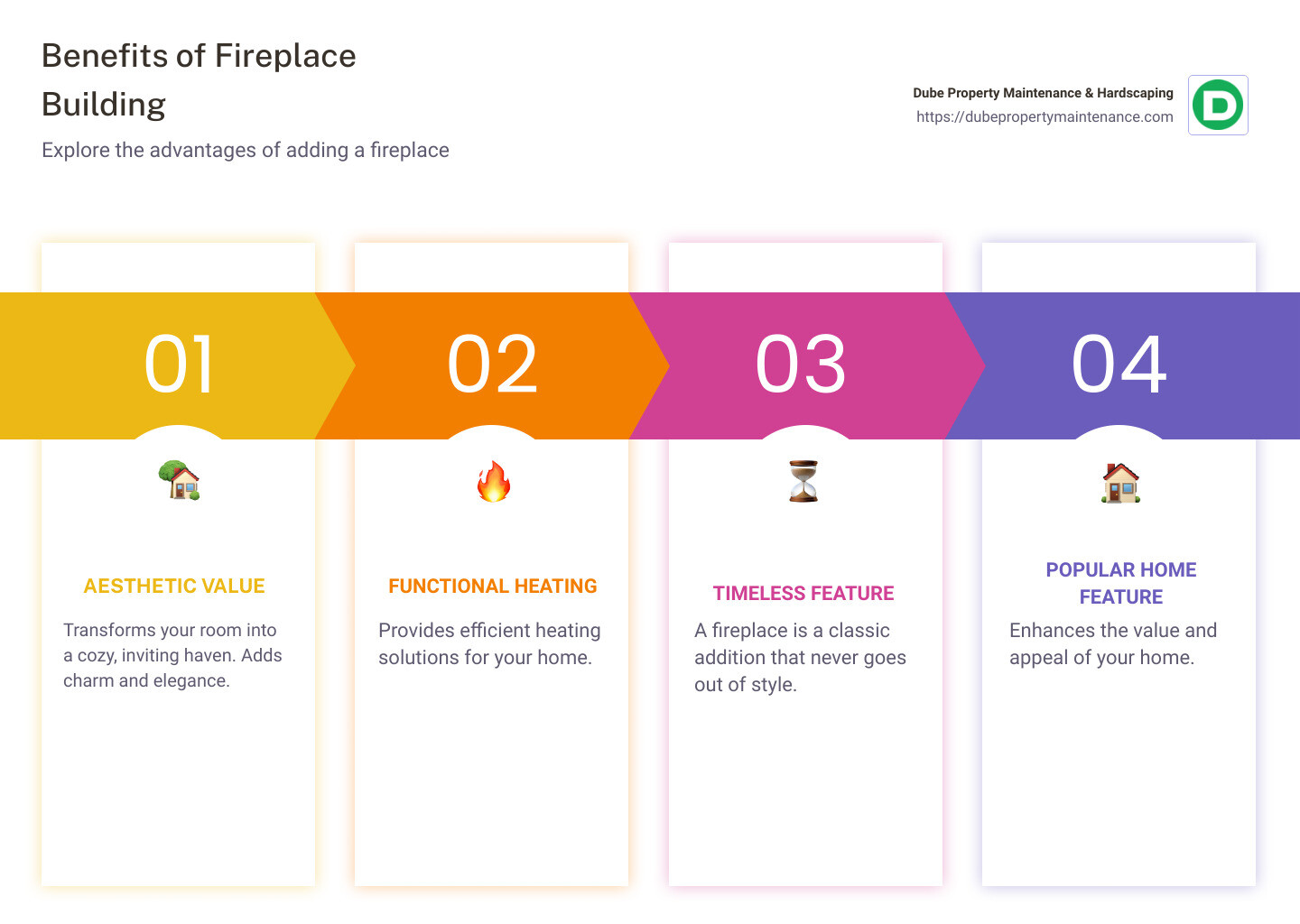
Yes, fireplaces remain a popular feature in many homes. They not only add aesthetic value but also serve as an efficient heating source. According to U.S. News Real Estate, fireplaces are considered a desirable feature by many homebuyers, enhancing the property’s appeal and value.
Modern alternatives, such as gas and electric fireplaces, have gained popularity due to their convenience and lower maintenance requirements. These options offer the cozy ambiance of a traditional fireplace without the need for wood or extensive chimney systems.
Incorporating a fireplace into your home can improve both its warmth and charm, making it a worthwhile investment for many homeowners.
At Dube Property Maintenance & Hardscaping, we understand that fireplace building is more than just a construction project—it’s about creating a functional and beautiful centerpiece for your home. Our professional services ensure that every fireplace we build is crafted with precision and care, enhancing both the aesthetic value and heating functionality of your space.
Value Addition: A well-built fireplace not only provides warmth but also adds significant value to your property. Many homebuyers view fireplaces as a desirable feature, which can increase your home’s market appeal. By choosing us, you’re investing in a feature that combines beauty and practicality, crafted to last for years.
Professional Services: Our team specializes in delivering high-quality, comprehensive outdoor and indoor solutions. With our expertise, we guide you through every step of the process, from planning and design to the final finishing touches. We prioritize using quality materials and addressing any challenges that arise, ensuring a seamless and satisfying experience for our clients.
Whether you prefer a traditional wood-burning fireplace or a modern gas or electric option, our skilled team is here to bring your vision to life. We tailor our services to meet your specific needs and preferences, guaranteeing a result that aligns with your lifestyle and improves your home’s charm.
For a detailed look at how we can help you with your fireplace project, visit our hardscape maintenance service page.
Choose Dube Property Maintenance & Hardscaping for your fireplace building needs, and let us transform your home with a feature that offers both warmth and elegance.