
Filter fabric retaining wall construction is essential for preventing structural failure and ensuring long-term stability. Here’s what you need to know:
Key Benefits:
Best Material: Non-woven geotextile fabric made from polypropylene or polyester offers superior drainage capabilities compared to standard landscape fabric.
Installation Location: Place fabric behind the wall (not underneath) to separate soil from drainage materials and prevent clogging.
Whether you’re building a new retaining wall or wondering why your existing one is failing, the fabric you choose – and how you install it – can mean the difference between a structure that lasts decades and one that fails within years.
As one engineer noted in our research, “Using a professional-grade fabric in retaining wall construction is important in ensuring the longevity of the wall.” Without proper filtration, water pressure builds up behind your wall, soil particles clog your drainage system, and structural failure becomes inevitable.
The good news? With the right materials and installation techniques, you can build a retaining wall system that manages water effectively and stands strong for generations.
Filter fabric retaining wall vocab explained:
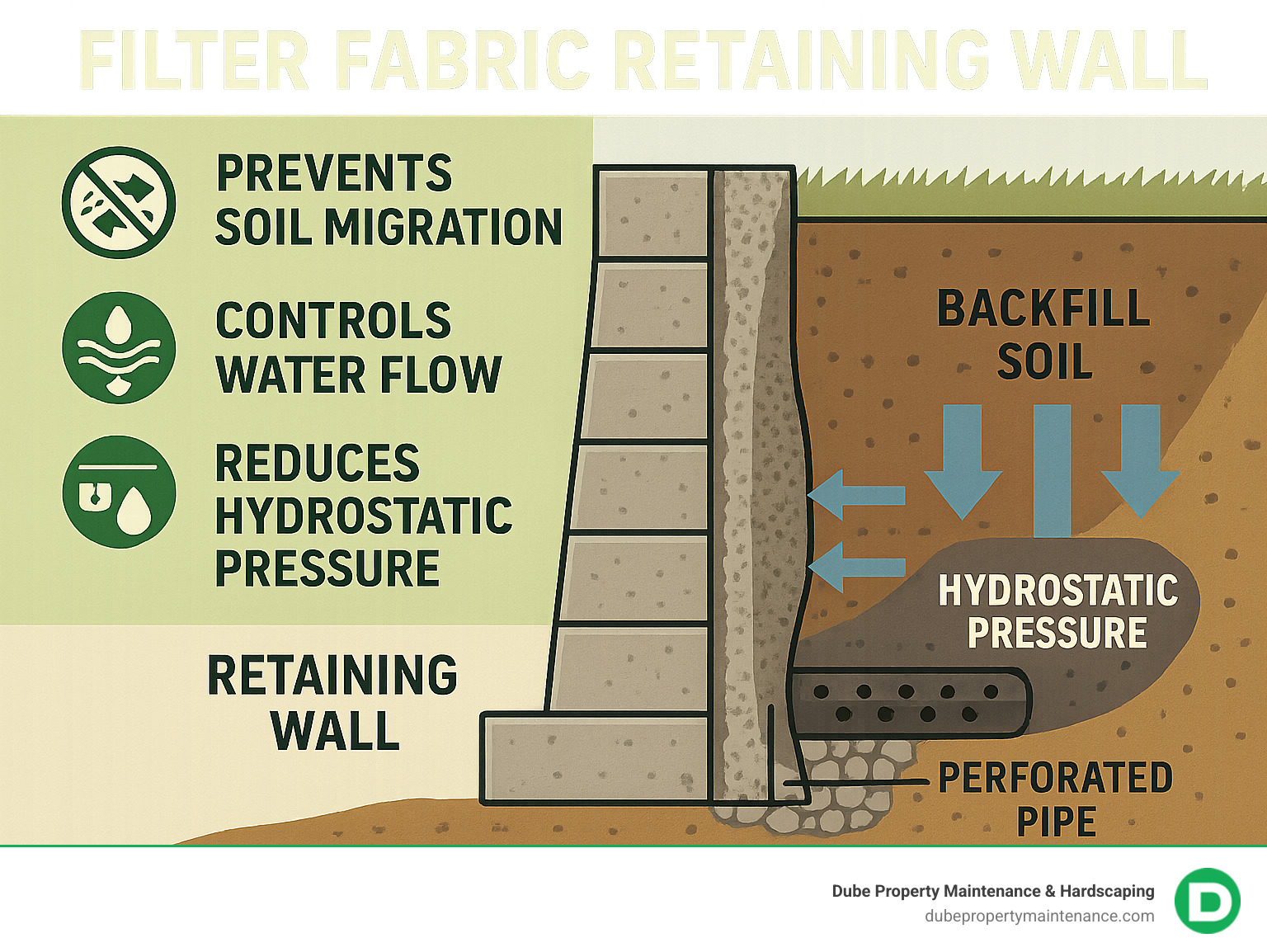
A retaining wall that leans, cracks, or fails is often a victim of poor water management. The main culprit is hydrostatic pressure—the force of water building up behind the wall when drainage is inadequate. This is where a proper filter fabric retaining wall system is essential.
Filter fabric prevents soil migration, where fine soil particles wash into and clog the drainage gravel. A clogged drainage system can’t relieve water pressure, compromising the wall’s integrity. By controlling erosion and maintaining proper drainage, filter fabric significantly increases the longevity and structural stability of your wall, extending its life from a few years to 50 or more.
Want to see how all these components work together? Check out this View Enlarged Diagram > that shows the complete system. Whether you’re planning a classic Stone Retaining Wall or a modern Block Retaining Wall, these drainage principles remain the same.
Filter fabric works as a high-tech separator. Its engineered pore sizes allow for high water permeability while blocking soil particles. This achieves two critical goals:
First, soil separation maintains the distinct layers of native soil, fabric, and clean drainage aggregate. Without this barrier, the layers would mix into a muddy, ineffective mess.
Second, the filtration process prevents clogs in your drainage system. Non-woven fabrics are particularly effective due to their needle-punched construction, which balances high water flow with fine particle retention. This backfill protection keeps your drainage aggregate clean and functional, ensuring your Retaining Wall Drainage Pipe system works efficiently to move water away from the wall.
Filter fabric is key to preventing catastrophic wall failures. Its primary benefit is hydrostatic pressure reduction. By ensuring water drains freely, it prevents the buildup that causes walls to bulge outward, lean, or collapse.
In cold climates like Massachusetts and New Hampshire, filter fabric also combats frost heave. When water-saturated soil freezes, it expands with enough force to shift the wall. Proper drainage prevents this saturation, minimizing movement during freeze-thaw cycles.
A proper filter fabric system can increase the longevity of a wall by decades, preventing costly repairs and reconstruction. For a complete guide on construction, see our article on Building a Retaining Wall.
For filter fabric retaining wall construction, you need engineered geotextile fabrics, not standard garden materials. These are powerful textiles designed for civil engineering and landscaping.

Geotextiles are permeable fabrics made from durable synthetic materials like polypropylene or polyester. They are designed to allow water flow while blocking soil and debris. They come in various fabric weights for different applications, from lightweight separation to heavy-duty structural support. High-quality geotextiles are often made from 100% polypropylene staple fiber for strength and dimensional stability.
Geotextiles come in two main types: woven and non-woven. Understanding the difference is key to choosing the right one for your project.
| Feature | Woven Geotextile | Non-Woven Geotextile |
|---|---|---|
| Construction | Yarns woven together (like a traditional fabric) | Fibers bonded or needle-punched randomly |
| Permeability | Lower water flow rates, but still permeable | High water flow rates, highly porous |
| Strength | High tensile strength, excellent for load-bearing | Moderate tensile strength, good puncture resistance |
| Primary Use | Soil reinforcement, separation under roads/pavements | Filtration, drainage, separation, protection |
| Suitability for Retaining Walls | Good for separation and reinforcement layers, especially with geogrid | Typically recommended for filtration and drainage behind walls |
Woven fabric has high tensile strength from its woven construction, making it ideal for stabilization and reinforcement, such as under driveways.
Non-woven fabric is the top choice for retaining wall drainage. Its fibers are randomly bonded or needle-punched, creating a porous structure with superior filtration and drainage capabilities. This design allows water to flow freely while blocking soil particles, making it perfect for drainage applications behind retaining walls.
It’s a common mistake to confuse geotextile filter fabric with standard landscape fabric. They are not interchangeable.
Standard landscape fabric is designed for weed control function. Its main purpose is to block sunlight, and it is not built to handle the high water flow required for retaining wall drainage. Using it creates a significant clogging risk, as fine soil particles will quickly block its small pores, leading to drainage failure.
Filter fabric (geotextile) is engineered specifically for drainage function. Its pore structure and water flow rates are designed to manage significant water movement without clogging, and its durability ensures long-term performance underground.
As confirmed in resources like Landscape fabric vs. filter fabric – Fine Homebuilding, using the wrong fabric type can cause system failure. Always choose a non-woven geotextile filter fabric for retaining walls. For installation details, see our guide on How to Install Landscape Fabric Behind Retaining Wall.
Correct filter fabric retaining wall installation is critical. Even the best fabric is useless if installed improperly. Following the correct sequence ensures a long-lasting wall.

Here is a summary of the installation process:
Following these steps is essential for any wall type, including a Building Interlocking Block Retaining Wall project.
Strategic fabric placement is crucial for a wall’s longevity. While fabric is essential behind the wall, using it in other locations creates a more robust system.
These three placements create a complete protective envelope for your drainage system, as shown in this View Enlarged Diagram >.
Filter fabric is part of a complete drainage team. For best results, integrate it with these components:
Together, these elements create a comprehensive drainage system that protects your wall. Learn more in our guide to Retaining Wall Drainage Pipe.
Installation mistakes can undermine even a high-quality filter fabric retaining wall. Most problems are preventable by avoiding these common errors.
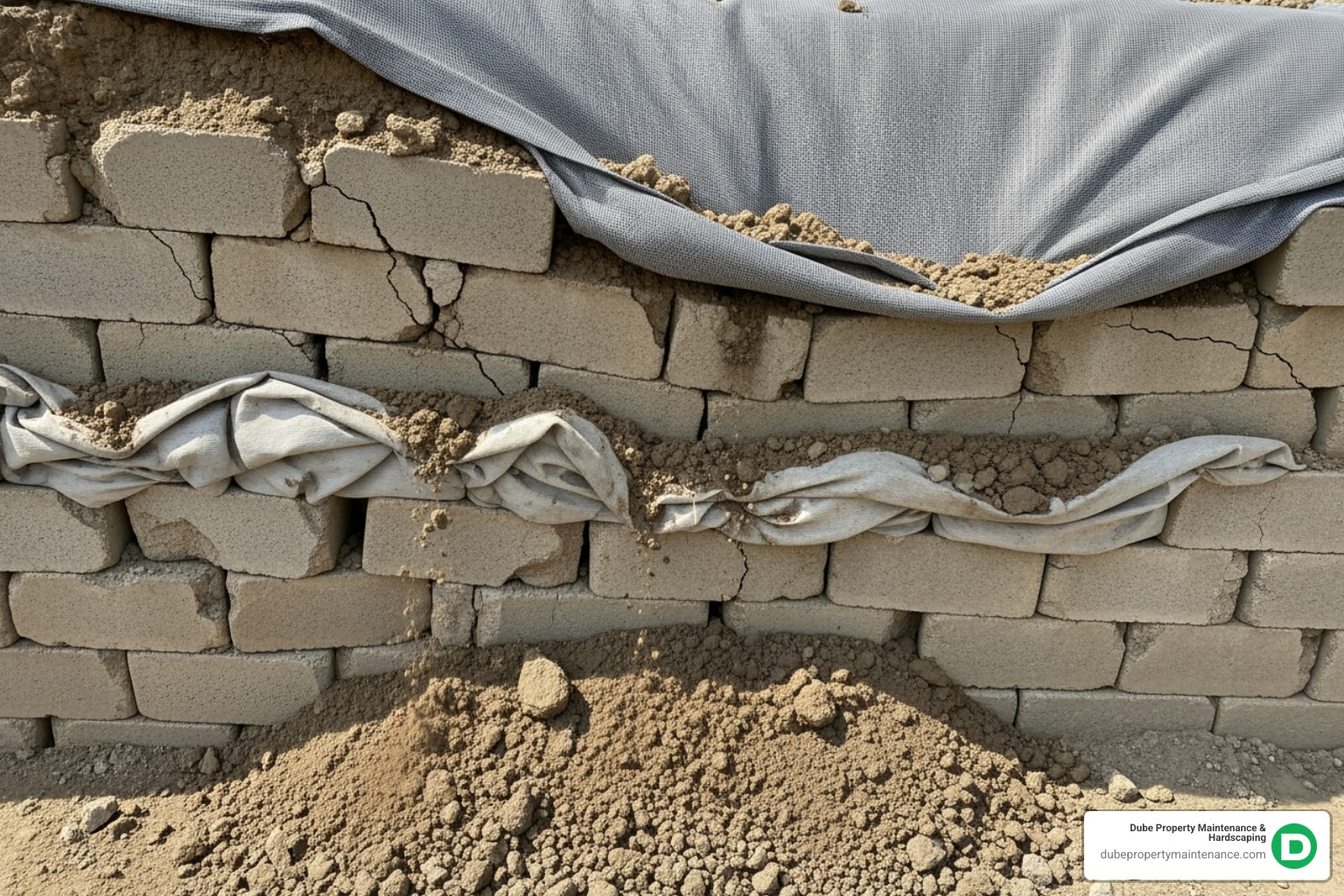
Avoiding these pitfalls is key to a successful installation. For visual aids, this landscape fabric installation video can be helpful. If you’re doing it yourself, our DIY Retaining Wall Blocks guide offers more tips.
A filter fabric retaining wall is a long-term investment. High-quality, non-woven geotextile fabrics are engineered to last 50+ years when properly installed, with some premium fabrics lasting 20-50+ years.
The key to this longevity is protection from UV degradation. Unlike exposed fabrics that break down in 5-10 years, buried geotextile is shielded from sunlight.
To ensure a long lifespan, follow these best practices:
Professional installation is the best way to ensure your wall is built to last. For more on sustainable options, see our guide on Eco-Friendly Retaining Walls.
Here are answers to common questions about filter fabric retaining wall construction.
Non-woven geotextile fabric is the best choice. Its randomly bonded fibers create a material that allows high water flow while blocking soil particles, preventing clogs. This is essential for proper drainage behind a retaining wall. We recommend durable polypropylene material for its resistance to chemicals and degradation.
When properly installed and protected from sunlight, high-quality geotextile fabric can last 50+ years. The key is ensuring it’s completely covered by gravel and soil, which shields it from UV rays. The lifespan can vary based on conditions, but a well-installed system is a long-term solution.
The primary and most critical placement is behind the wall. This is where it performs its filtration function, separating soil from the drainage aggregate and reducing hydrostatic pressure. Fabric can also be placed under the wall’s base for added stabilization, where it prevents the gravel foundation from mixing with soft subsoil. For most walls, fabric behind is essential; fabric underneath is a smart addition for extra stability, especially for taller walls or on poor soil.
When you invest in a retaining wall, you’re not just building a structure – you’re creating a legacy for your property. The difference between a wall that lasts five years and one that stands strong for fifty comes down to understanding what truly matters: the importance of proper materials and correct installation.
Throughout this guide, we’ve seen how filter fabric retaining wall construction transforms an ordinary structure into an engineering marvel. That humble layer of non-woven geotextile fabric working behind your wall isn’t just an add-on – it’s the unsung hero preventing catastrophic failure, managing water pressure, and ensuring your investment pays dividends for decades.
The science is clear: proper drainage prevents hydrostatic pressure buildup, filter fabric stops soil migration that clogs your system, and quality materials like polypropylene geotextiles can last 50+ years when installed correctly. But here’s the thing – even the best materials in the world won’t help if they’re installed incorrectly.
We’ve seen too many beautiful walls fail because someone skipped the fabric, used the wrong type, or didn’t integrate it properly with the drainage system. Don’t let that be your story.
Professional help makes all the difference. At Dube Property Maintenance & Hardscaping, we understand that building a retaining wall isn’t just about stacking blocks – it’s about creating a comprehensive system that manages water, supports soil, and stands the test of time. Our team knows which non-woven geotextile to choose, how to properly overlap seams, where to place drainage pipes, and how to integrate everything into a system that works flawlessly together.
We serve homeowners and businesses throughout Massachusetts and New Hampshire who want their outdoor spaces built right the first time. From the initial excavation to the final backfill, we handle every detail with the precision and care your property deserves.
Your landscape is too important to leave to chance. Let us help you build a filter fabric retaining wall that not only looks stunning but also protects your property for generations to come.
Ready to get started? Contact us for your retaining wall project today, or learn more about finding qualified Retaining Wall Builders Near Me. Your future self will thank you for building it right the first time.
