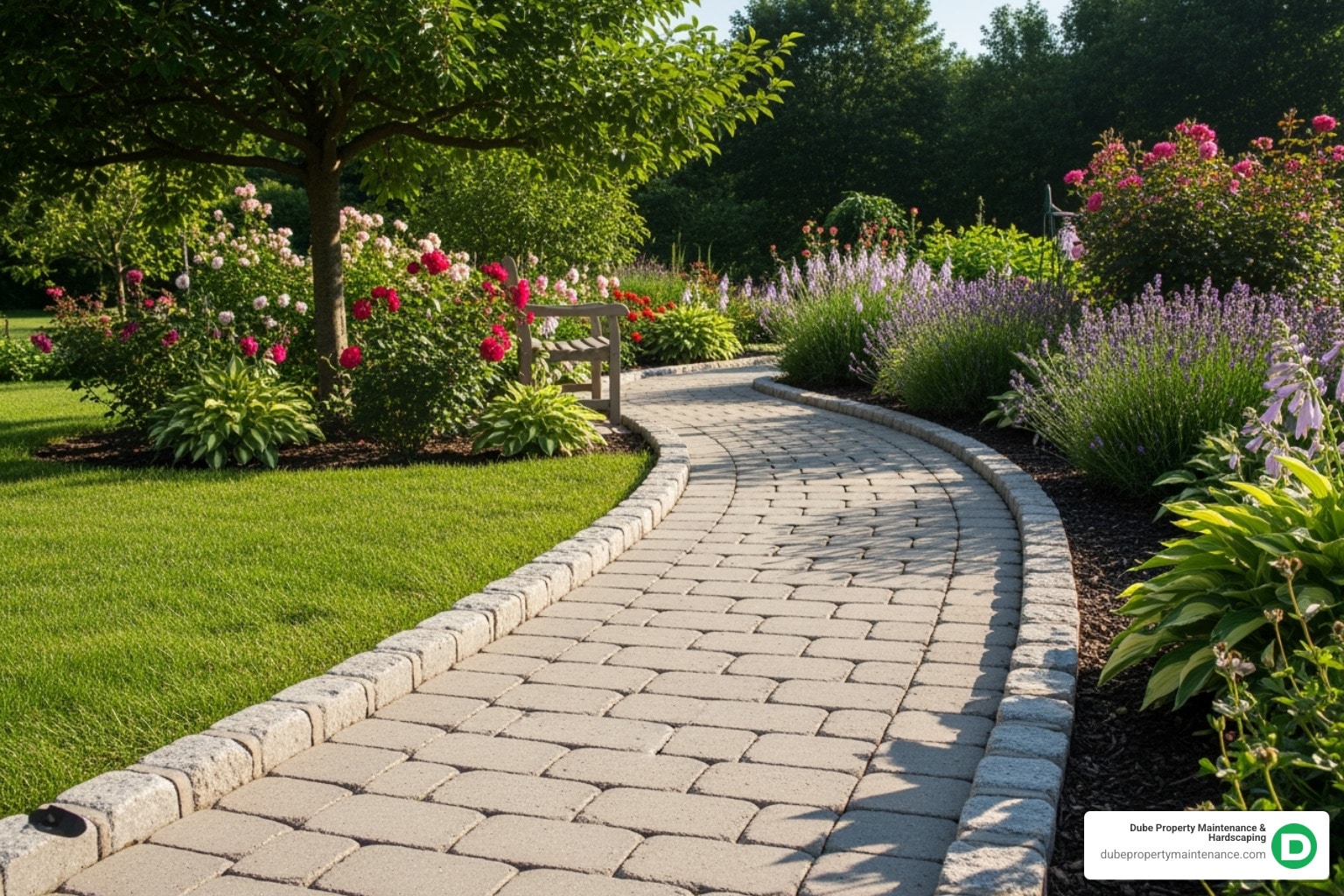

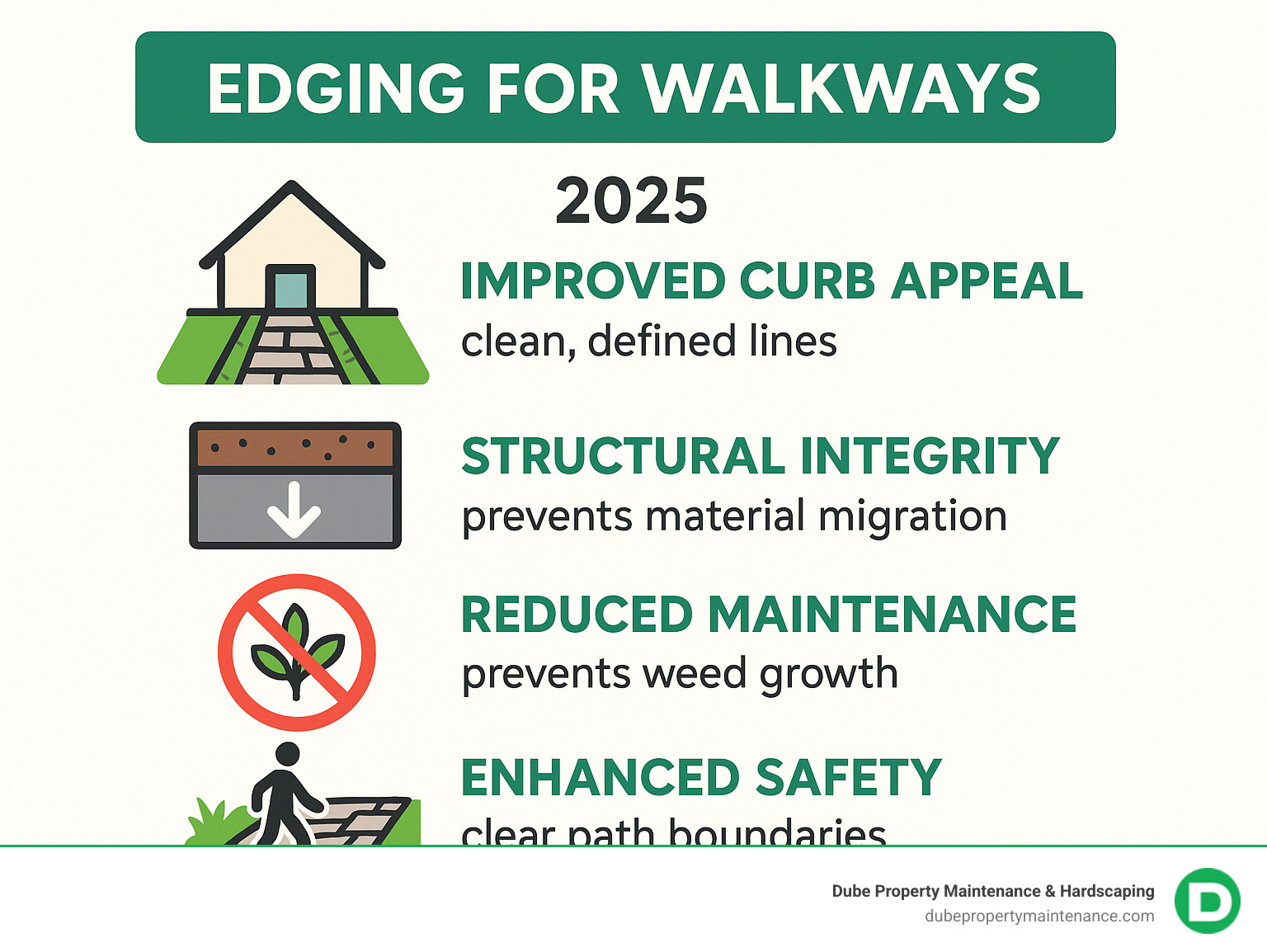
Edging for walkways provides essential structure and visual appeal to your outdoor paths, keeping materials contained while preventing weeds and creating clean, defined lines. The right edging transforms ordinary walkways into polished landscape features that boost curb appeal and reduce maintenance.
Quick Guide to Walkway Edging Options:
Note: These are average costs based on internet data and not actual costs for Dube Property Maintenance and Hardscaping.
Whether you’re dealing with a simple garden path or a formal paver walkway leading to your front entrance, the right edging material makes all the difference. As one landscaping professional noted from the research, “Edge restraints secure the hardscape system and are a necessity in any hardscape project installation if you want it to look beautiful through the years.”
Your choice depends on your walkway material, budget, desired aesthetics, and whether you need flexibility for curves. Proper edging prevents costly repairs by keeping walkway materials from shifting and spreading over time.
Selecting the perfect edging for walkways can feel overwhelming with so many options available. Each material brings its own personality to your outdoor space, balancing beauty, durability, and your budget in different ways. Let’s walk through the most popular choices to help you find the one that’ll make your walkway shine.
Plastic and composite edging is like the reliable friend who’s always there when you need them. These materials have become incredibly popular because they’re affordable, flexible, and surprisingly easy to work with. If your walkway has gentle curves or you’re working around existing landscaping, plastic edging bends to your will without complaint.
The real game-changer here is the no-dig installation option. Instead of spending your weekend with a shovel, you can simply stake these edgings into place. Your back will thank you, and you’ll have more time to enjoy your finished walkway.
Modern composite options have come a long way from the flimsy plastic strips of the past. They’re engineered to handle weather better and maintain their shape over time. However, durability concerns still exist, especially with cheaper options that can become brittle under constant sun exposure.
The main trade-off with plastic edging is longevity. While it’s perfect for budget-conscious projects or temporary solutions, UV degradation can eventually leave you replacing sections. But at this price point, many homeowners find it’s worth the occasional refresh.
At Dube Property Maintenance, we understand that every project has different needs and budgets. We’re experts in all types of hardscape walkways, and we’ll help you choose materials that balance your vision with practical considerations.
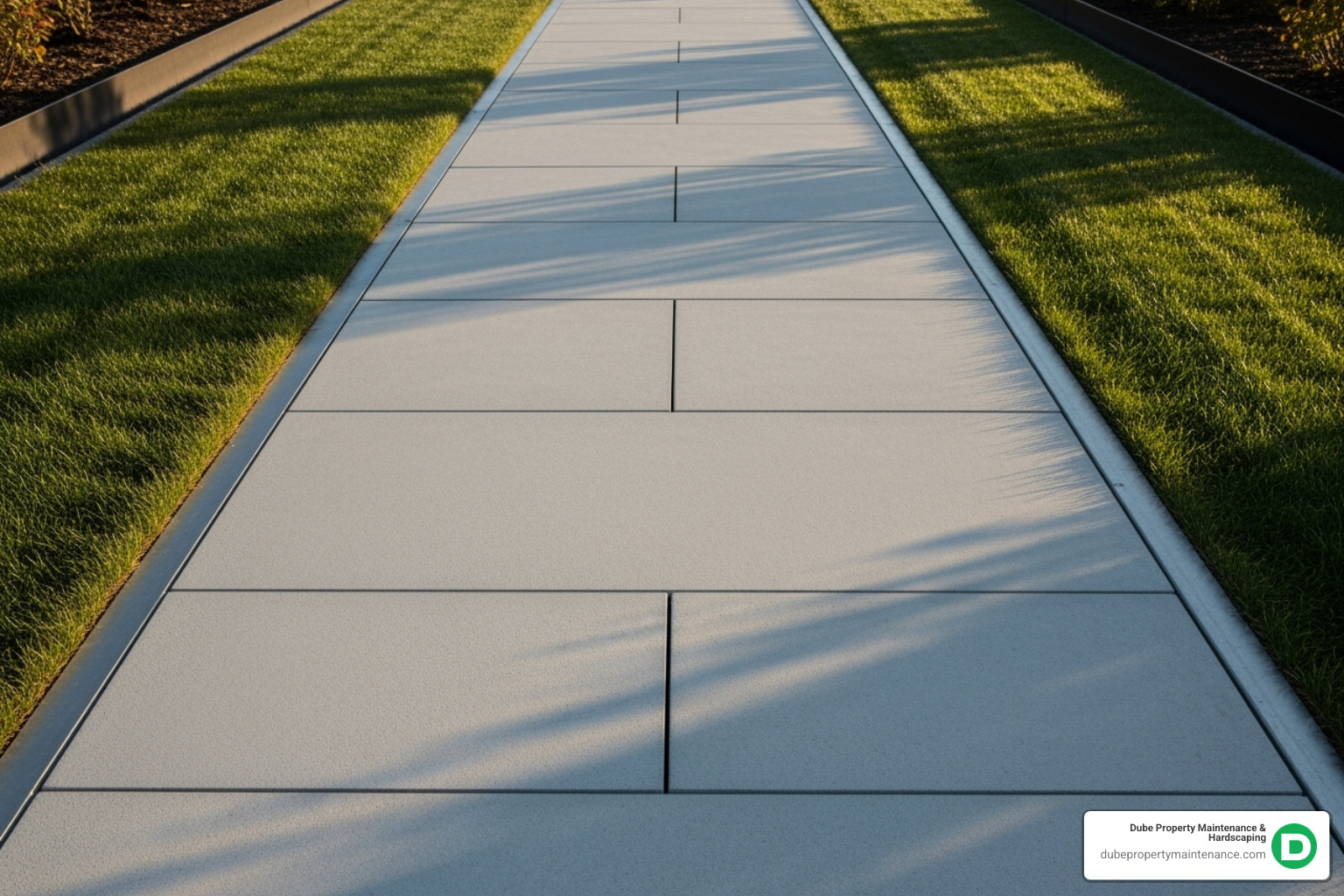
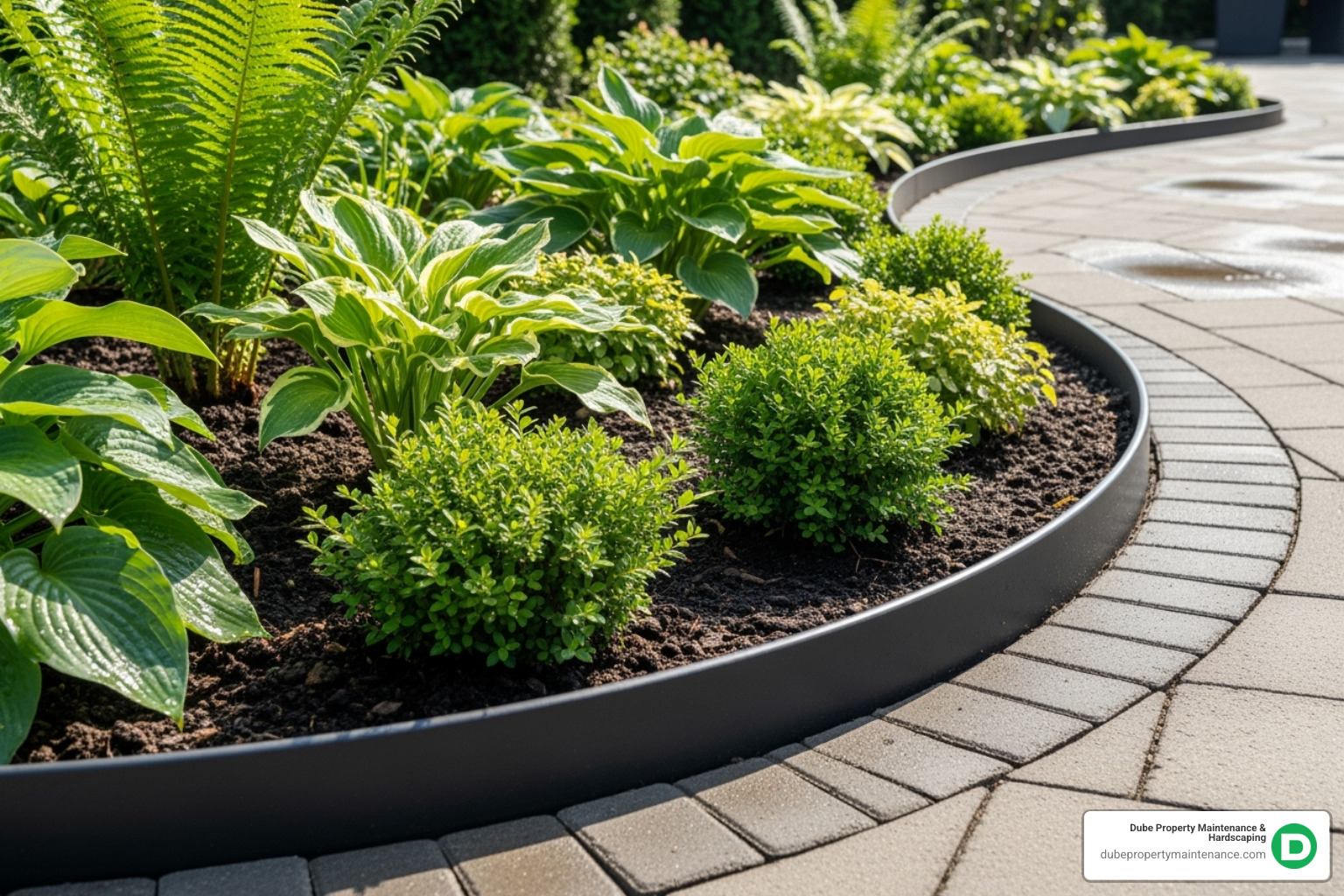
When you want your walkway to look like it belongs in a design magazine, metal edging delivers that crisp, professional finish. Both steel and aluminum create those razor-sharp lines that make everything look intentional and polished.
Durability is where metal edging really shines. Steel edging can handle serious pressure from heavy materials or foot traffic without budging. It’s the strong, silent type that does its job year after year. Aluminum offers similar strength with the bonus of natural rust resistance, making it perfect for areas with challenging weather.
The sleek appearance of metal edging complements modern homes beautifully, but it works just as well with traditional styles when you want clean definition between different landscape areas. Companies like Permaloc create aluminum edging specifically designed for aggregate walkways, proving that metal can handle any walkway material you throw at it.
The higher cost is metal edging’s main drawback, both in materials and installation. Steel can also face potential rust issues over time, though many products come with protective coatings. The installation requires more planning and effort, but the results speak for themselves.
Longevity makes metal edging a smart investment. While you’ll pay more upfront, you’re buying peace of mind that your edging will maintain its crisp look for decades.
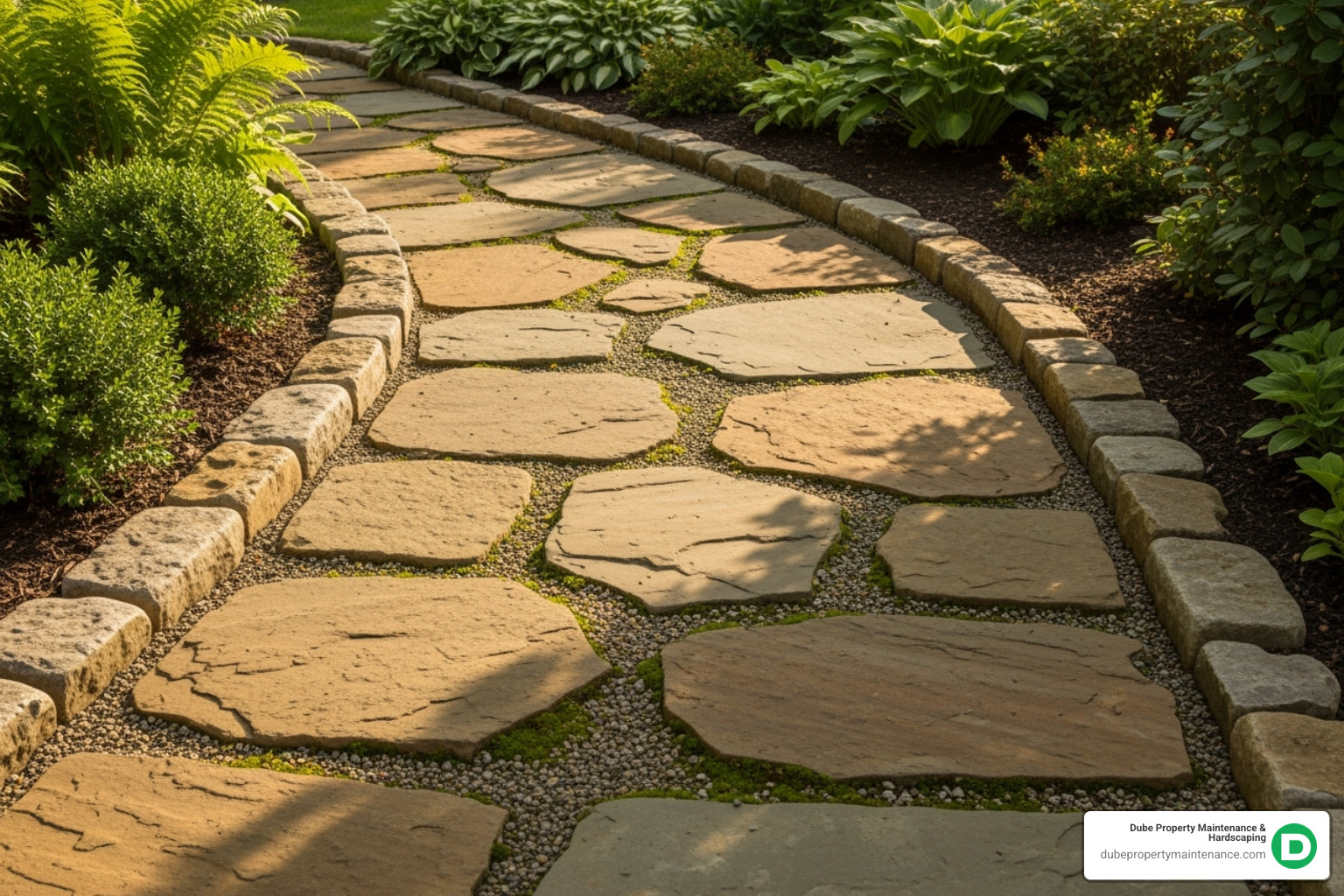
Nothing says “permanent and beautiful” quite like stone, brick, or concrete edging. These materials don’t just edge your walkway – they become part of the architectural story of your property. The classic aesthetic these materials provide never goes out of style.
Extreme durability is perhaps the biggest advantage here. We’re talking about materials that can outlast your house if properly installed. Weather, foot traffic, and time barely make a dent in quality stone or concrete edging.
The design versatility is endless. Want rustic charm? Natural stone delivers. Prefer formal elegance? Brick creates perfect geometric lines. Looking for something completely custom? Concrete can be shaped and colored to match any vision.
However, this quality comes with trade-offs. The higher installation effort means you’re looking at significant labor, trenching, and sometimes mortar work. The cost reflects both premium materials and skilled installation requirements.
Our masonry team at Dube Property Maintenance specializes in creating stunning brick steps and walkways that integrate seamlessly with stone or brick edging, creating cohesive outdoor spaces that last generations.
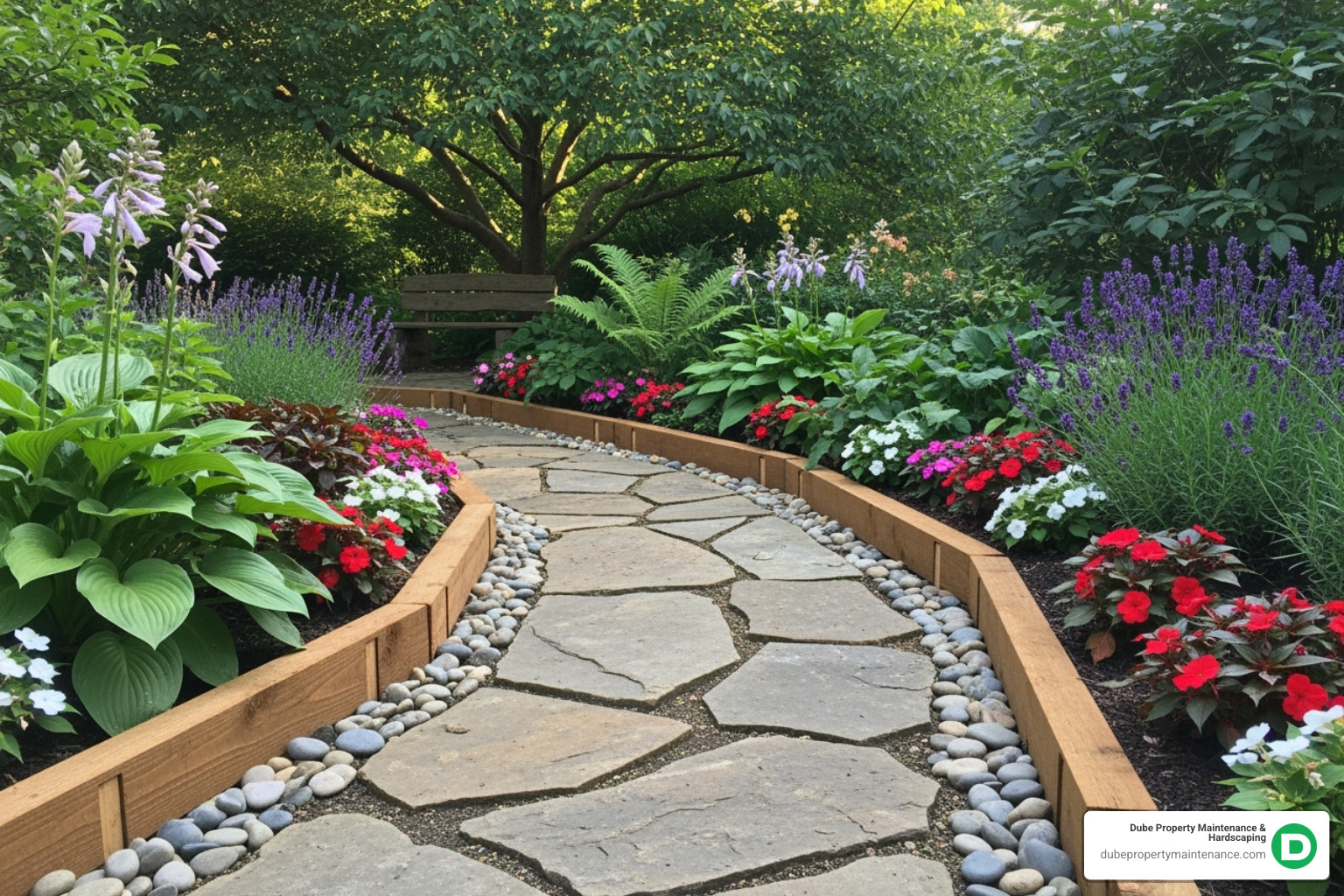
Wood and rubber edging bring something special to walkway design – personality and environmental consciousness. Wood timbers create that natural look that makes formal gardens feel more approachable and woodland paths feel intentional.
Rubber edging might sound unusual, but it’s surprisingly practical. Made from recycled materials, it offers eco-friendly options that appeal to environmentally conscious homeowners. Modern rubber edging doesn’t freeze, crack, or fade like older versions, and many designs include mower-friendly features that let you maintain clean edges without hand-trimming.
The flexibility of both materials makes them perfect for curved paths and irregular shapes. Wood brings warmth and organic beauty, while rubber provides durability without the environmental impact of new materials.
Susceptibility to rot remains wood’s biggest challenge, even with pressure treatment. Eventually, wood edging will need replacement, though quality materials can last many years with proper care. Rubber edging can sometimes shift without proper anchoring, but it’s generally more stable than you’d expect.
If you’re drawn to natural materials and informal designs, we also create beautiful mulch and stepping stone walkways where wood or rubber edging provides the perfect finishing touch.
Choosing the perfect edging for walkways isn’t just about picking something that looks nice (though that matters too!). Think of it as finding the right partner for your walkway – one that’ll stick around through thick and thin, look great doing it, and not break the bank in the process.
When we sit down with homeowners to discuss their walkway projects, we always start with the big picture. Durability tops our list because nobody wants to redo their edging every few years. Will your chosen material laugh in the face of New England winters? Can it handle the occasional whack from a wayward lawnmower? Steel and concrete are the marathon runners of the edging world, while untreated wood might tap out early.
The aesthetics question is where things get fun. Your edging should feel like it belongs with your home’s personality. A sleek modern house might call for crisp metal lines, while a cozy cottage could accept the warmth of natural stone or wood. We’ve worked on countless front steps and walkway designs where the right edging choice transformed an ordinary path into a stunning landscape feature.
Flexibility for curves becomes crucial if your walkway winds and curves like a country road. Plastic and composite materials bend with grace, while concrete blocks prefer straight lines and right angles. The more twists and turns in your design, the more you’ll appreciate materials that go with the flow.
Installation difficulty separates the weekend warriors from the “honey, let’s call the professionals” crowd. No-dig plastic edging is wonderfully forgiving for DIY enthusiasts, but installing concrete or heavy steel edging often requires specialized tools, a strong back, and the patience of a saint.
Let’s talk budget – the elephant in every planning room. The sticker price is just the beginning. While plastic might seem like a bargain upfront, investing in durable materials like metal or stone often saves money over time by eliminating the need for replacements and repairs. Installation costs can easily double or triple your material expenses, especially for complex installations.
Your walkway’s job description should guide your edging choice. A quiet garden path meandering through your flower beds has different needs than a busy driveway border that faces daily car traffic.
For garden paths made of gravel, mulch, or stepping stones, you want edging that whispers rather than shouts. Flexible materials like plastic, composite, or modest wood timbers provide the containment you need without overwhelming the natural beauty of your plantings.
Driveway borders need to be tough cookies. They face heavy vehicles, weather extremes, and the occasional moving truck. Concrete, thick steel, or heavy-duty restraint systems are your best friends here – they’ll keep everything in line when lesser materials would throw in the towel.
Paver walkways demand respect and proper support. Without strong, rigid edge restraints, individual pavers start wandering like sheep without a shepherd, creating trip hazards and structural headaches. Our team handles paver walkway installation regularly, and we can tell you that skimping on paver edging is like building a house without a foundation.
Gravel paths need continuous, solid barriers to keep those little stones from staging a great escape into your lawn. The edging height should be sufficient to contain your gravel layer – think of it as a gentle but firm boundary.
High-traffic areas call for the heavy hitters: concrete, brick, stone, or heavy-gauge metal. These materials don’t just survive busy walkways; they thrive in them, maintaining their good looks and structural integrity year after year.
Even the perfect edging needs a little TLC to stay looking its best. Think of maintenance as a small investment that pays big dividends in longevity and appearance.
Weed control remains important even with good edging. While your border helps keep grass and weeds at bay, it’s not a magic force field. Regular weeding or landscape fabric under your walkway material creates a more complete defense system.
Re-securing loose sections becomes part of your seasonal routine, especially with pound-in or no-dig edging. Ground movement, frost heave, and the occasional impact can loosen stakes or shift sections. A quick inspection and some gentle persuasion with a mallet usually sets things right.
Cleaning requirements vary by material. Concrete and natural stone might develop a patina of moss or algae over time, calling for occasional scrubbing or pressure washing. Metal and plastic are generally more low-maintenance, needing just an occasional wipe-down to look fresh.
Sealing extends the life of wood edging and prevents staining on concrete or some natural stones. This protective barrier shields your investment from moisture and UV damage – think of it as sunscreen for your edging.
Checking for frost heave damage is particularly important in our New England climate. Those freeze-thaw cycles can shift even the most well-installed edging. Regular inspections help you catch and address small issues before they become big problems.
Planning your edging for walkways project means understanding both how different materials get installed and what you’ll likely spend. Some edging options are perfect weekend DIY projects, while others really shine when installed by professionals who know the tricks of the trade.
The way you install your walkway edging depends heavily on what material you’ve chosen and how permanent you want the result to be. Each approach has its own level of complexity and time commitment.
No-dig installation is the simplest method, perfect for many plastic and rubber edging options. You literally unroll the material along your walkway edge and pound anchoring spikes into the ground every few feet. It’s satisfying work that most homeowners can tackle in an afternoon, and there’s no digging required.
Trenching offers more stability and works well for plastic, composite, and metal edging. You’ll dig a shallow, precise trench along your walkway, place the edging material, and backfill with soil. Metal edging particularly benefits from this method since it creates those crisp, straight lines that make such a visual impact.
Spikes and stakes are commonly used with metal edging systems. The edging often comes with integrated attachment points or separate spikes that you drive into the ground. This method provides excellent holding power while still being manageable for experienced DIYers.
Mortar application is where things get serious, typically reserved for concrete, brick, and stone edging. This involves digging deeper trenches, preparing a compacted gravel base, and setting individual units in mortar beds. The units are often mortared together as well, creating an incredibly durable and integrated structure that can last decades.
| Edging Material | Typical Installation Method |
|---|---|
| Plastic & Composite | No-Dig Installation: Unroll and pound spikes, or Trenching: Shallow trench with backfill |
| Metal (Steel & Aluminum) | Trenching: Precise trench with backfill, secured with Spikes and Stakes |
| Concrete, Brick & Stone | Trenching & Base Preparation: Deep trench with gravel base, Mortar Application for permanence |
| Wood & Rubber | Trenching (Wood): Set in shallow trench with rebar stakes, Pound-in/Spikes (Rubber): Similar to plastic |
Our detailed guide on how to install a paver walkway provides excellent insights into proper base preparation and installation techniques that apply to edging projects as well.
Understanding the financial investment for your edging for walkways project helps you make informed decisions about materials and installation methods. Costs can vary dramatically based on your choices and local market conditions.
Note: The following are average costs based on internet data and not actual costs for Dube Property Maintenance and Hardscaping. Prices can vary significantly based on region, supplier, and project complexity.
Plastic edging costs make it the most budget-friendly option, typically running $0.50 to $3 per linear foot for materials. A 60-foot no-dig kit might cost around $30-40, making it incredibly affordable for extensive borders. The wide price range reflects differences in thickness, UV protection, and brand quality.
Metal edging costs represent a significant step up in both price and performance. Material costs range from $2 to $15 per linear foot, with thicker gauges and specialty finishes like powder-coated steel commanding premium prices. A quality 1/4″ steel edging section might cost around $25 per 8-foot piece, while aluminum options could run closer to $7 per foot.
Concrete and stone costs reflect their premium status and durability. Material costs alone can range from $3 to $25 per linear foot, with natural stone at the top of the range. Basic concrete edgers offer more affordability, but custom-cut stone or intricate brick patterns can push costs much higher.
Wood and rubber costs typically fall in the middle range at $1 to $8 per linear foot. The price depends on wood type, treatment level, and whether you choose recycled rubber options. These materials offer good value for their natural appearance and environmental benefits.
Professional installation versus DIY is a crucial budget consideration. While DIY installation can save on labor costs for simpler plastic or rubber edging, complex installations involving metal, concrete, or stone often justify professional expertise. Professionals ensure proper preparation, precise leveling, and durable anchoring that prevents costly problems later.
The labor component can easily represent 50-70% of your total project cost, especially for intricate installations. Our paver walkway installation cost guide provides valuable insights into professional installation pricing. Investing in professional installation means your walkway edging will look fantastic and perform reliably for years to come.
Over the years, we’ve helped countless homeowners create beautiful walkways, and we’ve noticed certain questions come up again and again. Let’s tackle the most common concerns about edging for walkways so you can move forward with confidence.
If you’re looking for a weekend DIY project that won’t leave you exhausted, plastic or composite no-dig edging is your best friend. Products like flexible plastic landscape edging kits are designed with the average homeowner in mind – no special skills required!
The beauty of no-dig systems is right there in the name. You simply unroll the edging along your walkway, position it where you want it, and secure it by pounding stakes into the ground every few feet. No trenching, no heavy lifting, and no need to rent special equipment.
Rubber edging that pounds directly into the ground is another wonderfully simple option. Many of our clients are surprised at how quickly they can transform their walkways with these user-friendly materials. The whole process often takes just a few hours, even for beginners.
The trade-off for this ease of installation is typically durability – these materials may not last as long as more complex installations, but they’re perfect when you want quick results without the hassle.
The right depth for your walkway edging depends on what you’re trying to contain and how permanent you want the installation to be. Think of it as building the right foundation for your specific needs.
For gravel or mulch walkways, your edging needs to work harder to keep loose materials in place. The edging should extend deep enough to contain the full depth of your walkway material, plus several inches below ground for stability. This usually means the visible portion sits about 2-4 inches above ground, while the buried portion extends 4-6 inches or more below the surface.
For paver walkways, precision is key. The edging needs to be set at the same level as the base layer of your pavers – typically around 4-6 inches deep. The top of the edging should sit just below or flush with the paver surface to prevent tripping hazards and allow your mower to pass over easily.
For simple grass separation, you don’t need to go as deep. About 4-6 inches below ground with 1-2 inches visible above ground creates an effective barrier that prevents grass roots from creeping under while maintaining clean lines.
Deeper installation generally means better stability, but it also means more work. The goal is finding the sweet spot where your edging stays put and does its job effectively.
Nothing’s more frustrating than spending time installing edging only to find it shifting or popping up after a few months. The good news is that proper anchoring techniques can prevent these headaches.
Spikes and stakes are the workhorses of edging installation. Most plastic, composite, rubber, and lightweight metal edging systems rely on spikes driven through the material into the ground. The key is using enough spikes – don’t try to save money by spacing them too far apart. Every 2-3 feet is usually about right.
Trenching and backfill provides rock-solid stability for almost any edging material. Dig your trench to the proper depth, place the edging, then firmly compact soil on both sides. This method works especially well in areas with freeze-thaw cycles that can shift less secure installations.
Mortar application creates the most permanent solution for brick, stone, and concrete edging. While it’s more labor-intensive, setting units in mortar and filling the joints creates a border that’s practically immovable. This is the gold standard for formal walkways and high-end installations.
Weight and proper base preparation keep heavy materials like large concrete blocks or natural stone in place through sheer mass. When installed on a well-prepared, level base, these materials stay put through their own weight.
The secret to long-lasting edging is matching your anchoring method to your material and local conditions. In areas prone to frost heave, extra attention to proper depth and drainage can save you from spring repair projects.
The right edging for walkways completes your outdoor paths, changing them from simple routes into polished landscape features that add beauty, function, and real value to your property. It’s not just about containing materials or preventing weeds—though those benefits are certainly important. Quality walkway edging creates the clean, defined lines that make the difference between a DIY project that looks homemade and a professional installation that improves your home’s curb appeal for years to come.
Choosing the best material and ensuring proper installation is absolutely key for a lasting result. Whether you’ve decided on budget-friendly plastic edging for a garden path or premium stone borders for a formal entrance walkway, the details of installation matter tremendously. A poorly installed edge restraint can shift, separate, or fail entirely, leading to costly repairs and maintenance headaches down the road.
At Dube Property Maintenance & Hardscaping, we understand that every landscape is unique, with its own challenges, opportunities, and aesthetic goals. Our professional team brings years of experience in all aspects of landscape installations, construction, and hardscaping to every project. We know that the difference between a walkway that looks great for a season and one that remains beautiful through the years often comes down to the quality of the edge restraints and the precision of the installation.
We’re dedicated to delivering results that stand the test of time, making your outdoor spaces both beautiful and practical. From selecting materials that complement your home’s architectural style to ensuring proper depth, anchoring, and alignment, we handle every detail with the care and expertise that comes from years of experience in the field.
For expert hardscaping services and flawless walkway installations, we invite you to explore our hardscaping solutions. Let us help you define your path to a more beautiful and functional outdoor living area that you’ll enjoy for years to come.