
Do I need filter fabric for dry stack retaining wall? The answer depends on your wall type, soil conditions, and height. Traditional thick dry stone walls may not need fabric, but modern segmental walls and those in clay soils typically do require geotextile fabric for proper drainage and longevity.
Quick Answer Guide:
The debate over filter fabric in dry stack retaining walls is long-standing. Traditional dry stone masons argue a properly built wall allows water to flow through, making fabric unnecessary. Conversely, modern engineers insist geotextile fabric is essential for preventing soil migration and maintaining drainage.
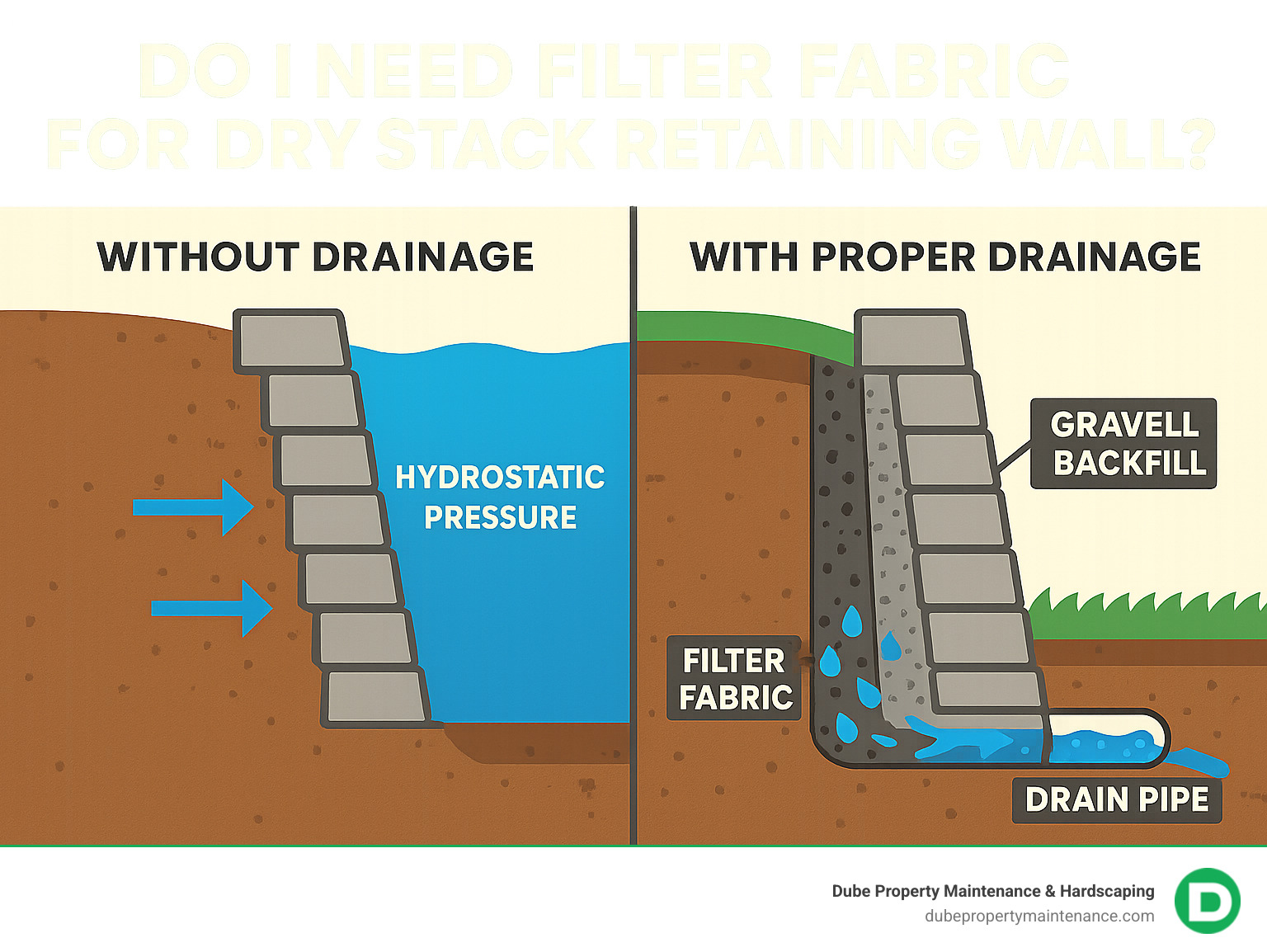
Most homeowners don’t realize that the majority of retaining wall failures happen because of poor drainage, not structural issues. Water buildup creates immense hydrostatic pressure that can push a wall forward. A four-foot-tall, fifteen-foot-long wall can hold back 20 tons of soil, and water weight adds even more pressure.
The key is understanding that different wall types have different drainage needs. A traditional dry stone wall built with proper hearting (internal stone packing) handles water differently than a modern segmental block wall. Your soil type matters too – clay holds water like a sponge, while sandy soil drains naturally.
Easy do i need filter fabric for dry stack retaining wall word list:
Geotextile filter fabric works like a coffee filter for your retaining wall, allowing water to drain while stopping soil particles from clogging your drainage system.
This specialized synthetic material, usually made from polypropylene or polyester, is like having a microscopic bouncer at the door of your drainage system. It’s permeable enough to let water flow but tough enough to block even the tiniest soil particles from sneaking through.
For your Dry Stack Retaining Wall, this is critical. Without filtration, your gravel backfill becomes a muddy mess as fine soil particles wash in, choking off drainage paths.
When drainage fails, three problems arise: your gravel backfill stops draining, water builds up creating immense pressure against the Retaining Wall Blocks, and soil erosion causes settling and shifting.
The smart solution? Filter fabric acts as both a separator and a filter. It keeps your native soil in its place while maintaining clear drainage paths through your gravel backfill. This dramatically reduces water pressure against your wall and helps it last for decades. For more technical details, check out this comprehensive guide on Geotextile Filter Fabric for Retaining Walls – RoadSky.
Not all filter fabrics are created equal; picking the wrong type means it won’t do the job you need.
Woven geotextile fabric is made by weaving threads together. It’s very strong and ideal for soil reinforcement but its tight structure restricts water flow.
Non-woven geotextile fabric is made by bonding fibers together. This creates a porous material with random fiber orientation, which is perfect for drainage applications.
For retaining wall drainage, we always recommend non-woven 6oz filter fabric. This specific weight hits the sweet spot between water permeability and soil retention. It’s tough enough to handle backfill operations without tearing, yet permeable enough to handle heavy rainfall without backing up.
The numbers don’t lie – non-woven fabric typically allows 3-5 times more water flow than woven alternatives while still catching soil particles effectively.
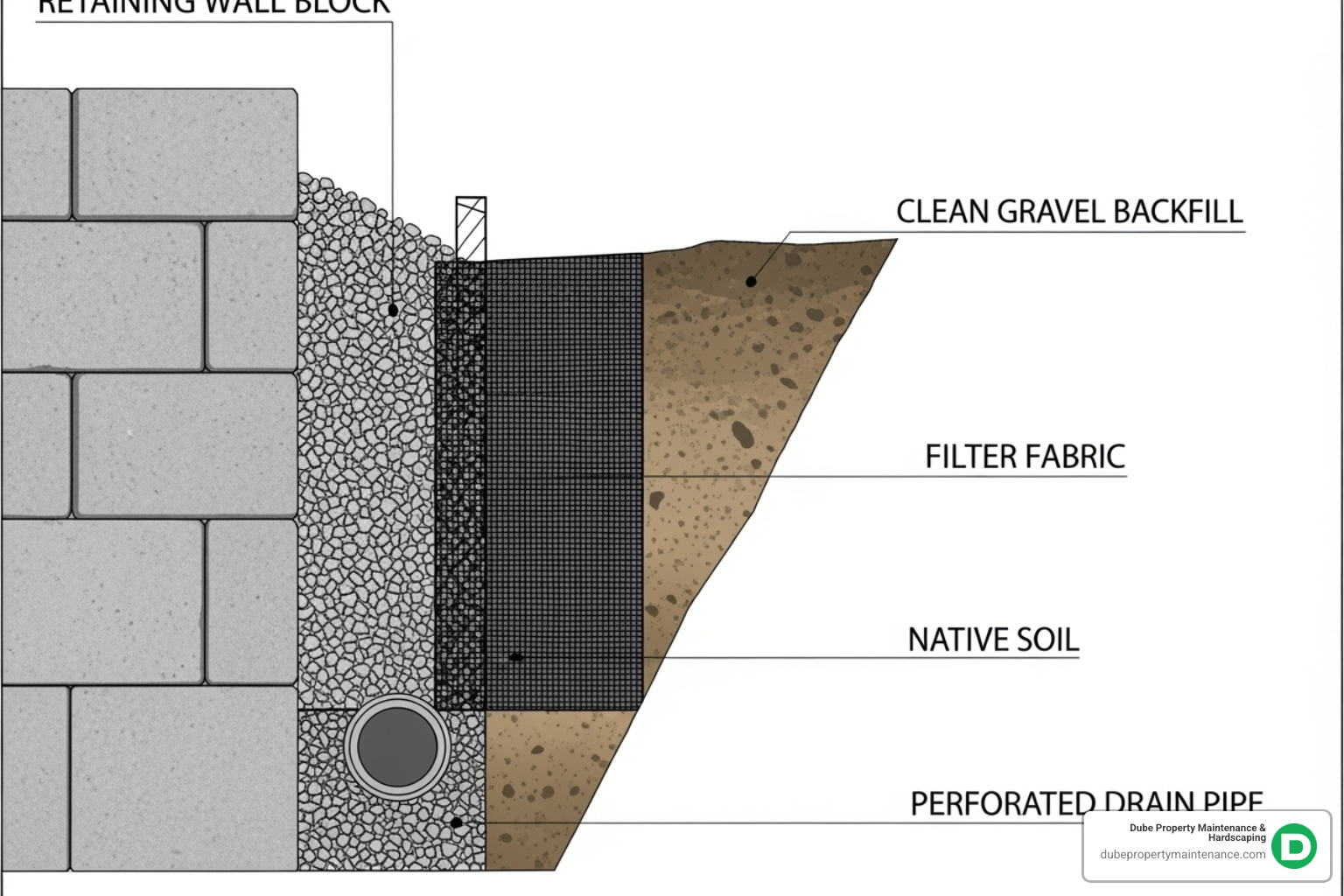
The real hero of any successful retaining wall is the unseen drainage column. This column of clean, angular gravel (typically #57 or 3/4″ clean crush) sits behind your wall, collecting moisture and directing it safely away through a perforated drain pipe at the base.
Filter fabric is the bodyguard for this drainage column. By wrapping the fabric over the top of your gravel backfill and extending it up behind the wall, you create a barrier that keeps soil fines, roots, and organic matter from infiltrating your clean stone.
This protection is critical for long-term success. When your gravel backfill stays clean, water flows freely. When it gets contaminated with soil, drainage efficiency drops by 70% or more.
A typical Block Retaining Wall Construction project can fail within 5-10 years if the drainage system gets clogged, while properly protected systems often last 50+ years.
Do I need filter fabric for dry stack retaining wall? If you want your drainage column to stay clean and functional for decades, the answer is usually yes. Filter fabric isn’t just an add-on – it’s insurance for your entire investment.
This question has divided builders for decades. On any job site, you’ll find passionate discussions about whether filter fabric is essential or unnecessary for a dry stack retaining wall.
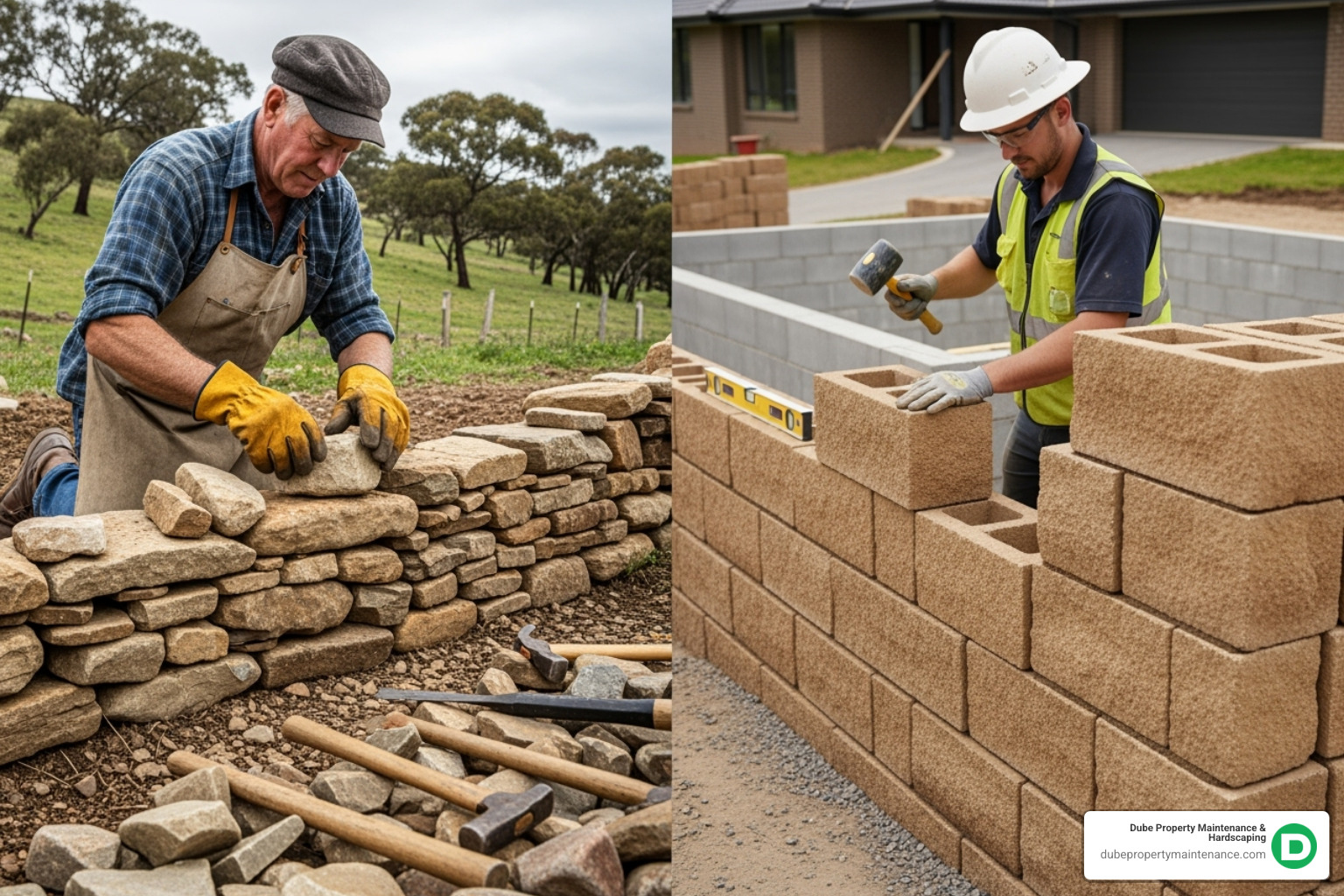
The debate stems from two philosophies. Traditional dry stone masons, with generations of experience, argue that a properly built wall is permeable, allowing water to flow through it, making modern drainage unnecessary. Conversely, modern engineers and contractors using segmental retaining wall systems follow strict guidelines that almost always require filter fabric as a critical component.
The truth is, both sides have valid points. The answer to “do I need filter fabric for dry stack retaining wall” depends on your wall type, soil conditions, and local climate. When we work on Dry Stack Retaining Wall projects, we evaluate these factors to make the right recommendation.
For most modern dry stack retaining walls, especially those built with engineered block systems, the arguments for using filter fabric are convincing.
Filter fabric prevents soil migration. Without this barrier, fine soil particles, organic matter, and roots wash into your clean gravel backfill, compromising the system.
It maintains drainage efficiency. Clean gravel is essential for proper function. When soil clogs the gravel, water gets trapped, which is a recipe for disaster.
Reducing hydrostatic pressure is a key benefit. Water weighs about 62 pounds per cubic foot, and its buildup creates incredible force. We’ve seen solid walls fail from preventable water pressure.
The wall simply lasts longer with proper drainage. It’s like changing the oil in your car—skipping this step leads to expensive repairs or complete wall replacement.
Most professional installation guides, including the detailed Commercial Installation Manual for segmental systems, specify filter fabric as non-negotiable. When we’re Building a Retaining Wall that needs to last, we follow these proven engineering standards.
Traditional masons have arguments rooted in centuries of walls that are still standing strong without synthetic fabric.
A properly built dry stone wall is naturally permeable. Craftsmen create voids and drainage paths allowing water to flow through, preventing buildup.
Filter fabric can actually clog over time when placed against certain fine-grained soils. When fabric clogs, it traps water instead of letting it through, creating the problem it was meant to solve.
Small gravel can cause problems in traditional stone walls, acting like ball bearings that cause shifting. Traditional builders prefer angular stones throughout the structure.
Proper hearting serves as the drainage system. In authentic dry stone construction, the interior of a thick wall is packed with smaller, irregularly shaped stones called “hearting.” This locks everything in place while providing natural drainage.
As one experienced dry stone mason put it: “Water flows right through a well-built wall. Make it thick enough with proper hearting, and you don’t need all these modern additions.”
There are situations where you can skip the filter fabric and still build a successful wall.
On the flip side, there are many situations where skipping filter fabric is asking for trouble. Do I need filter fabric for dry stack retaining wall becomes a definite yes in these scenarios.
Correct installation is critical. The best filter fabric is useless if installed incorrectly. When we build Landscape Retaining Walls, we know the details matter.
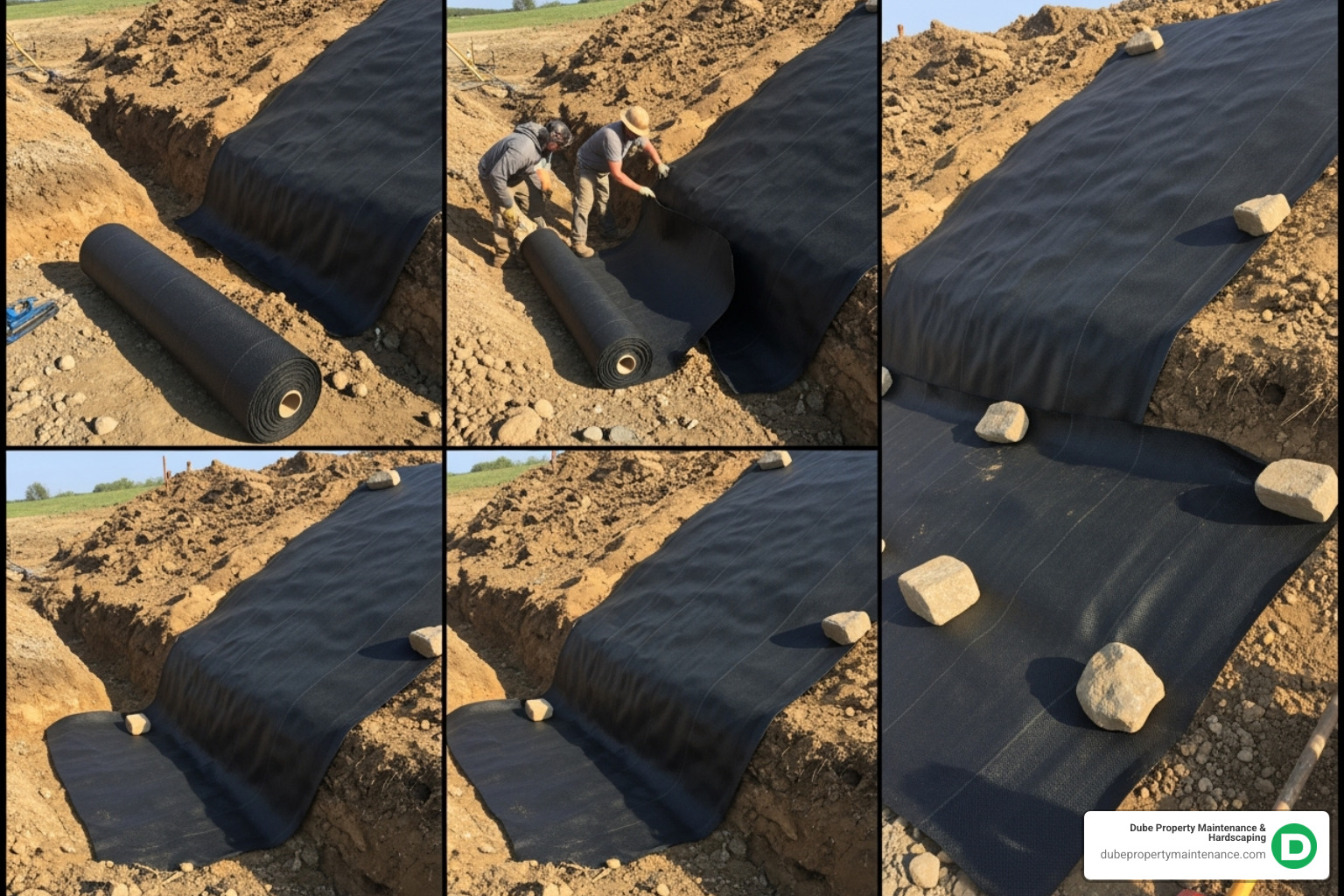
Proper installation requires creating a continuous barrier separating native soil from the clean drainage stone. The fabric must line the trench bottom, extend up the back of the excavation, and fold over the top.
Do I need filter fabric for dry stack retaining wall? If you’ve decided yes, then doing it right the first time will save you headaches and money down the road.
Here’s how we approach fabric installation to ensure your wall performs for decades:
We’ve seen many installation mistakes. Here are the most common ones to avoid:
The bottom line? If your conditions call for fabric, then proper installation isn’t optional—it’s what separates a wall that lasts decades from one that becomes an expensive lesson.
Skipping filter fabric where it’s needed on a do I need filter fabric for dry stack retaining wall project invites a slow-motion disaster. The wall may look fine initially, but water will eventually find every weakness.
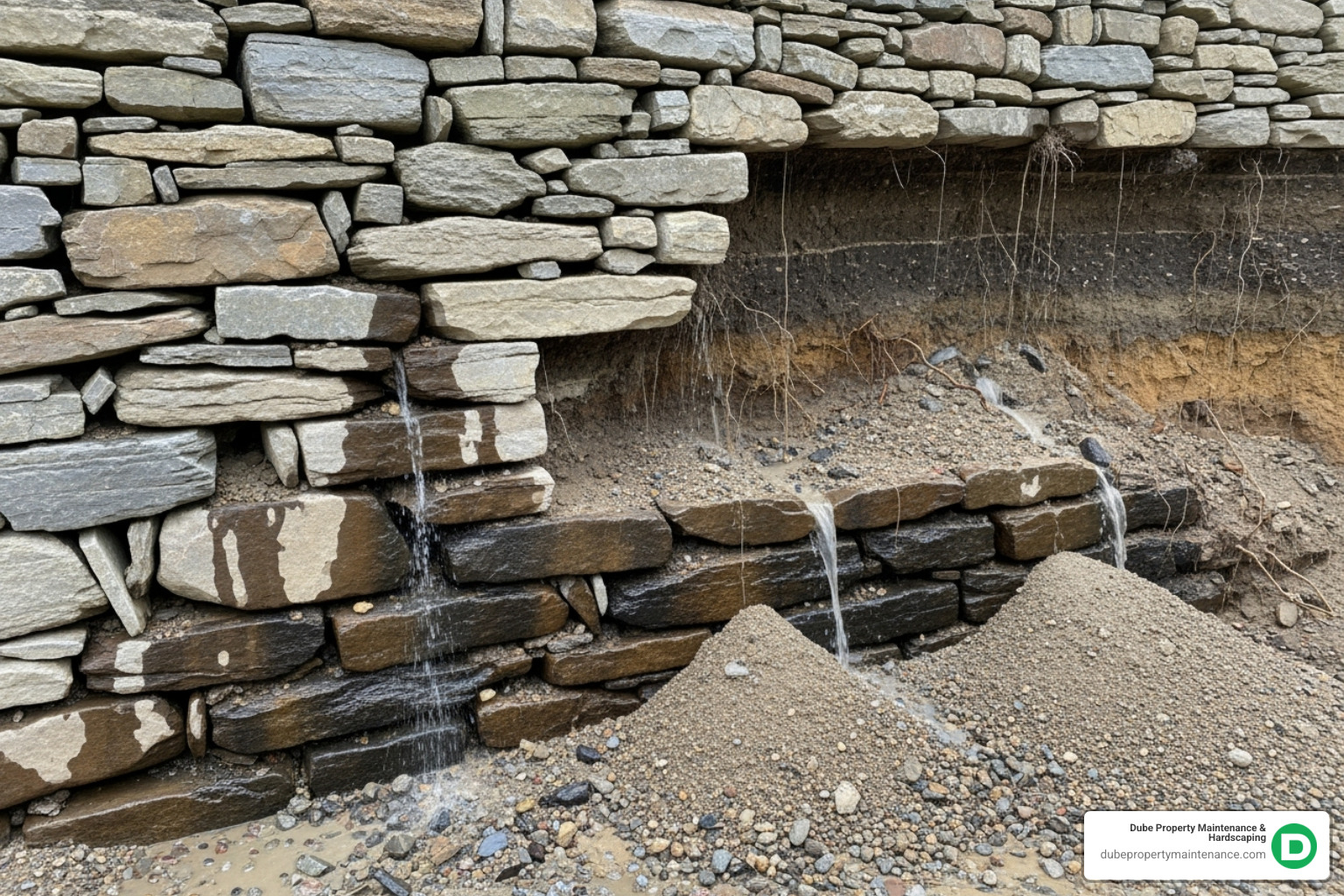
Trouble begins when native soil contacts the clean gravel backfill. Soil infiltration occurs as fine particles wash into the drainage stone with every rain or watering, a process that cannot be reversed.
As soil fills the gravel, the clogged drainage aggregate can no longer let water flow freely. Water then backs up behind the wall, creating immense pressure.
This backup creates increased hydrostatic pressure, forcing your wall to fight against thousands of pounds of water weight it wasn’t designed to handle. The result is wall bulging that starts subtly but becomes more obvious over time.
Unfortunately, eventual failure is almost guaranteed when drainage systems fail, especially in our New England climate where freeze-thaw cycles accelerate the damage. We’ve seen too many beautiful Front Yard Retaining Walls that had to be completely rebuilt because this crucial step was skipped.
These problems snowball over time. Erosion behind the wall creates sinkholes in your lawn as soil washes away. You’ll find yourself constantly adding topsoil, only to see them reappear.
Settlement of backfill can crack your patio or make your walkway uneven. The reduced structural integrity means your wall becomes weaker each season.
Costly repairs often run two to three times more than the initial installation. This involves excavating, removing contaminated gravel, installing proper drainage, and rebuilding. Finding a quality contractor for Retaining Wall Installation Near Me for major repairs can also be a challenge.
While filter fabric is our go-to solution for most modern retaining walls, there are a few alternatives worth considering.
For most modern dry stack retaining walls using segmental blocks, standard filter fabric remains the most reliable, cost-effective solution for long-term success.
After diving deep into retaining walls and filter fabric, the answer to do I need filter fabric for dry stack retaining wall? isn’t a simple yes or no. It’s a thoughtful “it depends” on your specific situation.
Your retaining wall decision depends on the conditions, much like deciding whether to carry an umbrella.
For modern segmental retaining walls or any Dry Stack Retaining Walls over three feet tall, filter fabric is essential. These walls rely on engineered drainage systems, and without proper filtration, the system will fail. The fabric keeps your drainage stone clean and functional, which keeps your wall standing strong.
Traditional dry stone walls tell a different story. If you’re working with a master craftsperson who understands proper hearting and through-stones, fabric might not be necessary. These walls have stood for centuries, proving that skill can sometimes replace technology.
Most people are building modern landscape features that must perform reliably in challenging conditions like clay soils, heavy rain, and freeze-thaw cycles. In New England, where we serve communities like Methuen, Andover, and Salem, these factors are especially important.
Soil conditions are your biggest clue. With sandy, well-draining soil, you might have flexibility. With heavy clay, filter fabric becomes your wall’s best friend, preventing it from clogging your drainage stone.
The reality is that most retaining wall failures happen because of poor drainage decisions. We’ve seen too many walls that looked perfect on day one but started bulging within a few years because water had nowhere to go.
At Dube Property Maintenance & Hardscaping, we know that cutting corners on drainage is like skipping the foundation on a house. It might save money upfront, but it costs far more in the long run. Our team has the experience to assess your site conditions, soil type, and wall requirements to determine the right approach.
Whether your wall needs filter fabric or can succeed without it, the key is getting the details right from the start. Every site is different, and every wall deserves a thoughtful approach that considers both engineering principles and practical reality.
Ready to build a retaining wall that will stand the test of time? Contact us today to discuss your Retaining Walls project. We’ll help you make the right decisions for your specific situation, ensuring your investment performs beautifully for years to come.
