

DIY front steps and walkway projects can transform the look of your home, creating a welcoming entrance that boosts curb appeal. For homeowners and business owners in Methuen, MA, and surrounding areas, crafting beautiful and functional outdoor spaces is a key priority, especially when facing the challenges of harsh winters.
Designing and constructing your own front steps and walkway allows you to blend practicality with personal style. Whether you prefer the timeless charm of brick pavers, the sleek look of concrete, or the natural beauty of stone, your outdoor space becomes a reflection of your taste. Properly installed, outdoor stairs not only improve functionality but can also highlight the architectural style of your home.
Starting with a clear plan and understanding your materials helps ensure success. Considering factors like aesthetics, safety, and maintenance, a well-designed front entry can make your space inviting and durable year-round, while effective water management techniques will protect your installation from seasonal challenges.
Similar topics to diy front steps and walkway:
– brick steps and walkway
– brick steps with wing walls
– outdoor step designs
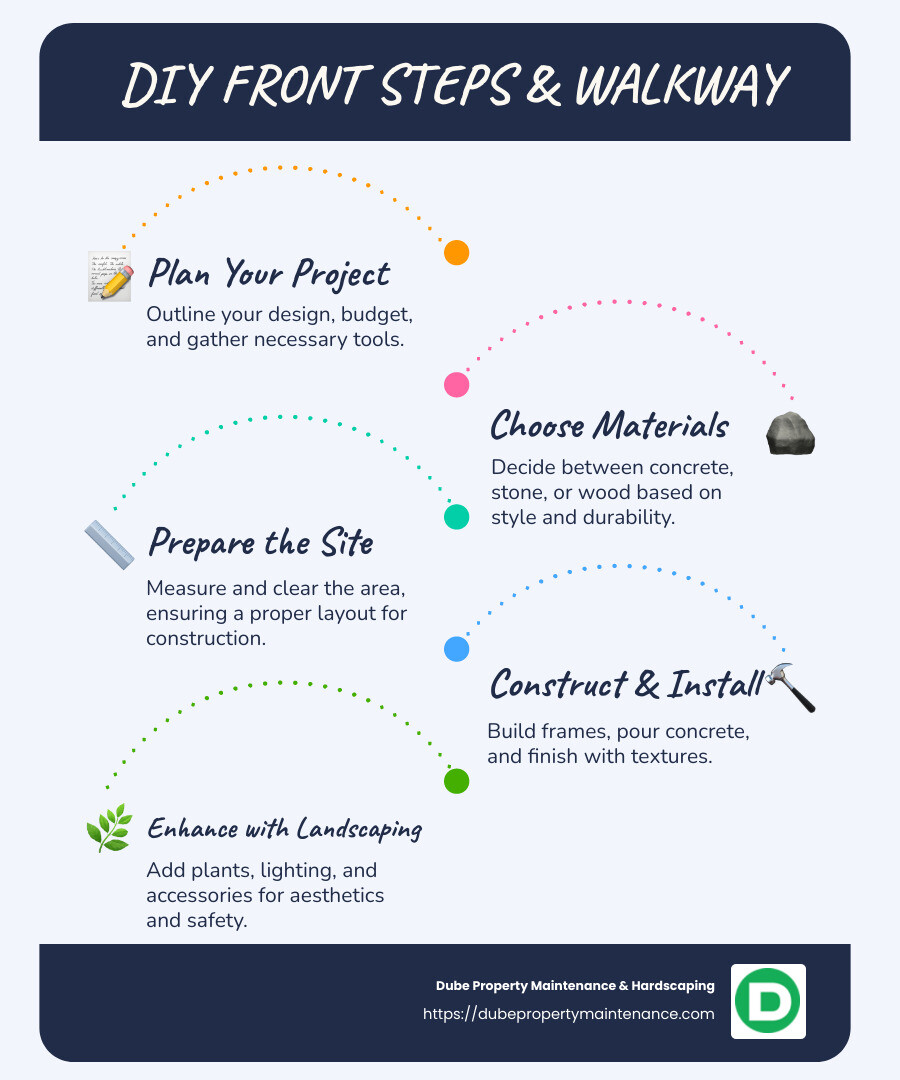
Creating your own DIY front steps and walkway can be a rewarding project, both visually and financially. To ensure success, careful planning is crucial. This involves selecting the right materials, designing with style and safety in mind, and keeping within your budget.
When it comes to materials, the choice largely depends on your aesthetic preferences, budget, and the climate of your area. Here are some popular options:

Designing your front steps and walkway involves more than just picking materials. It’s about creating a space that is safe, stylish, and compliant with local building codes.
Budgeting is an essential part of the planning process. Here’s how you can manage costs effectively:
By carefully selecting materials and considering design elements like safety and compliance, you can create a DIY front steps and walkway that improves your home’s curb appeal and functionality. With a solid plan in place, you’re ready to move on to the next stage of your project.
Now that you’ve planned your DIY front steps and walkway, it’s time to roll up your sleeves and get started. This step-by-step guide will walk you through preparing the site, building the frame, and pouring and finishing the concrete.
Preparation is key. Start by determining the exact area for your steps. Here’s how:
Once the site is prepped, it’s time to build the frame. The frame will mold the concrete into the desired shape:
With the frame in place, you’re ready to pour the concrete. This is where your steps take shape:
By following these steps, you’ll create a sturdy and visually appealing set of front steps. Next, we’ll explore how to improve your walkway and steps with landscaping and lighting.
Once you’ve built your DIY front steps and walkway, it’s time to improve their appearance and functionality. Here, we’ll explore landscaping ideas and lighting solutions that can transform your space into a welcoming and safe entrance.
Plants and Borders
Adding plants and borders can make your walkway inviting and colorful. Choose a mix of flowers and shrubs that complement your home’s exterior for a cohesive look. Consider using:
Mulch
Mulch is a simple way to keep your garden beds neat and tidy. It helps retain moisture, suppress weeds, and improve the soil. Use organic mulches like bark or wood chips for a natural look. They also add a pleasant aroma and can improve the aesthetics of your walkway.
Proper lighting not only highlights your walkway but also ensures safety. Here are some options to consider:
Solar Lights
Solar lights are eco-friendly and cost-effective. They absorb sunlight during the day and automatically illuminate your walkway at night. Place them along the path for a soft, glowing effect.
LED Lights
LED lights are durable and energy-efficient. They provide bright illumination and come in various styles, from spotlights to pathway lights. Use them to highlight specific features like steps or plants.
Safety Considerations
Lighting is crucial for safety, especially in areas with steps. Ensure that all steps are well-lit to prevent accidents. Consider motion sensor lights for added security, which activate when someone approaches.
By incorporating these landscaping and lighting ideas, your DIY front steps and walkway will not only look stunning but also function effectively, enhancing the overall curb appeal of your home. Next, we’ll dig into maintenance and upkeep to ensure your walkway remains in top condition for years to come.
Keeping your DIY front steps and walkway in top shape doesn’t have to be a chore. With regular cleaning and timely repairs, you can ensure they remain safe and attractive year-round. Let’s explore some simple tips and tricks for maintaining your masterpiece.
Sweeping and Washing
Start with the basics. Regular sweeping prevents dirt and debris from accumulating. This simple step not only keeps your walkway clean but also helps avoid stains and damage.
For a deeper clean, wash your steps and walkway with a mild detergent and water. A garden hose with a spray nozzle works well for rinsing. Avoid using harsh chemicals that can damage the surface or harm nearby plants.
Stain Removal
Stains can be pesky, but they don’t have to be permanent. For oil or grease stains, sprinkle some baking soda or kitty litter on the spot to absorb the spill. Let it sit for a few hours before sweeping it away. For tougher stains, a gentle scrub with a brush and a water-vinegar solution can work wonders.
Concrete Patching
Over time, small cracks may appear in concrete steps. It’s important to address these early to prevent further damage. Use a concrete patching compound to fill cracks. Simply clean the area, apply the patch, and smooth it out with a trowel. This quick fix can save you from more extensive repairs later.
Re-sanding and Tread Replacement
If your steps or walkway include pavers, re-sanding may be necessary. Over time, sand between pavers can wash away, leading to instability. Simply add new sand and sweep it into the joints to keep everything snug.
For wooden steps, inspect the treads regularly. Replace any that are worn or damaged to ensure safety and maintain appearance.
Seasonal Care
Different seasons bring different challenges. In winter, keep your steps clear of ice and snow. Use a non-corrosive deicer to avoid damaging the surface. In spring and fall, check for any water damage or erosion and address it promptly.
By following these maintenance and repair tips, your DIY front steps and walkway will continue to improve your home’s curb appeal for years to come. Up next, we’ll answer some common questions about materials and techniques to help you make informed decisions for your next project.
When choosing materials for your DIY front steps and walkway, consider durability, aesthetics, and maintenance. Concrete, natural stone, and wood are popular options, each with its own pros and cons.
Safety is key when designing your steps. Here are some ways to ensure your outdoor steps aren’t slippery:
While concrete is a common choice, there are alternatives if you’re looking for something different:
Choosing the right materials and techniques for your DIY front steps and walkway can significantly impact both safety and aesthetics. By considering these options, you can create a functional and beautiful entrance to your home.
Now that we’ve covered some common questions, let’s explore how to improve your walkway and steps with landscaping and lighting solutions.
Crafting your DIY front steps and walkway can be a rewarding experience, bringing both satisfaction and a sense of accomplishment. As you transform your home’s entrance, you’ll not only boost its curb appeal but also create a welcoming space for family and friends.
This guide has walked you through every essential step, from planning and material selection to construction and maintenance. By following these comprehensive instructions, you’re equipped with the knowledge to tackle your project confidently. Whether you choose durable concrete, neat natural stone, or warm wood, each material offers unique benefits that can match your style and needs.
As you wrap up this project, consider what might be next. Perhaps, enhancing your outdoor space with a custom firepit or a beautifully designed walkway could be on your agenda. At Dube Property Maintenance & Hardscaping, we’re here to support your outdoor projects with expert advice and quality services.
Every successful project begins with a solid plan and the right resources. So, take pride in the work you’ve done and look forward to enjoying your new front steps and walkway for years to come. If you ever need professional help or inspiration for your next project, don’t hesitate to reach out to us. We’re committed to making your outdoor spaces both functional and beautiful.
Thank you for trusting us to guide you through this journey. Happy building!
