Why Gardening Pathways Transform Your Outdoor Space
Gardening pathways are the backbone of every beautiful, functional landscape. Whether you’re connecting your driveway to your front door or creating a meandering route through flower beds, these walkways shape how you experience and use your outdoor space.
Quick Guide: What You Need to Know About Gardening Pathways
Primary paths should be at least 48 inches wide for comfortable two-person passage
Secondary paths work well at 30-36 inches for garden access
Material costs vary widely: gravel ($0.65-$11/sq ft), brick ($10-$20/sq ft), natural stone ($15-$50/sq ft)
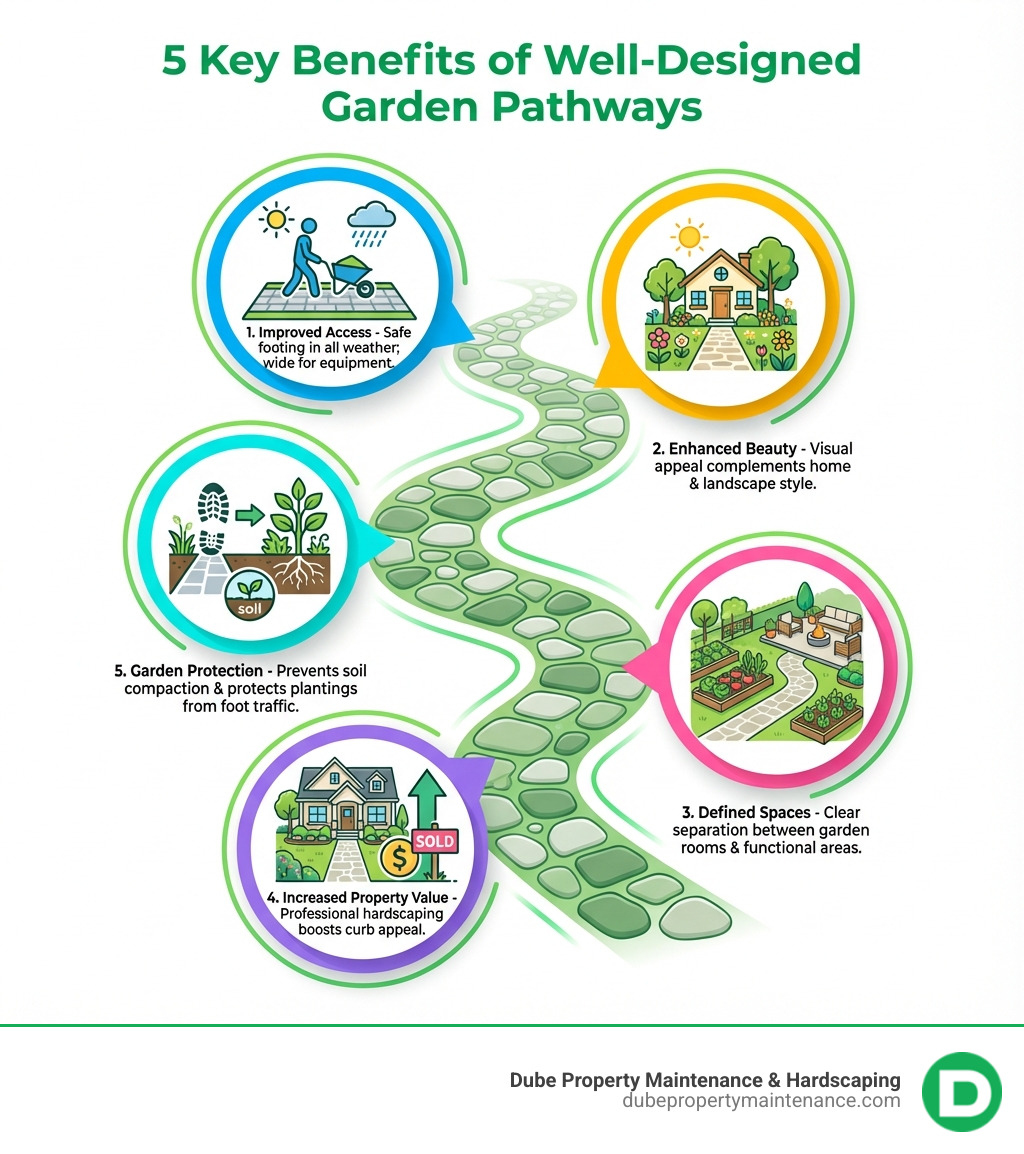
Key functions include connecting spaces, defining garden rooms, improving drainage, and boosting property value
Installation basics require proper base preparation (4-8 inches crushed stone), drainage slope, and edging
A well-designed garden path does more than keep your feet dry. As landscape professionals know, these walkways shape and define garden areas, connect unrelated parts of your yard, and create a coherent whole that links your house to the garden both visually and physically.
For homeowners in Methuen, North Andover, Haverhill, Andover, and Salem, NH, choosing the right pathway design means considering our harsh New England winters, seasonal rainfall, and the need for year-round access. The right materials and installation make all the difference between a path that lasts decades and one that shifts, cracks, or becomes a muddy mess after the first spring thaw.
In this guide, we’ll walk you through everything from planning your path’s route to selecting materials that fit both your budget and your climate. You’ll find creative design ideas, learn about proper installation techniques, and understand what maintenance keeps your pathways looking perfect through every season.
The Foundation of Flow: Planning Your Pathway’s Route and Function
Before we even consider materials, the first and most crucial step in creating beautiful gardening pathways is thoughtful planning. Just as the bones provide structure to a body, hardscaping, including pathways, forms the fundamental structure of your landscape. Pathways are not merely utilitarian routes; they are integral design elements that guide movement, define spaces, and improve the overall experience of your garden.
Our team at Dube Property Maintenance & Hardscaping always starts by evaluating your yard’s unique attributes, such as size, grade, light exposure, drainage, and soil conditions. This helps us understand the canvas we’re working with and how to best integrate your new pathways. The goal is to create a “way-finding system” that tells visitors where to enter, where to pause, and where to explore next.
When designing paths for your landscaping, consider the natural access routes and how people typically move through your outdoor space. Whether you have a sprawling property with multiple “outdoor rooms” or a cozy backyard in Andover, MA, your pathways should seamlessly connect these areas. For more inspiration on designing effective routes, check out this guide on Designing Paths for Your Landscaping.
Safety is also paramount, especially on slopes. We ensure pathways are designed to be safe, incorporating features like meandering paths, steps, or terraces as needed. Good drainage is another critical factor to prevent slippery surfaces and water accumulation, which is particularly important with our New England weather patterns.
Defining the Purpose: Primary, Secondary, and Tertiary Paths
Not all paths are created equal, and understanding their different functions is key to effective design. We categorize gardening pathways into three main types based on their purpose and traffic volume:
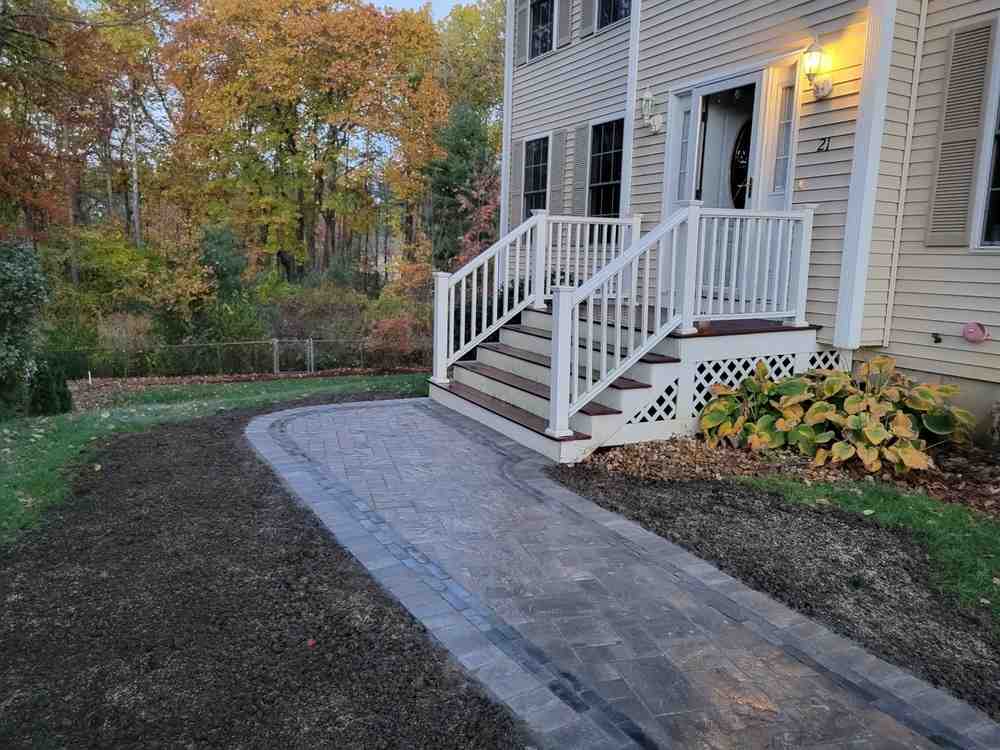
Primary Paths: These are your garden’s main arteries, connecting key areas like your front door to the street or driveway, or leading to an essential outdoor living space. They are designed for high-traffic and frequent use, allowing multiple people to walk comfortably side-by-side. For homes in Salem, NH, a primary path might lead directly to a welcoming front porch.
Secondary Paths: Branching off primary paths, these extend deeper into the landscape, leading to areas like a vegetable garden, a secluded seating area, or a children’s play zone. They add depth to your garden design and encourage exploration.
Tertiary Paths: These are the most casual and least traveled paths, often inviting exploration of hidden corners, a quiet reading nook, or a maintenance access point behind a shed. They are designed to create intimate spaces and a sense of findy.
Pathways are fundamental to the overall circulation and flow of a garden. They link different garden “rooms,” allow for easy access to garden beds for maintenance, and ensure your outdoor space feels cohesive rather than disjointed. For high-traffic areas, such as around major garden amenities, we always recommend durable materials that can withstand constant use.
The Shape of Your Stroll: Straight vs. Curved Designs
The shape of your gardening pathways significantly impacts the aesthetic and perceived size of your garden.
Straight Paths: These paths tend to create a formal garden style, offering direct routes and a sense of purpose. A straight path can also make a garden appear longer, especially if its endpoint is not immediately visible. This style works well for grand entrances or leading directly to a prominent focal point. For a formal English-style garden in Concord, MA, a straight brick pathway edged by hedging might be the perfect choice.
Curved Paths: In contrast, curved paths lend themselves to an informal design, encouraging a leisurely stroll and a sense of intrigue. They are often considered more pleasing to the eye and can make a narrow garden feel much larger by concealing what lies around the bend. Meandering paths through dense planting work particularly well in a cottage garden style, common in towns like Hopkinton, MA, inviting exploration and revealing new findies along the way.
The choice between straight and curved paths depends on your garden’s overall style and the experience you want to create.
Sizing It Right: Path Width for People and Equipment
The width of your gardening pathways is critical for both functionality and comfort. A path that is too wide can overwhelm a smaller space, while one that is too narrow may be difficult to steer and feel cramped.
Here are our recommended width guidelines:
Primary Paths: For two people to walk side-by-side comfortably, primary paths should be at least 48 inches (4 feet) wide. Some designers even recommend flaring these paths to 5 or 6 feet where they meet a driveway or stoop, especially for larger facades in towns like Lexington, MA.
Secondary Paths: These paths are typically narrower, ranging from 30 to 36 inches wide, allowing for comfortable single-file walking or easy access to garden beds.
Tertiary Paths: These are slimmer still, with varying widths that can add interest and intimacy to your garden’s quiet corners.
When planning your paths, we also factor in garden equipment. A lawnmower or garden cart typically requires about 3 to 4 feet of width, while a tractor may need 5 feet or more. If you plan to use a wheelbarrow regularly, ensuring your paths are wide enough (at least 3 feet) will save you a lot of hassle.
For areas needing wheelchair accessibility, paths require careful consideration. Wheelchair-friendly paths need to be made of high-quality concrete and be wide enough for wheelchairs to turn around or accommodate another person alongside, typically 1.5m to 2m (approximately 59 to 78 inches) wide. They must also be free of steps or edges that could impede movement. This is a crucial safety and accessibility consideration we prioritize in our designs.
A Palette Underfoot: Choosing the Perfect Pathway Materials
Once the route is planned, the next exciting step is selecting the materials for your gardening pathways. The right material not only determines the path’s durability and maintenance needs but also significantly contributes to your garden’s aesthetic, sound, and texture.
Considering our New England climate, material choice is vital. We need materials that can withstand significant temperature fluctuations, heavy snowfall, and freeze-thaw cycles without cracking, shifting, or becoming slippery. This is where the expertise of a local hardscaping company like Dube Property Maintenance & Hardscaping comes in handy. Learn more about our specialized services in hardscaping on our Hardscaping Services page.
Soft Surfaces: Natural and Informal Options
Soft surface gardening pathways offer a natural, informal look and are generally best suited for low-traffic areas or secondary and tertiary paths.
Mulch Paths (Wood Chips, Bark, Sawdust):
Pros: Easy and inexpensive to lay, natural appearance, can enrich the soil as they decompose, and provide good weed suppression if applied 4-5 inches thick. Sawdust, especially from untreated wood, can be very cushy to walk on.
Cons: Require yearly replenishment as the material decomposes, can get kicked around easily, and may not provide firm footing in all weather. Organic mulches are prone to breaking down quickly and getting overtaken by weeds if not regularly maintained.
Cost: Mulch paths can cost anywhere from $15 to $80 per yard for the material itself. Delivery and professional installation can add to the total.
Sustainability: Often locally sourced, and wood chips can sometimes be obtained for free from tree-trimming crews in areas like Billerica, MA.
Grass Paths:
Pros: Seamlessly integrates with a lawn, offers a soft and comfortable walking surface, and can look beautiful when well-maintained.
Cons: High-maintenance, requiring regular mowing, watering, and weeding. Can become muddy and slippery quickly, especially in areas with high clay content or frequent rain, making them less ideal for our climate unless carefully cared for. Not suitable for high-traffic areas or wheelchair accessibility.
Cost: Sod for grass paths can cost $0.35–$0.85 per square foot, while turf can range from $2–$6 per square foot. Grass seed is even cheaper at $3–$10 per pound.
Pine Needles: Similar to wood mulch, pine needles offer a natural, informal look, particularly suited for woodland gardens. They decompose slower than some other mulches but still require periodic replenishment.
Hard Surfaces: Durability and Elegance for Your Gardening Pathways
Hard surface gardening pathways are known for their durability, low maintenance, and ability to handle high traffic, making them excellent choices for primary paths and formal designs.
Brick Paths:
Pros: Offer a classic, timeless look with numerous pattern possibilities (like herringbone), are highly durable, and require little maintenance once installed correctly. They can last for decades.
Cons: Can be more expensive and installation is labor-intensive, requiring a solid base to prevent shifting and frost heave. Unmortared bricks are susceptible to frost heaving in colder climates like ours.
Cost: Brick paths can cost up to $20 per square foot. Reclaimed bricks can offer a characterful and more affordable option. For more on brick, visit the Brick Industry Association.
Concrete Pavers:
Pros: Extremely versatile in design, available in many shapes, sizes, and colors, allowing for creative patterns. They are often more affordable than natural stone and provide a clean, formal look.
Cons: Can be susceptible to shifting if not installed on a proper base. Some types can absorb heat, which is beneficial in colder regions but can be a drawback in direct sun.
Cost: Concrete pavers typically cost between $8 to $15 per square foot.
Natural Stone Paths (Flagstone, Cut Stone):
Pros: Provide an neat, timeless, and organic look. They are incredibly durable and can last for generations, offering best beauty.
Cons: Potentially the most expensive material, and installation can be challenging, often requiring professional expertise, especially if set in concrete.
Cost: Natural stone paths can cost between $15 to $50 per square foot.
Gravel and Crushed Stone Paths:
Pros: Inexpensive, easy to install, offer excellent drainage, and are low-maintenance. The crunching sound of gravel underfoot can also add a unique sensory element to your garden, and even act as a security feature. They are permeable, allowing water to percolate into the soil.
Cons: Can spill out without proper edging, may need occasional raking and topping up, and can be uncomfortable for some footwear. Small, angular stones are best as they lock together for stability.
Cost: The average cost of gravel for a path can range from $0.65 to $11 per square foot, depending on the type (e.g., crushed granite at $1–$3, lava rock at $3.50–$11).
For any of these hard surface options, especially if you’re considering a more elaborate design for your property in Methuen, MA, our masonry services can ensure a beautiful and lasting installation. Find out more on our Masonry Services page.
Cost and Sustainability Considerations
When selecting materials for your gardening pathways, cost is often a significant factor. Please note that the prices mentioned below are average costs based on internet data and are not the actual costs of Dube Property Maintenance & Hardscaping. We always recommend getting a personalized quote for your specific project.
Average Cost Ranges: As noted above, costs can vary dramatically:
Gravel: $0.65 to $11 per square foot
Brick: Up to $20 per square foot
Natural Stone: $15 to $50 per square foot
Concrete Pavers: $8 to $15 per square foot
Mulch: $15 to $80 per yard (material only)
Sustainability is also an increasingly important consideration. We encourage choosing materials that are:
Permeable: Materials like gravel, crushed stone, and permeable pavers allow rainwater to seep into the ground, reducing runoff and supporting local groundwater. This is particularly beneficial in areas with strict stormwater management regulations.
Recycled Materials: Using reclaimed bricks or repurposed stone can add character and reduce environmental impact.
Locally Sourced: Opting for stone or gravel from quarries in Massachusetts or New Hampshire reduces transportation costs and carbon footprint.
Building to Last: Installation and Maintenance for Your Gardening Pathways
A beautiful path is only as good as its foundation. Professional installation ensures longevity, stability, and proper drainage, especially vital in our New England climate where frost heave can wreak havoc on poorly constructed surfaces. Our expertise in paver patio installation, for example, extends to all types of hardscape pathways. Find more about our installation processes on our Patio Installation page.
The Essential Steps of Professional Path Installation
Whether it’s a simple gravel path or an intricate paver walkway, there are essential steps we follow to ensure a durable and functional installation:
Excavation: We begin by carefully excavating the path area to the appropriate depth, considering the chosen material and the necessary base layers.
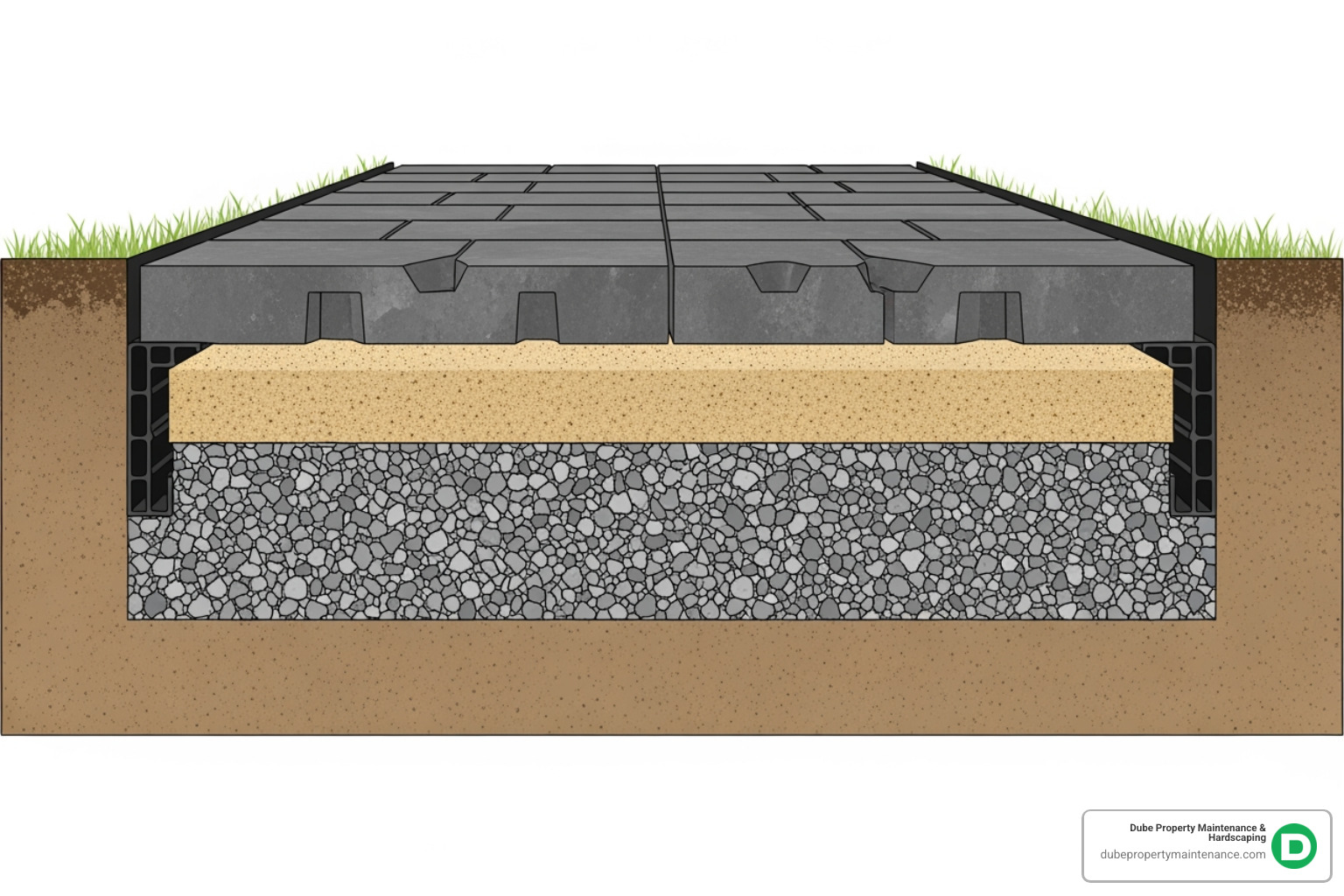
Base Preparation: This is the most critical step. We lay a robust base of coarse crushed stone, typically 4 to 8 inches deep, and compact it thoroughly. This stable foundation prevents sinking and shifting over time.
Landscape Fabric: For loose materials like gravel or mulch, we often lay a layer of commercial-grade woven landscape fabric over the compacted base. This acts as a weed barrier, prevents the base material from mixing with the surface material, and maintains permeability.
Leveling Course: A layer of leveling sand, typically 1-2 inches deep, is applied over the base or fabric. This allows us to precisely level the surface for pavers or stepping stones.
Surface Material Application: The chosen path material is then laid according to design specifications. For pavers, this involves careful placement and alignment; for gravel, it means spreading and leveling.
Compaction: Hard surfaces like pavers are compacted with a plate compactor to ensure they are firmly seated.
Jointing Sand: For paver or brick paths, we sweep fine jointing sand (often polymeric sand) into the gaps between the units. This locks them into place, inhibits weed growth, and deters ants.
Edging: Proper edging is crucial for containing loose materials like gravel or wood chips and providing a clean, defined border for all path types. For hardscape paths, we use professional-quality masonry edging to prevent lateral shifting.
Keeping Your Path Perfect: Year-Round Maintenance
Even the most well-built gardening pathways require ongoing care to maintain their beauty and functionality. We advise our clients in Methuen, MA, and surrounding areas on best practices for year-round maintenance:
Regular Cleaning and Sweeping: Regularly sweeping your paths removes debris, leaves, and dirt, preventing organic matter from breaking down and encouraging weed growth.
Weed Control: Despite landscape fabric and jointing sand, weeds can still appear. Promptly pulling them or using targeted herbicides keeps your paths pristine.
Moss and Algae Removal: In our humid climate, moss and algae can grow on hard surfaces, making them slippery. Regular scrubbing, especially for stone paving under trees or in shaded areas, is essential for safety.
Seasonal Maintenance Tips:
Spring: After the snow melts, inspect paths for frost-heave damage (shifted pavers, cracks). Replenish soft surfaces like mulch or gravel as needed. This is a great time for a thorough spring yard cleanup, which often includes path maintenance. Learn more about our services on our Spring Yard Cleanups page.
Summer: Keep an eye on weed growth and sweep regularly.
Fall: Clear fallen leaves and debris to prevent staining and slippery surfaces.
Winter: Avoid harsh de-icing chemicals, which can damage many path materials and harm surrounding plants. Instead, use sand or kitty litter for traction. Ensure paths are clear of snow and ice for safe passage.
Elevating Your Landscape: Creative and Aesthetic Path Designs
Beyond functionality, gardening pathways are powerful tools for enhancing the visual appeal and overall aesthetics of your outdoor space. They guide the eye, create a sense of journey, and can even become works of art themselves. Our landscaping services are designed to bring these creative visions to life. Explore our expertise on our Landscaping Services page.
Using Pathways to Create Visual Interest and Focal Points
A well-designed path doesn’t just lead; it captivates.
Drawing the Eye to a Focal Point: Pathways can be strategically designed to draw the eye to a specific destination or focal point, such as a garden bench, a water feature, or a stunning statue. A straight path can lead directly to a feature, while a curved path can slowly reveal it, building anticipation.
Arbors and Gates: Incorporating structures like arbors draped with climbing roses or decorative gates along a path adds architectural interest and creates a sense of arrival or transition between garden “rooms.”
Repetition in Design: Repeating elements, such as identical containers, topiary, or lighting fixtures along a path, can create a rhythmic visual flow and unify the design.
Path Lighting: Thoughtful lighting not only improves safety but also creates dramatic visual interest at night, highlighting the path’s curves or texture.
Integrating Plants and Unique Features into your gardening pathways
Plants play a crucial role in softening the hard lines of pathways and integrating them into the surrounding landscape.
Planting Pockets and Ground Covers: We can incorporate planting pockets within pathways (e.g., between stepping stones) for low-growing ground covers like creeping thyme or Irish moss. These plants soften the edges and add fragrance when walked upon.
Softening Edges: Bordering paths with appropriate plants, from small annuals to larger shrubs, helps integrate the path into the garden, making it feel less like a hard line and more like a natural part of the landscape. In areas like Andover, MA, we often recommend native plants that support local pollinators, tying into initiatives like the Andover Pollinator Pathway.
Mixed Materials: Combining different materials, such as large stone slabs set in decorative gravel, or brick borders for a concrete path, adds texture and visual intrigue.
Creative Stepping Stones: Beyond simple uniform stones, we can create unique designs with custom-made concrete pavers embedded with glass or shells, or use cut log slices for a rustic, woodland feel.
Ensuring Accessibility for All
Designing gardening pathways with accessibility in mind ensures that everyone can enjoy your outdoor space.
Wheelchair-Accessible Paths: As mentioned, these paths require specific dimensions and materials. They must be wide enough (typically 1.5m to 2m) for wheelchairs to turn and for companions to walk alongside. High-quality concrete is often the preferred material due to its smooth, stable surface.
Smooth Surfaces: Avoid loose materials like pea gravel that can impede wheelchair movement. Hard, stable surfaces like concrete, tightly laid pavers, or natural stone set in mortar are ideal.
No-Step Design and Ramps: Wheelchair-accessible paths must be free of steps. Gentle ramps can be incorporated where changes in elevation are necessary, adhering to ADA compliance standards for slope.
Safety Considerations: Beyond smooth surfaces and appropriate widths, safety also includes ensuring paths are well-lit at night and that any slopes are gentle or equipped with railings. All materials should be non-slip, especially in wet conditions.
Conclusion: Bring Your Vision to Life
Gardening pathways are more than just a way to get around; they are the framework of your outdoor living space, guiding the eye and the feet on a journey through your personal oasis. By carefully planning the route, selecting the right materials, and ensuring professional installation, your paths will provide beauty and function for years to come in your Massachusetts or southern New Hampshire home. For expert help designing and building the durable, beautiful walkways your property deserves, contact the team at Dube Property Maintenance & Hardscaping.
For 25+ years Dube Property Maintenance & Hardscaping has provided top-rated residential and commercial landscape design, installations, hardscaping, irrigation systems and commercial snow and ice management. Our hardscaping division proudly serves the Merrimack Valley, Middlesex and Essex County and Southern, NH regions, transforming outdoor spaces into stunning works of art.