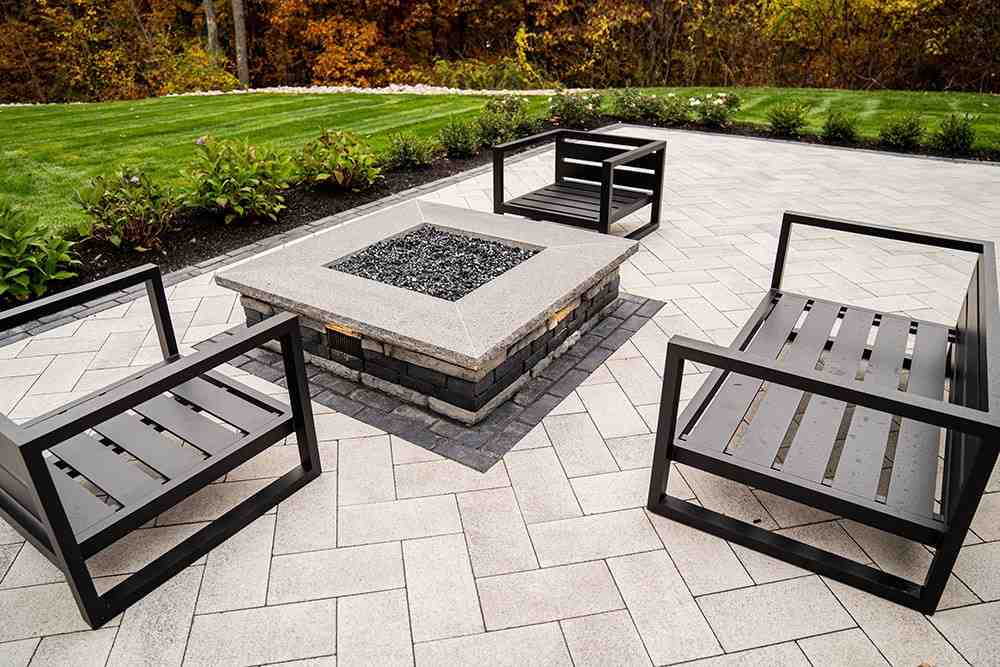
Why Designing an Outdoor Patio Is Your Best Home Investment
Designing an outdoor patio is one of the smartest decisions you can make for your home. Whether you’re looking to create a cozy spot for morning coffee or a grand entertainment space for family gatherings, a well-planned patio extends your living area and can increase your home’s value by 10-15%.
Here’s what you need to know about patio design:
Plan Your Purpose – Decide if you’ll use it for dining, lounging, cooking, or entertaining
Choose Durable Materials – Select pavers, stone, or concrete that withstand New England’s freeze-thaw cycles
Design Your Layout – Consider attached vs. detached, size, and traffic flow
Add Key Features – Incorporate outdoor kitchens, fire pits, or pergolas for functionality
Furnish and Light – Layer lighting and choose weather-resistant furniture to complete the space
The outdoor living market reached $104.1 billion in 2022 and continues growing as more homeowners find the benefits of extending their homes outdoors. With approximately 70% of homeowners using their outdoor spaces at least weekly during warmer months, a thoughtfully designed patio isn’t just an aesthetic upgrade—it’s a lifestyle improvement.
For homeowners in Massachusetts and southern New Hampshire, designing a patio requires special attention to our region’s challenging climate. Harsh winters with heavy snow and freezing temperatures, combined with hot, humid summers, mean your material choices and structural planning need to account for dramatic temperature swings.
This guide walks you through every step of creating your perfect outdoor patio, from initial planning and material selection to incorporating high-value features like outdoor kitchens and fire pits. Whether you’re working with a spacious backyard in Andover or maximizing a compact area in Methuen, you’ll find practical strategies to design a beautiful, functional outdoor space that complements your home and withstands New England weather for years to come.
Laying the Groundwork: Planning Your Perfect Patio
Before we even think about materials or furniture, the first, and arguably most crucial, step in designing an outdoor patio is thorough planning. This initial phase sets the stage for everything that follows, ensuring your outdoor space is not only beautiful but also perfectly suited to your lifestyle and the unique demands of our New England climate. We encourage you to be a bit of a detective here, observing your space and envisioning its potential.
Start by asking yourself: What is the primary purpose of this patio? Will it be a quiet retreat for morning coffee, a lively spot for family dinners, or a grand stage for entertaining friends? Your answer will significantly influence its size, layout, and features.
Next, conduct a detailed site assessment. This involves understanding your yard’s topography, observing sun exposure throughout the day and across seasons, and considering existing elements like trees, retaining walls, or even a cherished babbling water fountain. Angi suggests that you carefully note the sunlight patterns and how trees might provide shade. We also need to think about traffic flow—how will people move from your house to the patio and around its different zones?
Budgeting is another cornerstone of effective planning. The average cost to install a patio can range anywhere from $1,800 to over $5,200, depending on materials, size, and complexity. Knowing your budget upfront helps guide material choices and prevents unexpected surprises.
Finally, we recommend outlining your envisioned patio perimeter with stakes and string or landscaper’s spray paint. Live with this outline for a few days, as Bob Vila suggests, to ensure you’ve chosen wisely. This simple step can reveal if the space feels too small, too large, or if it interferes with other backyard activities. For more detailed guidance, explore this planning guide for patios.
For comprehensive solutions that consider all these factors, our team at Dube Property Maintenance & Hardscaping offers expert guidance. Learn more about our hardscaping services.
Understanding Patio Layouts and Shapes
Just as with interior rooms, the layout and shape of your patio profoundly impact its functionality and aesthetic appeal. Patios, by definition, are ground-level installations, offering a seamless transition from your home to your yard.
There are several common patio layouts to consider for your New England home:
Attached Patios: These are built directly adjacent to your house, often extending from a kitchen or living area. They offer easy access and truly act as an extension of your indoor living space. This layout is excellent for maximizing convenience, especially for dining and entertaining.
Detached Patios: Positioned away from the house, perhaps deeper in the yard or nestled in a garden corner, detached patios create a sense of seclusion and a destination. They can be ideal for a cozy fire pit area or a quiet reading nook.
Courtyard Style Patios: Often enclosed by walls, fences, or the house itself, these offer a private, intimate setting. They are perfect for creating a serene oasis, particularly in urban settings like a backyard in Lowell or a side yard in Methuen.
Multi-level Designs: For properties with varying elevations, multi-level patios can add dramatic visual interest and define distinct functional zones. Imagine a dining area on one level and a lounging space on another, connected by neat steps.
When it comes to shapes, you’re not limited to simple squares or rectangles. Gently curved edges can soften the hardscape and blend more organically with your landscape. Houzz showcases a vast array of patio photos, from compact to expansive, demonstrating how different shapes and sizes can be custom to various backyard types.
Regardless of the layout, the key is always functionality. As Angi points out, creating distinct zones for dining, lounging, or cooking within your chosen layout ensures every square foot serves a purpose.
Navigating Structural Planning and Permits in MA & NH
For homeowners in Massachusetts and New Hampshire, structural planning and understanding local permits are non-negotiable steps in designing an outdoor patio. Our region’s unique climate, particularly the deep frost line, means that proper foundation work is critical to prevent shifting, cracking, and long-term damage.
Here’s what we need to consider:
Local Building Codes and Permits: Most significant outdoor construction projects, including patios of a certain size or those involving permanent structures like covered roofs or extensive retaining walls, will require a building permit. These regulations vary by town, so whether you’re in Andover, MA, or Salem, NH, check with your local municipal building department. Permitting ensures your patio meets safety standards and local zoning requirements.
Setback Requirements: Zoning ordinances often dictate how close a structure can be to property lines or other buildings. These “setback” requirements are crucial for permit approval and maintaining good neighborly relations.
Drainage Considerations: Proper drainage is paramount in our region to prevent water pooling, erosion, and damage to your home’s foundation. Your patio must be graded with a slight slope (typically 1/8-inch per foot) away from your house to direct water runoff effectively. Bob Vila warns against placing a patio in a low spot prone to excessive moisture, as this can lead to ground disturbance, weed growth, and mildew.
Soil Preparation and Frost Line: Given our freeze-thaw cycles, the ground beneath your patio needs meticulous preparation. This often involves excavating to a sufficient depth (typically six inches for sand and gravel base, plus the paver height), laying a compacted gravel and sand base, and ensuring the final surface is slightly higher than ground level for water runoff. This thorough preparation helps mitigate the effects of the frost line, where soil moisture freezes and expands, causing upward pressure on structures.
Utility Lines: Before any excavation, know the location of underground plumbing, septic, and electrical lines. As Bob Vila wisely notes, homeowners have sometimes had to dig up their newly installed patios for utility repairs, a situation we certainly want to avoid for you!
Navigating these requirements can feel complex, but ensuring compliance from the outset saves time, money, and headaches down the road.
The Benefits of Using Patio Design Software for Visualization
When starting on designing an outdoor patio, visualizing the finished product can be challenging. This is where patio design software becomes an invaluable tool, changing abstract ideas into concrete images. For our clients across Massachusetts and southern New Hampshire, this technology offers immense benefits:
2D Layouts for Precision: Software allows us to create accurate 2D layouts, which are essential for technical details. These plans show precise measurements, utility locations, and the exact footprint of your patio elements. They form the blueprint for construction, ensuring everything fits perfectly.
3D Renderings for Immersive Visualization: The real magic happens with 3D renderings. These photorealistic images bring your patio design to life, allowing you to walk through your future outdoor space before a single shovel hits the ground. You can see how an outdoor kitchen will look next to your house, how a pergola casts shade, or how different materials interact. As Cedreo highlights, 3D plans are a powerful sales tool, helping clients who might struggle to envision a project from a flat drawing.
Material and Furniture Placement: With design software, we can experiment with various materials—from concrete pavers to natural stone—and instantly see how they affect the overall aesthetic. We can also place virtual furniture, fire pits, and planters to test different arrangements and ensure comfortable traffic flow and functional zones. This eliminates guesswork and helps us select the perfect pieces.
Efficient Project Planning: The software streamlines the entire planning process. It allows for quick modifications, helping us refine the design until it perfectly matches your vision and budget. This efficiency saves time and reduces potential errors during construction.
Improved Client Communication: For us, it means clearer communication with you. We can share detailed designs, walk you through virtual tours, and ensure we’re all on the same page. This collaborative approach leads to a more satisfying outcome, ensuring the patio we build is exactly the patio you dreamed of. Cedreo even boasts that their software can generate photorealistic designs in less than five minutes, making client communication seamless and exciting.
Choosing the Right Materials for Your New England Patio
Selecting the right materials is a cornerstone of designing an outdoor patio, especially for homes in Massachusetts and New Hampshire. Our region’s climate demands materials that are not only aesthetically pleasing but also robust enough to withstand significant temperature swings, heavy snowfall, and constant freeze-thaw cycles. The longevity and beauty of your patio will largely depend on these choices.
When considering materials, we look at several factors:
Climate Considerations: This is paramount. Materials must be able to endure freezing temperatures and thawing, which can cause less durable options to crack, heave, or degrade over time.
Durability: We need materials that can stand up to heavy foot traffic, outdoor furniture, and general wear and tear without constant repair.
Maintenance Levels: How much effort are you willing to put into keeping your patio looking its best? Some materials require more sealing, cleaning, or joint maintenance than others.
Budget Impact: Material costs vary widely, impacting the overall project expense. We’ll help you find the best balance between quality, durability, and your financial plan.
The materials you choose will dictate the overall style and feel of your outdoor space, as Houzz aptly puts it. For expert advice on material selection and installation, consider our specialized masonry services.
A Comparison of Popular Patio Materials
Here’s a look at popular materials ideal for designing an outdoor patio in New England, compared across key factors:
For 25+ years Dube Property Maintenance & Hardscaping has provided top-rated residential and commercial landscape design, installations, hardscaping, irrigation systems and commercial snow and ice management. Our hardscaping division proudly serves the Merrimack Valley, Middlesex and Essex County and Southern, NH regions, transforming outdoor spaces into stunning works of art.