
When it comes to design landscape construction, creating an outdoor space that seamlessly blends aesthetics with functionality is key. The journey from a bare backyard to a stunning outdoor haven involves a structured process that guides homeowners and business owners through every step.
Key Points to Know in Design Landscape Construction
Creating a beautiful and practical landscape isn’t just about planting trees and installing walkways. It requires careful planning, consideration of your unique needs, and a thorough understanding of your site conditions. This process not only enhances the beauty of your property but also ensures that it remains sustainable and functional throughout the year.
In the following sections, we’ll dive deeper into the steps involved in transforming your landscape dreams into reality.
A landscape designer is the visionary who brings your outdoor space to life. They blend planning, creativity, and functionality to create a landscape that is not only beautiful but also practical and sustainable. Here’s what a landscape designer does:
A well-planned landscape design is crucial for several reasons:
Consider the story of a homeowner who wanted a garden that was both beautiful and functional. By working with a landscape designer, they were able to create a space that included a vegetable garden, a play area for their children, and a serene patio for relaxation. The designer used sustainable practices, such as rain gardens to manage stormwater and native plants to attract pollinators. The result was a landscape that met all the homeowner’s needs and was also environmentally friendly.
In summary, the design landscape construction process is a blend of science and art. It requires careful planning, creative vision, and a focus on functionality. When done correctly, it results in a landscape that is sustainable, usable, and beautiful.

In the following sections, we’ll dive deeper into the steps involved in transforming your landscape dreams into reality.
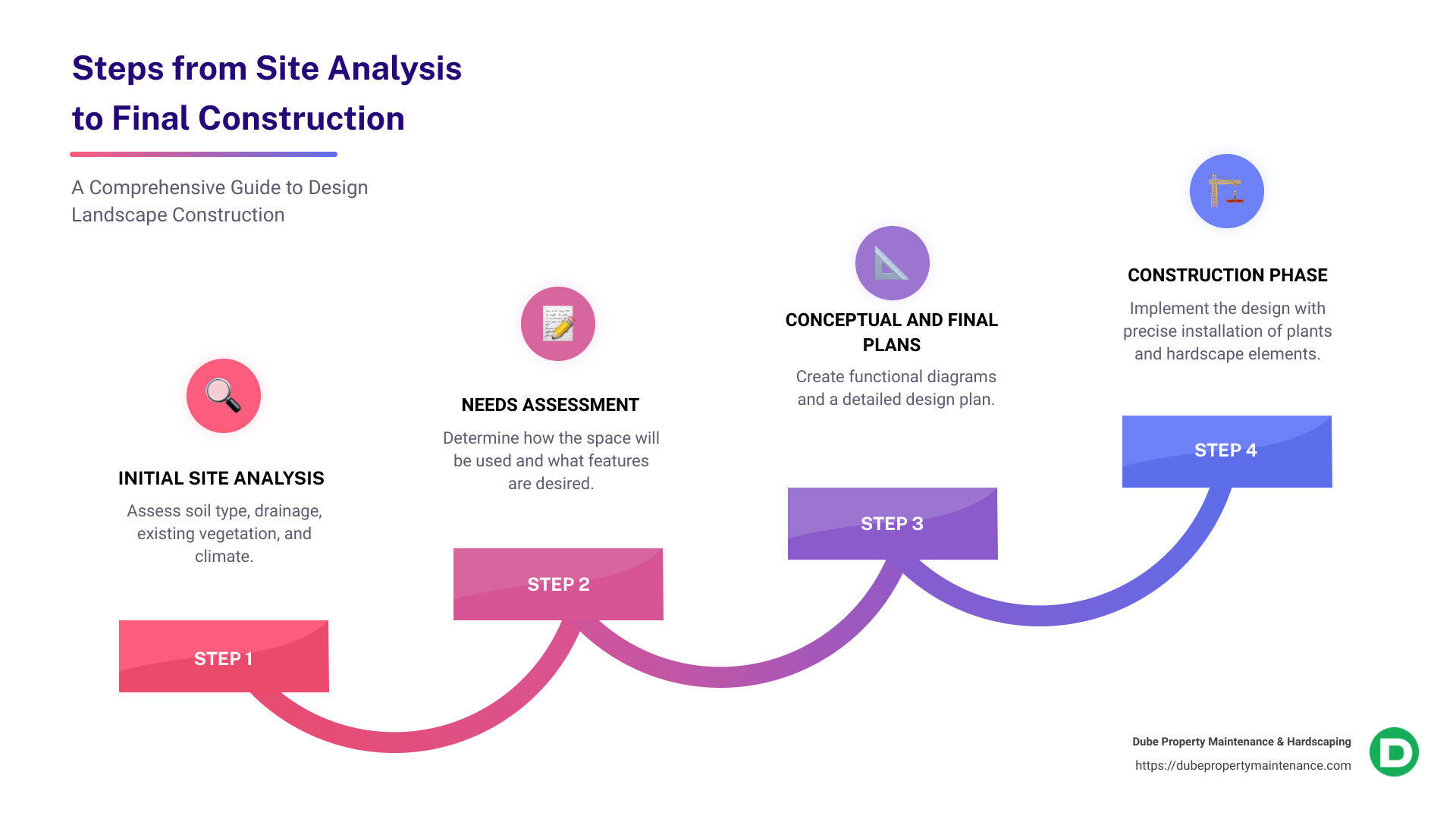
The landscape construction journey starts with an initial consultation and site analysis. This stage is all about understanding your needs and evaluating the site conditions.
Needs Assessment: During the consultation, the designer will ask questions to understand your vision. Do you need a patio for entertaining? A garden for relaxation? Or perhaps a play area for kids? Knowing your priorities helps shape the design.
Site Inventory: Next, the designer conducts a site inventory to assess the existing conditions. They’ll look at the soil type, drainage, climate, and existing vegetation. These factors are crucial for plant selection and placement. For example, a yard with poor drainage will need plants that thrive in wet conditions.
Once the site analysis is complete, the next step is design and budget planning.
Conceptual Plans: The designer creates conceptual plans that outline the layout and features of the landscape. These initial sketches help visualize the design and make necessary adjustments early on.
Cost Estimates: Alongside the conceptual plans, the designer provides cost estimates. This includes the cost of materials, labor, and any additional services. Having a budget in place ensures the project stays within financial limits.
With the design and budget approved, it’s time to finalize the design and prepare for construction.
Blueprints: Detailed blueprints are created, showing the exact placement of plants, structures, and other elements. These plans guide the construction team and ensure everything is built to specifications.
Material Selection: Choosing the right materials is crucial. Whether it’s selecting the type of stone for a walkway or the variety of plants for a garden, each decision impacts the overall look and durability of the landscape.
Permits: Before breaking ground, necessary permits must be obtained. This step ensures the project complies with local regulations and codes.
With these steps completed, your landscape project is ready for the exciting phase of installation.
In the next sections, we’ll explore the implementation phase and how to overcome common challenges in landscape construction.
Once permits are secured and materials are selected, it’s time to bring the design to life. This phase is where the vision becomes reality.
Ground-breaking marks the official start of the construction process. This involves clearing the site, grading the land, and setting up the initial layout. It’s an exciting moment but also one that requires careful planning to avoid future issues.
Construction follows, involving tasks like trenching for irrigation, laying down hardscape elements, and planting. Each step must be monitored closely to ensure everything aligns with the design plan. Regular site visits and inspections help keep the project on track.
Monitoring throughout the construction phase is crucial. It helps catch potential issues early, such as drainage problems or unexpected soil conditions. This proactive approach saves time and money in the long run.
Weather can be a major challenge. Rain, extreme heat, or cold can delay progress. To mitigate weather-related issues, it’s important to have a flexible timeline and contingency plans.
Material delays are another common hurdle. Sometimes, the specific stone or plant variety you want isn’t available. In such cases, having alternative options or suppliers can keep the project moving.
Budget constraints can also pose challenges. It’s essential to stick to the budget while ensuring quality. Regular budget reviews and transparent communication with clients help manage expectations.
Technology has revolutionized landscape construction, making it more efficient and precise.
Software tools help in creating detailed design plans and 3D models. These tools allow clients to visualize the final outcome and make adjustments before construction begins.
Drones offer a bird’s-eye view of the site, which is invaluable for large projects. They help in accurate site analysis and monitoring progress.
Automated machinery like robotic mowers and automated irrigation systems make maintenance easier and more efficient. These technologies ensure the landscape remains in top condition with minimal manual effort.
By leveraging technology and addressing challenges proactively, the transition from design to reality becomes smoother and more efficient.
In the next section, we’ll discuss how to maintain your newly constructed landscape for long-term beauty and functionality.
Once your dream landscape is complete, maintenance is key to keeping it beautiful and functional for years to come. Here are some essential tips:
Irrigation: Proper watering is crucial. Automated irrigation systems can help ensure consistent watering, but it’s important to adjust them seasonally. During hotter months, increase watering frequency. In cooler months, reduce it to prevent overwatering.
Fertilization: Fertilize plants according to their specific needs. Use a balanced fertilizer in the spring and fall to promote healthy growth. Always follow the manufacturer’s instructions to avoid over-fertilizing, which can harm plants.
Pruning: Regular pruning keeps plants healthy and looking their best. Prune dead or diseased branches immediately. For most plants, late winter or early spring is the best time to prune. This encourages new growth and maintains the plant’s shape.
Seasonal Adjustments: Each season brings different challenges. In spring, focus on cleaning up debris and refreshing mulch. Summer requires vigilant watering and pest control. Fall is the time for pruning and preparing plants for winter. In winter, protect sensitive plants from frost and ensure that irrigation systems are properly winterized.
Follow-up Services: Many landscape construction companies offer follow-up services. These can include seasonal clean-ups, fertilization schedules, and irrigation system checks. Taking advantage of these services ensures that your landscape remains in top condition year-round.
Even with the best care, issues can arise. Here’s how to tackle some common problems:
Drainage Problems: Poor drainage can lead to waterlogged soil and plant diseases. Ensure that water flows away from your home and plants. Installing French drains or dry wells can help manage excess water.
Plant Diseases: Keep an eye out for signs of disease, such as discolored leaves or unusual growths. Early detection is key. Remove and dispose of affected plants to prevent the disease from spreading. Using disease-resistant plant varieties can also help.
Hardscape Repairs: Over time, hardscape elements like patios and walkways may crack or settle. Regularly inspect these areas and address any issues promptly. Small cracks can often be repaired with a sealant, while larger problems may require professional help.
By following these guidelines, you can ensure that your landscape remains a beautiful and functional space for years to come.
In the next section, we’ll explore some advanced techniques and technologies that can further enhance your landscape’s longevity and appeal.
At Dube Property Maintenance & Hardscaping, we are committed to turning your landscape dreams into reality. From the initial consultation to the final touches, our team is dedicated to providing top-notch service and craftsmanship in design landscape construction.
We understand that every project is unique. That’s why we tailor our services to meet your specific needs, ensuring that your landscape not only looks stunning but also functions seamlessly. Our team of professionally trained landscapers takes pride in their work, paying meticulous attention to detail to deliver results that exceed your expectations.
Our Commitment to You
Contact Us
Ready to transform your outdoor space? Reach out to us today!
Visit our Landscaping Andover, MA service page for more information, or get in touch with us directly.
Email: [email protected]
Phone: 805-466-6263
Let Dube Property Maintenance & Hardscaping help you create a landscape that you will love for years to come.