

Building a deck around pool can transform your backyard into a stylish and functional space for relaxation and entertainment.
A deck not only improves the aesthetics of your pool area but also offers practical benefits that extend its usability and safety. Here’s a quick overview of the benefits:
Constructing a pool deck is not just about adding a feature to your outdoor space; it’s about creating a more enjoyable, safe, and beautiful home environment. In the sections that follow, we’ll guide you through choosing the right materials, designs, and features to ensure your pool area becomes a true haven for leisure and fun.

Essential deck around pool terms:
– pool deck pavers cost
– installing pavers around swimming pool
– pool deck paving
When it comes to building a deck around pool, the material you choose is key. It affects everything from safety to aesthetics to cost. Let’s explore the most popular options:
Concrete is a popular choice due to its durability and versatility. It’s easy to maintain and can be textured to prevent slipping. Plus, it stays cool underfoot on hot days. Concrete can be customized with various finishes, like stamped or stained concrete, to match any style. While it might seem costly upfront, its long lifespan makes it a cost-effective option over time. Average costs can vary widely based on internet data, with high-end options being at least three times the average pricing.
Natural stone offers a timeless, neat look. Options like granite, limestone, and slate bring unique textures and colors to your pool deck. However, stone can get quite hot in the sun and installation can be labor-intensive, which increases costs. Expect to pay more for this luxurious choice, but enjoy its best beauty and durability. As with other materials, average costs based on internet data can range significantly, with the high end being at least three times the average pricing.
Pavers are versatile and come in many styles and colors. They offer a classic look and are relatively easy to replace if damaged. However, like natural stone, they can heat up quickly. Pavers are a middle-ground option in terms of cost, providing a balance between affordability and aesthetic appeal. Average costs based on internet data show a wide range, with the high end being at least three times the average pricing.
Wood decking, with its natural warmth, is a classic choice. Use water-resistant woods like cedar, ipe, or teak to ensure longevity. Wood needs regular maintenance to prevent water and insect damage, but it offers a cozy and inviting ambiance. Prices vary widely based on wood type, with some exotic woods reaching premium price levels. Average costs based on internet data can vary greatly, with the high end being at least three times the average pricing.
Unglazed tile, such as travertine, is a smart choice for those seeking a cool-to-the-touch surface. It provides a natural look and is less slippery when wet compared to glazed tile. While it might require sealing to maintain its appearance, it offers a blend of beauty and functionality at a moderate cost. Average costs based on internet data can range widely, with the high end being at least three times the average pricing.
Choosing the right decking material involves balancing aesthetics, safety, and budget. Each option has its pros and cons, and understanding these can help you make an informed decision for your poolside paradise. Next, we’ll explore how to build the perfect deck around your pool, considering framing, grading, and safety features.
Constructing a deck around pool areas can transform your backyard into a stunning oasis. But before you start, it’s important to understand the key elements involved: deck framing, grading, zoning restrictions, and safety features.
The foundation of your pool deck is its framing. This involves creating a sturdy base that can support the deck’s weight and withstand the elements. Typically, pressure-treated wood or steel is used for framing due to their strength and resistance to moisture. Ensure your deck framing is securely anchored and level to prevent any future stability issues.
Proper grading is crucial to prevent water accumulation around your deck and pool. The ground should slope away from the pool to ensure effective drainage. This helps prevent water damage and keeps your deck safe and dry. It’s often advisable to consult a professional for grading to avoid costly mistakes.
Before you start building, check local zoning restrictions. Many areas have specific regulations regarding pool decks, including setback requirements and height restrictions. You may need a permit, especially if your deck connects to your home. Visit your local building department’s website for detailed information and ensure compliance with all codes to avoid legal complications.
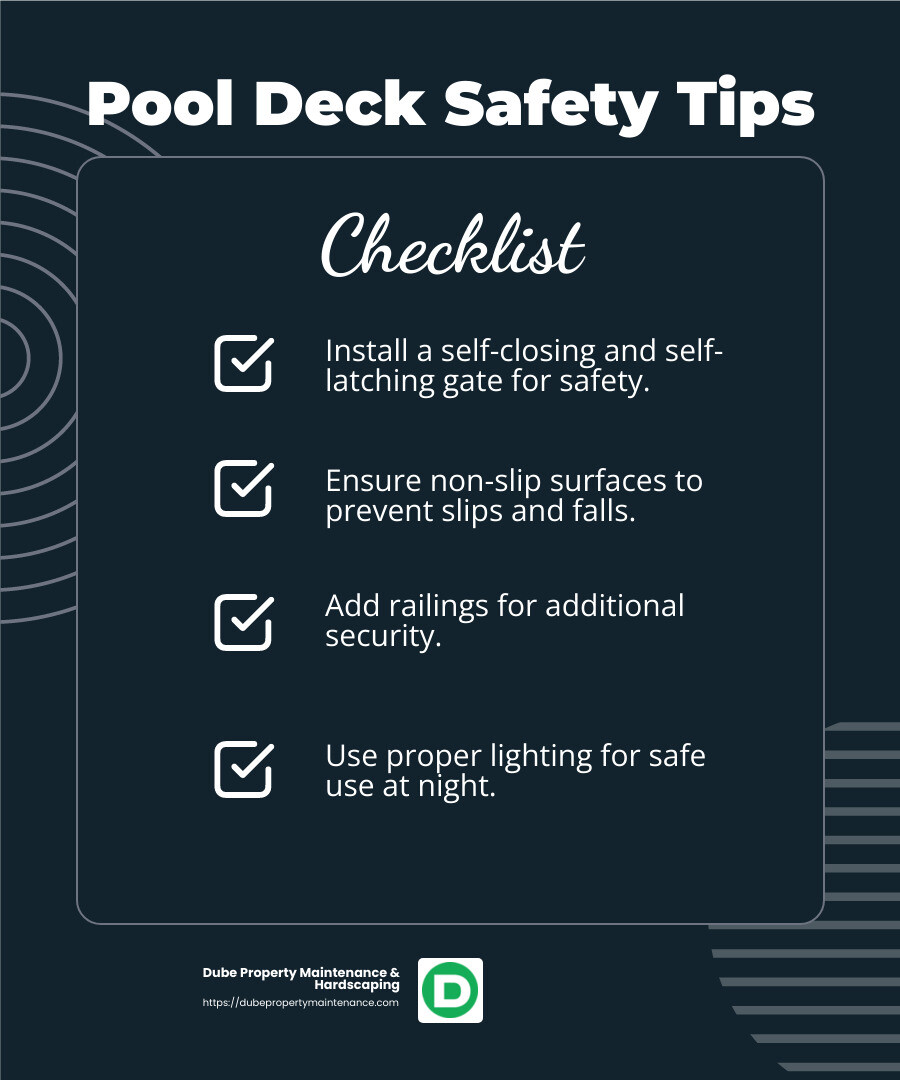
Safety should be a top priority when building a deck around your pool. Consider installing a self-closing, self-latching gate and a perimeter fence to prevent unauthorized access. Non-slip surfaces are essential to reduce the risk of slips and falls, especially when the deck is wet. You might also want to add railings and lighting for improved safety during nighttime use.
By focusing on these elements, you’ll create a safe and functional deck that improves your pool area. Next, we’ll dive into some popular pool deck designs to inspire your project.
When it comes to designing a deck around pool areas, creativity and practicality go hand in hand. Let’s explore five standout designs that can transform your backyard into a functional and beautiful retreat.
One of the most popular designs is a round above ground pool paired with a composite wood deck. Composite wood offers a sustainable and low-maintenance option that mimics the look of natural wood without the upkeep. A unique feature of this design is the addition of walk-in steps. These steps not only improve the aesthetic appeal but also provide easy access, giving the pool an inground feel.
For those looking to blend their pool seamlessly into the landscape, wrapping it with stone and wood is an excellent choice. This design not only improves the pool’s visual appeal but can also increase property value. By using the natural textures of stone and wood, the pool becomes a harmonious part of the environment, offering a rustic and neat look.
A terraced deck design is perfect for homes with challenging landscapes, such as a yard with a septic field. This design cleverly uses the terrain to its advantage by incorporating multiple levels. The terraced look adds depth and dimension to your pool area while also providing distinct zones for lounging and entertaining. This setup ensures that even with space constraints, you can enjoy a full-featured pool deck.
In urban backyards where space is at a premium, a corner pool with terraced steps can be a game-changer. This space-saving design maximizes every inch of your yard. The steps double as seating, making it a versatile solution for small areas. This design is particularly beneficial for narrow lots, allowing you to maintain open space for other activities while enjoying a stylish pool deck.
For larger backyards, a raised deck with a platform offers numerous benefits. This design not only lifts the pool, creating a striking focal point, but also provides practical storage solutions. Filtration equipment can be neatly tucked underneath, keeping it out of sight and protected from the elements. The raised platform also acts as a barrier, enhancing safety for children and pets.
By exploring these designs, you can find inspiration to create a pool deck that suits your needs and improves your outdoor living space. Next, we’ll address some frequently asked questions to help you make informed decisions about your pool deck project.
Absolutely! Adding a deck around pool areas not only improves the aesthetic appeal but also adds functionality and safety. A well-designed deck provides a comfortable space for lounging, entertaining, and even storing pool equipment. It can also increase your property value by creating a cohesive outdoor living space.
When choosing the best material for your pool deck, consider factors like durability, maintenance, and cost. Here’s a quick rundown of popular options:
Each of these materials has its own unique benefits, so your choice will depend on your specific needs and preferences.
The cost of building a deck around pool areas can vary widely depending on the materials used, the size of the deck, and local labor rates. Here’s a general cost range based on internet data:
These prices are averages and not the actual costs for Dube Property Maintenance & Hardscaping. Always consider the long-term maintenance costs as well when budgeting for your pool deck project.
At Dube Property Maintenance & Hardscaping, we understand that creating the perfect outdoor space involves more than just choosing materials or designs. It’s about crafting an environment that reflects your vision and meets your practical needs. With our comprehensive outdoor solutions, we offer expertise that transforms your outdoor areas into stunning and functional spaces.
Our professional team is dedicated to providing high-quality service and attention to detail. Whether it’s designing a deck around pool areas or installing sophisticated hardscaping, our goal is to exceed your expectations. We focus on durability, aesthetics, and safety, ensuring that your pool deck not only looks great but also stands the test of time.
By choosing us, you’re not just getting a service provider; you’re gaining a partner committed to bringing your outdoor dreams to life. From Methuen, MA to surrounding areas, our team is ready to help you create the outdoor oasis you’ve always wanted.
Explore our landscape and hardscape design services to learn more about how we can assist with your next project. Let’s work together to make your outdoor spaces a source of pride and enjoyment for years to come.
