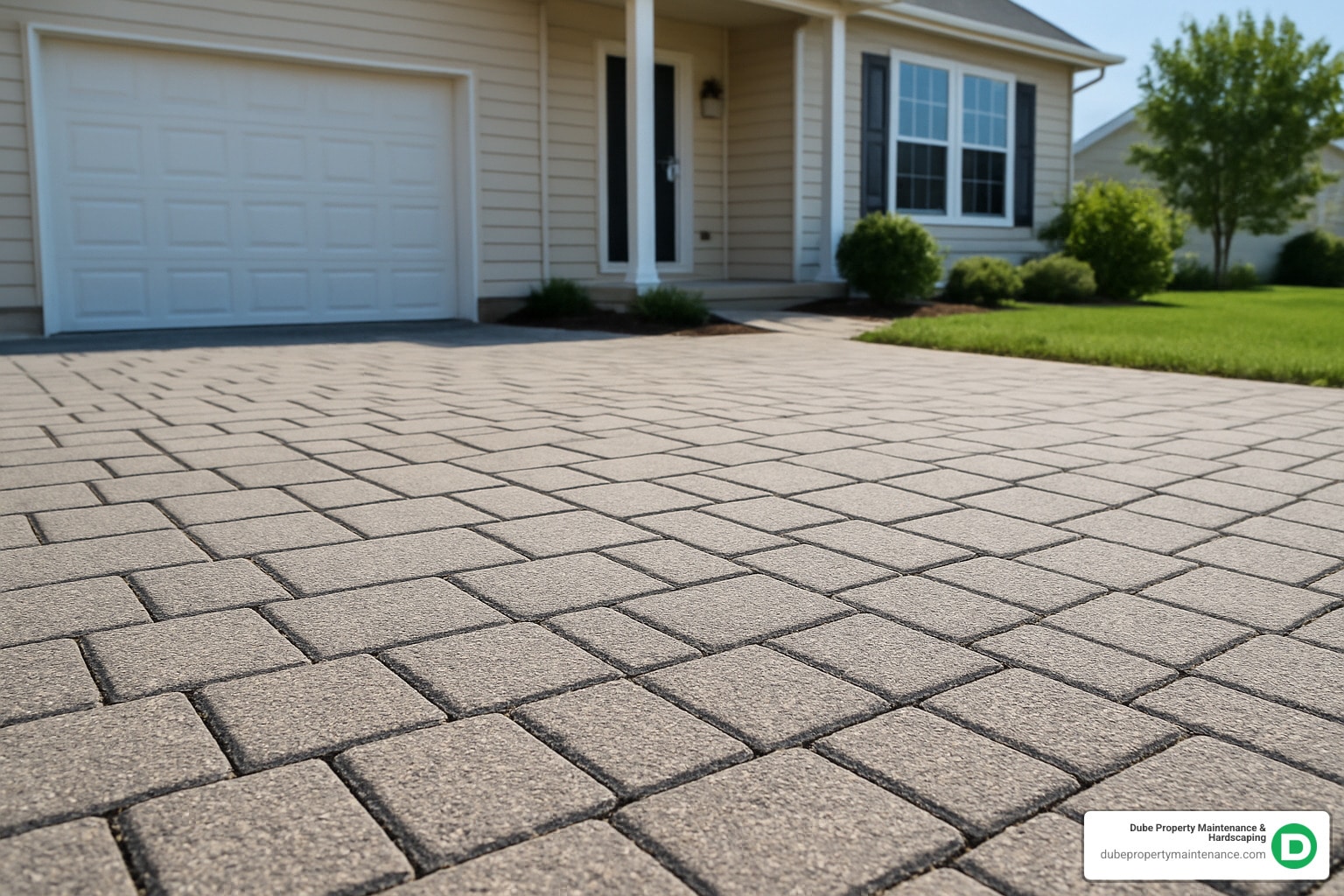

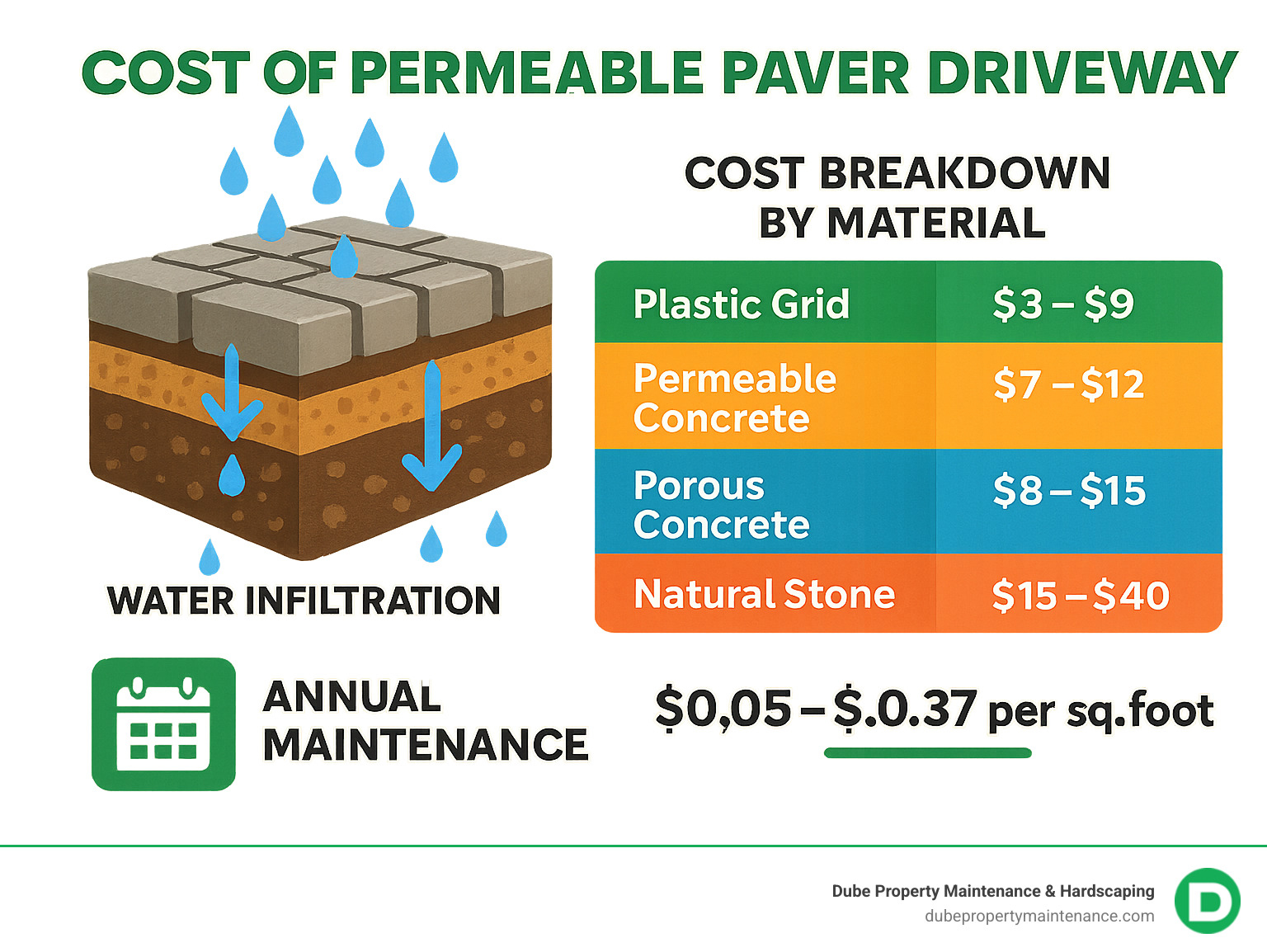
If you’re researching a driveway upgrade, the cost of permeable paver driveway installations ranges from $8 to $40 per square foot, depending on material choice and complexity. For a standard 640 square foot two-car driveway, expect to pay between $5,000 and $12,000 total, with an average cost of $7,500.
| Permeable Paver Type | Cost Per Square Foot | Average 2-Car Driveway Cost |
|---|---|---|
| Plastic Grid Pavers | $3-$9 | $1,920-$5,760 |
| Permeable Interlocking Concrete | $7-$12 | $4,480-$7,680 |
| Porous Concrete | $8-$15 | $5,120-$9,600 |
| Natural Stone Permeable | $15-$40 | $9,600-$25,600 |
Note: These figures represent average costs based on internet data and not actual costs for Dube Property Maintenance and Hardscaping.
Permeable paver driveways have grown increasingly popular among environmentally conscious homeowners looking to manage stormwater runoff while enhancing curb appeal. Unlike traditional concrete or asphalt surfaces that force water to run off into storm drains, permeable systems allow rainwater to pass through the surface and infiltrate the ground below.
This eco-friendly approach not only helps replenish groundwater but can eliminate the need for separate drainage systems—potentially saving $2,000 to $6,500 in additional infrastructure costs. While the upfront investment is typically 10-20% higher than conventional driveways, the environmental benefits and potential long-term savings make them worth considering.
Annual maintenance costs are surprisingly affordable, ranging from just $0.05 to $0.37 per square foot, and with proper care, these systems can last 20-60 years depending on the materials used.
Cost of permeable paver driveway helpful reading:
– cost to install paver driveway
– cost to pave a driveway
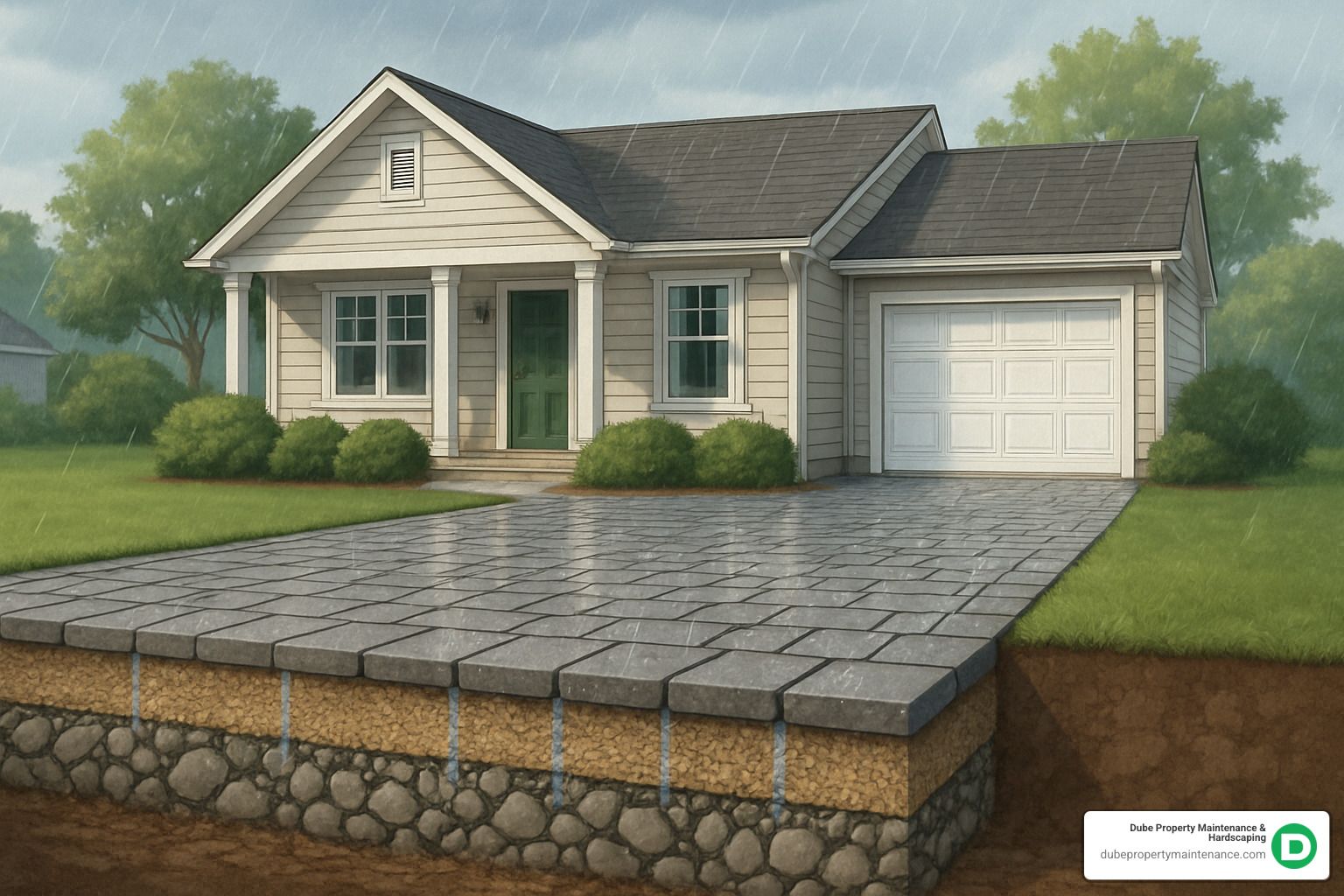
Ever wondered what happens to all that rainwater that hits your driveway? With traditional driveways, it simply washes away, often carrying pollutants straight into our waterways. Permeable paver driveways take a completely different approach—they work with nature, not against it.
These eco-friendly systems are built with a clever layered design that mimics Earth’s natural water filtration:
This thoughtful design allows rainwater to return to the ground naturally, replenishing our precious groundwater supplies instead of overwhelming storm sewers during heavy rainfall.
The environmental impact is substantial. According to scientific research on stormwater reduction, these driveways can reduce runoff by an impressive 50-93% compared to conventional surfaces. That’s a game-changer for preventing neighborhood flooding, reducing erosion, and keeping our local waterways cleaner.
But the benefits don’t stop at water management. These systems also help reduce the urban heat island effect (they stay cooler than concrete or asphalt), require up to 75% less salt during winter months, improve air quality by reducing puddles and spray, and can help homeowners comply with local environmental regulations.
Permeable pavers might look similar to traditional pavers from a distance, but they’re engineered with a crucial difference—they let water pass through rather than run off.
The most common types include void ratio pavers with wider-than-normal joints filled with small stones that create drainage channels between each unit. There are also porous material pavers manufactured with tiny air pockets throughout that allow water to pass directly through the paver itself. And don’t forget grid systems—plastic, concrete, or composite frameworks that can be filled with gravel or even grass for excellent drainage while maintaining a stable surface.
These clever designs typically include void spaces representing 5-15% of the surface area. The result? During heavy downpours, a well-installed permeable system can handle up to 1,000 inches of water per hour—far more than even the most torrential rainstorm will ever deliver.
When you invest in a permeable paver driveway, you’re getting more than just a place to park your car. You’re making a choice that benefits both your property and the broader environment.
From an environmental perspective, these systems are flood-prevention champions. By capturing rainfall where it falls, they dramatically reduce the risk of water pooling in your yard or overwhelming local drainage systems. They support aquifer recharge by allowing water to filter naturally into the ground, helping maintain healthy groundwater levels. Plus, they act as natural filters, capturing up to 80% of heavy metals, oils, and other pollutants before they can reach our waterways.
The practical advantages are just as impressive. These driveways experience less ice buildup in winter because the air trapped within the system helps melt snow and ice faster than traditional pavements. They offer remarkable design flexibility with numerous colors, shapes, and patterns available to complement your home’s architecture. Many homeowners are also pleasantly surprised to learn that their municipality might offer impervious surface credits or reduced stormwater fees for these installations.
As Joe Raboine, Vice President of Design at Oldcastle APG, points out: “Permeable pavers come in several different styles to suit homeowner aesthetics. You can opt for a more traditional-style permeable paver or a grid paver that allows greenery to grow through.”
While I’m enthusiastic about permeable paver driveways, I believe in giving you the full picture. There are some considerations to keep in mind:
The cost of permeable paver driveway installations typically runs 10-20% higher than traditional options upfront. For many homeowners, the environmental benefits and potential long-term savings justify this premium, but it’s important to budget accordingly.
Site conditions matter too. Properties with heavy clay soils may need additional engineering solutions to ensure proper drainage, which can add to the overall project cost.
Maintenance is generally straightforward but necessary. Regular sweeping and occasional cleaning prevents the system from clogging with sediment over time. Think of it like changing your home’s air filter—simple preventive care that keeps everything working properly.
Lastly, while most permeable systems can handle standard vehicles with ease, some lighter-duty options may have lower weight-bearing capacity than traditional concrete. Your contractor can help select the right system for your specific needs.
The good news? With proper design, quality installation, and routine maintenance, these potential drawbacks can be effectively managed—making permeable pavers an excellent choice for environmentally conscious homeowners looking to make a positive impact.
When exploring permeable driveway options, you’ll find a variety of materials that balance functionality, aesthetics, and budget considerations. Each type offers unique benefits that might make it perfect for your specific needs and local climate.
| Material Type | Cost Range (per sq ft) | Lifespan (years) | Best For | Maintenance Level |
|---|---|---|---|---|
| Interlocking Concrete Pavers | $7-$12 | 20-35 | Traditional look, heavy use | Moderate |
| Plastic Grid Systems | $3-$9 | Up to 60 | Budget-conscious, DIY-friendly | Low |
| Porous Concrete | $8-$15 | 20-40 | Modern aesthetic, uniform surface | Moderate |
| Porous Asphalt | $6-$13 | 15-30 | Traditional look, snow regions | Moderate |
| Grass Pavers | $3-$10 | 10-25 | Natural look, light traffic | High |
| Natural Stone Permeable | $15-$40 | 30-50 | Luxury appearance, durability | Low-Moderate |
Note: These figures represent average costs based on internet data and not actual costs for Dube Property Maintenance and Hardscaping.
If you’re looking for that classic driveway appearance with eco-friendly benefits, Permeable Interlocking Concrete Pavers might be your perfect match. These sturdy modular units feature clever spacer nibs that create consistent gaps between each paver. Once installed, these gaps get filled with small, clean-washed stone that allows rainwater to filter through while keeping your driveway stable and strong.
With costs of permeable paver driveway installations using PICP ranging from $7-$12 per square foot, these pavers offer excellent value considering their 20-35 year lifespan. They’re incredibly versatile, coming in countless colors and patterns to complement your home’s architecture. Their impressive strength (8,000-12,000 PSI) means they can handle everything from family sedans to delivery trucks without breaking a sweat.
As Joe Raboine of Oldcastle APG points out, “Certain styles eliminate the need for traditional drainage and detention requirements, which saves on costs long term.” Another practical benefit? If you ever need to access utilities beneath your driveway, these pavers can be removed and reinstalled without leaving unsightly patches.
For the budget-conscious homeowner who still wants environmental benefits, plastic grid systems represent an excellent value. Made from durable high-density polyethylene (often recycled materials), these interlocking grids create a stable framework that you can fill with either decorative gravel or grass for a greener look.
At just $3-$9 per square foot, these systems offer the lowest entry point for permeable driveways. Don’t let the affordable price fool you – these grids can last up to 60 years and handle loads up to 82 tons per square foot! They’re also incredibly DIY-friendly due to their lightweight nature, with many homeowners completing installation in a single weekend.
These systems really shine for secondary driveways, guest parking areas, or properties where you want a more natural appearance. When filled with grass, they create a green driveway that blends beautifully with your landscape while still providing all the stability your vehicles need.
If you prefer the clean, uniform look of traditional driveways but want the environmental benefits of permeability, porous concrete and asphalt deserve your consideration. Unlike their conventional counterparts, these materials are manufactured without fine particles, creating tiny interconnected channels that allow water to flow right through.
Porous concrete offers a sleek, modern appearance at $8-$15 per square foot with a lifespan of 20-40 years. It’s particularly effective in hot climates, as its porous structure absorbs less heat than traditional concrete. The installation requires a substantial base (12″-36″ depending on your soil), ensuring proper drainage and structural support.
Porous asphalt provides that familiar black driveway appearance at a slightly lower cost of permeable paver driveway installation ($6-$13 per square foot). With a 15-30 year lifespan, it performs exceptionally well in regions with heavy snowfall. Material costs run approximately $60-$90 per ton, though both options require specialized installation techniques that make DIY approaches impractical for most homeowners.
Want a driveway that looks more like part of your landscape than a paved surface? Grass pavers offer a unique solution that combines vegetation with surprising strength. Using either concrete or plastic grid systems, these pavers support vehicle weight while allowing grass to grow through the openings.
Priced between $3-$10 per square foot, grass pavers create a natural appearance that seamlessly blends with your yard. They provide excellent cooling effects during summer months and add a touch of green to what would otherwise be another paved surface. As one industry expert humorously notes, “While other homeowners are trying to get rid of moss on their driveway, you can actively encourage foliage growth with grass pavers.”
These systems do require regular mowing and occasional watering, making them better suited for overflow parking or emergency access routes rather than daily-use driveways. With lifespans ranging from 10-25 years for concrete versions to 60 years for plastic ones, they offer both aesthetic appeal and environmental benefits for the right applications.
When planning your eco-friendly driveway, understanding the full cost of permeable paver driveway projects helps you budget realistically. While the materials themselves are a significant chunk of your investment, several other factors play into the final price tag.
Across the country, permeable paver installation typically runs between $8 and $40 per square foot. Most homeowners end up spending in the $10 to $30 range for a complete installation. Why such a wide spread? It reflects the variety of materials available and how much prices can vary depending on where you live.
For a sense of what your specific project might cost, consider these common driveway sizes:
Note: These figures represent average costs based on internet data and not actual costs for Dube Property Maintenance and Hardscaping. Your actual costs might be significantly different depending on your specific situation.
Your total investment typically breaks down with materials taking up 40-60% of the cost, labor accounting for 30-50%, and equipment and miscellaneous expenses making up the remaining 10-20%. This gives you a clearer picture of where your money is going throughout the project.
Your driveway isn’t just about square footage—several key factors can significantly impact what you’ll pay:
Site conditions play a huge role in your final cost. If your property has limited access for equipment, you might see labor costs increase by 10-15%. Removing an old driveway? That’ll add another $1-$3 per square foot. And don’t forget about what’s underneath—poor soil quality might require additional excavation or amendments, while a steep site could need extensive grading that adds $500-$2,000 to your project.
Design choices also affect your bottom line. While basic concrete pavers are budget-friendly, natural stone or specialty systems will cost more. Thinking about a fancy herringbone pattern? Those extra cuts translate to more labor hours. Decorative borders can add $5-$15 per linear foot, and special colors or finishes might bump your material costs by 15-30%.
Where you live matters too. Labor rates vary dramatically across regions (from $5-$11 per square foot just for installation). If the materials you want aren’t locally available, shipping costs will add up. Colder climates require deeper base preparations, and local regulations might dictate specific permit requirements or stormwater management standards.
For a truly accurate estimate that takes all these factors into account, it’s worth scheduling a consultation with a permeable driveway specialist who can assess your property’s unique conditions.
When weighing the cost of permeable paver driveway projects against traditional options, it’s smart to look beyond just the initial price tag:
| Driveway Type | Initial Cost (per sq ft) | Lifespan (years) | Drainage System Needed? | Annual Maintenance Cost |
|---|---|---|---|---|
| Permeable Pavers | $8-$40 | 20-60 | No | $0.05-$0.37/sq ft |
| Standard Concrete | $5-$10 | 20-30 | Yes | $0.10-$0.30/sq ft |
| Asphalt | $3-$7 | 15-20 | Yes | $0.15-$0.40/sq ft |
Note: These figures represent average costs based on internet data and not actual costs for Dube Property Maintenance and Hardscaping.
Yes, permeable systems typically cost 10-20% more upfront, but they offer several financial advantages that can make them more economical in the long run.
You’ll save $2,000-$6,500 by eliminating the need for separate drainage solutions. The way permeable pavers handle freeze-thaw cycles means fewer crack repairs over time. Many permeable systems also outlast traditional pavements when properly maintained, which means you won’t be replacing your driveway as frequently.
There’s also money to be found in many municipal programs that offer incentives for permeable installations (more on this later). And when it comes time to sell your home, eco-friendly features like permeable pavers can improve your property’s resale value—some studies suggest up to 69% ROI.
When you factor in these long-term considerations, the lifetime cost of a permeable paver driveway often proves competitive with—or even less expensive than—traditional options. It’s not just about what you pay today, but what you’ll save tomorrow.
Taking care of your permeable paver driveway doesn’t have to be a headache. In fact, with some simple regular attention, these eco-friendly surfaces can last for decades while keeping their good looks and functionality intact.
The beauty of permeable paver maintenance is its simplicity. Think of it as giving your driveway a little TLC every now and then to keep it performing at its best.
Every few months, take a few minutes to sweep or blow away leaves and debris that might settle between the pavers. This simple step prevents organic matter from decomposing and potentially clogging the system. While you’re at it, pull any weeds that might be trying to make a home in the joints.
Twice a year – typically in spring and fall – it’s worth doing a more thorough cleaning. A shop vacuum works wonderfully for removing finer particles from between pavers, or you can rent a specialized vacuum sweeper for larger areas. After cleaning, you might need to add a bit more clean-washed stone to the joints to maintain proper levels.
“I tell all my clients that maintaining their permeable driveway is like flossing – a little regular attention prevents big problems down the road,” jokes one contractor who specializes in these systems.
When winter arrives, you’ll appreciate one of the hidden benefits of permeable pavers – they naturally melt snow faster than standard pavements. The air circulating through the base drainage layer creates a slight warming effect that helps ice disappear more quickly. When clearing snow, use a rubber-edged blade to avoid damaging the pavers, and remember that you’ll likely need 75% less salt than you would on a traditional driveway.
Important maintenance don’ts: Avoid pressure washing (it can force debris deeper into the system), keep garden soil and mulch away from the edges of your driveway, and skip any sealants that would reduce the surface’s permeability.
The yearly cost to maintain your permeable driveway typically runs between $0.05 and $0.37 per square foot – a small price to pay for preserving your investment.
When properly installed and maintained, the cost of permeable paver driveway systems pays off through impressive longevity. These systems typically outlast traditional paving options, particularly in climates with freeze-thaw cycles that wreak havoc on conventional materials.
Interlocking concrete pavers generally last 20-35 years, while plastic grid systems can survive an impressive 60 years. Porous concrete offers 20-40 years of service, and porous asphalt provides 15-30 years of durability. If you’ve opted for grass pavers, expect 10-25 years from concrete versions and up to 60 years from plastic varieties. Natural stone pavers top the durability chart at 30-50 years of beautiful performance.
“What surprises many of my customers is how well these systems hold up compared to traditional driveways,” says an industry professional. “The flexible design actually handles seasonal ground movement better than rigid pavements.”
For more details on maintaining your driveway investment for maximum lifespan, check out our guide on replacing driveway surfaces.
Looking beyond the initial cost of permeable paver driveway installation reveals several financial benefits that accumulate over time.
Many municipalities offer reduced stormwater utility fees for properties with permeable surfaces – a direct saving that adds up year after year. You’ll also spend less on maintenance compared to traditional surfaces that crack and deteriorate, especially in our New England climate. The natural snow-melting properties mean reduced spending on salt and deicing materials, and you’ll completely avoid the expense of installing and maintaining separate drainage systems.
The environmental benefits translate to financial advantages too. Your property faces decreased risk of water damage from flooding, which can save thousands in potential repairs. If you have a well, the improved groundwater quality benefits your water supply. The cooler surface temperatures of permeable pavers (compared to asphalt) reduce heat island effects and can lower cooling costs for adjacent structures in summer. Plus, the reduced runoff protects your landscape investments from erosion damage.
Joe Raboine of Oldcastle APG puts it well: “They help alleviate the effects of stormwater runoff or drought conditions, which benefits both homeowners and the environment.”
When calculating the true return on investment for your permeable paver driveway, these long-term savings make the initial price tag much easier to justify. A well-maintained system not only improves your property’s curb appeal but continues paying dividends through reduced maintenance costs and environmental benefits for decades to come.
Making informed decisions about installation, understanding permit requirements, and taking advantage of available incentives can significantly impact the cost of permeable paver driveway projects.
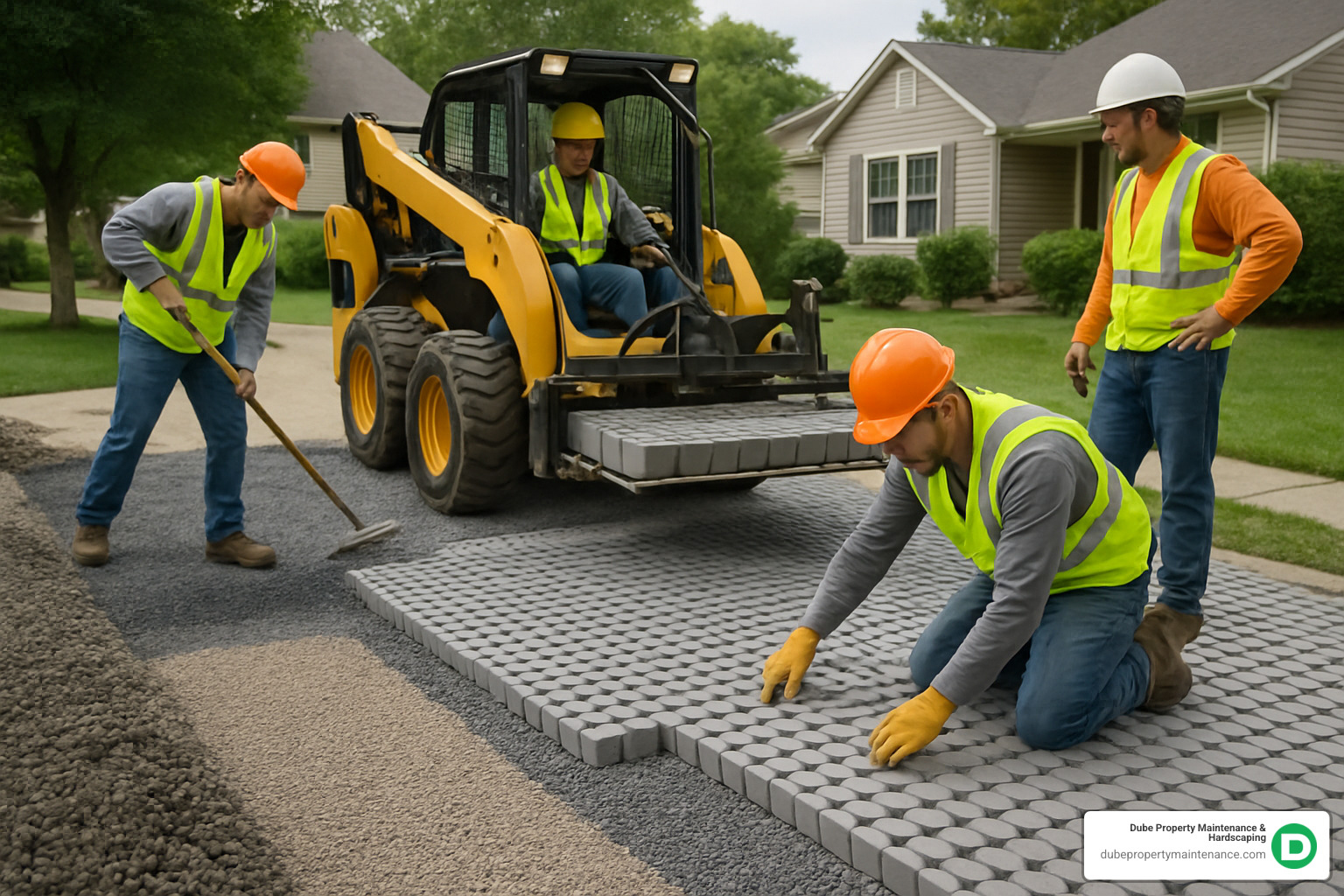
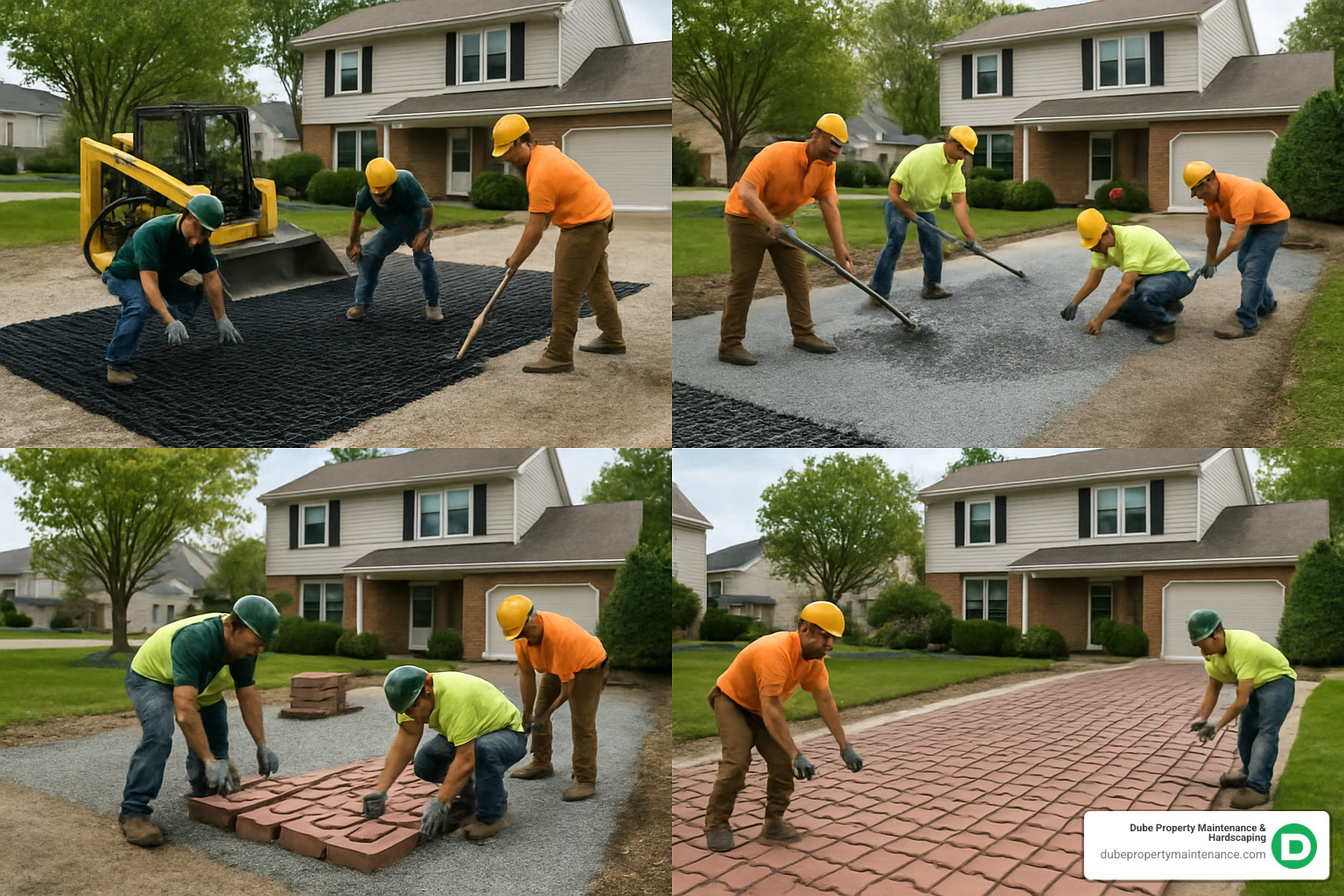
Let’s be honest – while the DIY route might seem tempting to save on labor costs, permeable paver installation isn’t your typical weekend project. Some systems, particularly plastic grid options, are more DIY-friendly than others, but all require significant skill and proper equipment.
If you’re an experienced DIYer with access to equipment, plastic grid systems might be within your reach. They’re relatively lightweight and the installation process is more straightforward than other options. Interlocking concrete pavers, on the other hand, present a much steeper challenge. And porous concrete or asphalt? Those are definitely best left to the professionals with specialized equipment and expertise.
Before you decide to tackle this project yourself, consider what you’ll need: a mini-excavator or skid steer for excavation, laser level for proper grading, plate compactor for the base, specialized cutting tools, plus geotextile fabric and edge restraints. That’s quite a shopping (or rental) list!
As Joe Raboine wisely points out: “Labor is only a small portion of the cost of driveway pavers; you won’t be saving much money by doing it yourself.” When you factor in equipment rental costs and the time investment, the savings often evaporate quickly.
Perhaps the most important consideration is that most manufacturer warranties require professional installation. Improper base preparation – the most common DIY misstep – can lead to premature failure of your beautiful new driveway. And moving and properly compacting 10-15 tons of base material is no small feat!
For most homeowners, professional installation offers peace of mind through proper execution, warranty protection, and freeing up your weekends for more enjoyable activities.
Finding the right contractor can make all the difference between a permeable paver driveway that lasts decades and one that develops problems within a few years. When vetting potential installers, look for credentials that matter: proper licensing and insurance, ICPI certification (Interlocking Concrete Pavement Institute), and specific experience with permeable systems.
Don’t be shy about asking tough questions during your consultation. How many permeable driveways have they installed? What base depth do they recommend for your specific soil conditions? Will they provide a detailed written scope and warranty? Understanding their maintenance recommendations and property protection plans during installation can also reveal their level of professionalism.
Watch out for warning signs that might indicate trouble ahead. Unusually low bids often mean corners will be cut somewhere – usually in the crucial base preparation that you can’t see but will definitely experience problems with later. Other red flags include reluctance to pull permits, vague knowledge about proper installation techniques, no references for similar projects, or demands for large upfront payments.
Permeable paver installation is a specialized skill – not all paver contractors have experience with the unique requirements of permeable systems. Take your time finding someone with the right expertise by checking out our guide to paver installation companies near me.
Navigating the permit landscape can feel overwhelming, but it’s an essential part of your project planning. Most municipalities require permits for new driveways or significant renovations, though requirements vary widely from one location to another.
You’ll typically need a building permit at minimum, with costs ranging from $50 to $200 in most areas. If you’re in a region with strict stormwater management regulations, you might also need specific stormwater permits. Historic districts often have additional approval requirements to maintain neighborhood character, and don’t forget to check with your HOA if you have one – many have specific guidelines about acceptable driveway materials and appearances.
Larger projects sometimes require engineering plans, which can add $300-$1,000 to your budget. This is another area where working with an experienced local contractor pays dividends – they’ll likely be familiar with local requirements and can often handle the application process as part of their service, saving you time and potential headaches.
Here’s some good news about the cost of permeable paver driveway projects – you might not have to bear the full expense yourself! Many municipalities and utilities offer financial incentives that can significantly reduce your out-of-pocket costs.
Some cities offer impressive rebates – up to $12 per square foot in certain areas – for installing permeable surfaces. These programs recognize the public benefit of reduced stormwater runoff and improved water quality. Beyond one-time rebates, you might qualify for ongoing stormwater fee credits on your utility bills, state income tax credits for green infrastructure, water conservation grants (especially in drought-prone regions), or watershed protection program funding.
To uncover these potential savings, start by contacting your local stormwater utility or environmental department. State environmental protection agencies and watershed conservation organizations are also excellent resources. Your contractor might be aware of local programs too – experienced permeable paver installers often help clients steer available incentives.
If you still need financial assistance after exploring incentive options, consider home equity loans, home improvement loans, or contractor financing programs. Many homeowners find these options make permeable paver driveways more immediately affordable while the long-term benefits accumulate.
Worried about fitting a permeable paver driveway into your budget? There are several smart strategies to reduce costs while maintaining quality and environmental benefits.
Get creative with your design approach. A hybrid installation that uses permeable pavers for borders and water-collection areas with less expensive materials in the center can dramatically reduce costs. Consider a phased installation if your budget is tight – complete the project in stages over time. Choosing simple laying patterns requires fewer cuts and therefore less labor, while sticking with standard colors rather than custom blends can save on material costs.
Your material choices significantly impact the bottom line too. Concrete pavers cost substantially less than natural stone while still offering excellent performance. For the most economical option, explore plastic grid systems filled with gravel. Some manufacturers also offer discounted pavers made with recycled content – good for both your wallet and the environment.
Timing your project strategically can yield savings as well. Schedule work during slower periods (November-January in many regions) when contractors might offer discounts to keep their crews busy. If you’re handy, consider handling the demolition and excavation yourself, then hiring professionals only for the technical installation work. And if your neighbors are also considering paver projects, coordinate for potential group discounts on materials.
With thoughtful planning and these budget-friendly approaches, you can often reduce your permeable paver driveway costs by 10-30% without compromising on quality or environmental benefits. The EPA guidance on permeable pavement offers additional resources for making informed decisions about your project.
When homeowners invest in a permeable paver driveway, they’re often pleasantly surprised by the impressive lifespan these systems offer. With proper installation and regular maintenance, your permeable driveway can serve your home for 20-60 years, depending on which material you choose.
The most durable options are plastic grid systems, which can last an impressive 60 years under optimal conditions. Interlocking concrete pavers typically provide 20-35 years of reliable service, while natural stone options fall somewhere in between at 30-50 years. When you compare these figures to traditional concrete (20-30 years) or asphalt (15-20 years), the longevity advantage becomes clear.
The secret to maximizing your driveway’s lifespan isn’t complicated, but it does require consistency. Start with professional installation that includes proper base preparation – this foundation quite literally supports everything else. Then, stick to a regular maintenance schedule to prevent clogging, address any damage promptly, and be mindful not to exceed the weight capacity your system was designed to handle.
As one homeowner from Massachusetts told us, “I’ve had my permeable driveway for 12 years now, and it still looks almost new. The annual maintenance is so simple, and I love knowing I’m doing something good for the environment while protecting my home from water issues.”
Yes, when looking solely at initial installation costs, permeable pavers typically come with a 10-20% premium compared to traditional asphalt or concrete driveways. However, focusing only on the upfront cost of permeable paver driveway projects misses the bigger financial picture.
Consider these long-term financial advantages:
First, permeable systems eliminate the need for separate drainage solutions, which can save you $2,000-$6,500 right off the bat. They also tend to require fewer repairs throughout their lifetime, especially in areas with freeze-thaw cycles that wreak havoc on traditional surfaces.
Many municipalities offer substantial rebates for installing permeable surfaces as part of their stormwater management programs. These incentives can significantly offset the initial price difference – sometimes covering up to 75% of the cost difference.
Perhaps most importantly, permeable pavers typically outlast traditional surfaces by 5-15 years or more. When you amortize the cost over the full lifespan of your driveway, the annual expense often works out to be similar or even lower than conventional options.
As one contractor puts it: “I always tell my clients to think of permeable pavers as buying a quality tool. You pay a bit more upfront, but you’re still using it long after the cheaper option would have needed replacement.”
The good news is that maintaining your permeable paver driveway doesn’t require an arsenal of specialized equipment. For most routine care, everyday tools you likely already own will do the job perfectly:
Your trusty leaf blower or regular broom works wonderfully for removing debris and preventing it from working into the joints. A standard garden hose is perfect for occasional rinsing, especially after pollen season or when leaves have fallen. And simple hand tools are all you need for the occasional weed that might pop up between pavers.
For optimal long-term performance, professionals recommend a more thorough cleaning twice a year using a vacuum sweeper. While you can rent this equipment if you’re the DIY type, many homeowners find it more convenient and effective to hire a professional service for this bi-annual task. These services typically cost between $0.25-$0.50 per square foot – a small price to pay for maintaining your driveway’s permeability and appearance.
You’ll also want to keep some replacement joint material (clean-washed stone) on hand. Every few years, some areas may need replenishing due to natural settlement or after thorough cleaning. A 50-pound bag typically costs $30-$50 and covers approximately 50-75 square feet of joints.
As one happy permeable driveway owner shared: “I was worried maintenance would be complicated, but it’s actually simpler than my old concrete driveway was. No more power washing or crack repairs – just a quick sweep now and then, and it looks great year-round.”
The cost of permeable paver driveway installations represents an investment that pays dividends for both your property and our shared environment. While the initial price tag of $8 to $40 per square foot might cause a bit of sticker shock compared to traditional options, there’s much more to the story than just upfront costs. For most homeowners, a typical two-car driveway runs between $5,000 and $12,000 – but what you’re getting goes far beyond just a place to park your car.
Think of your permeable driveway as a silent environmental hero. Every rainfall becomes an opportunity to replenish groundwater rather than contributing to neighborhood flooding. Those summer heat waves? Your driveway won’t be adding to the problem by absorbing and radiating heat like traditional asphalt. And that separate drainage system you might need with a conventional driveway? You can often cross that expense right off your list.
With proper care, these eco-friendly systems reward your investment with impressive longevity – anywhere from 20 to 60 years depending on the materials you choose. The maintenance is surprisingly simple too, requiring just basic seasonal attention to keep performing at its best.
When planning your budget, remember to consider the full picture:
First, explore the wide range of material options available. The difference between choosing plastic grid systems versus premium natural stone can literally save you thousands while still delivering environmental benefits.
Your property’s unique characteristics matter too. That steep slope or clay soil might require some additional engineering, but an experienced contractor can help steer these challenges cost-effectively.
Don’t leave money on the table! Many local governments and utilities offer substantial rebates for installing permeable surfaces. Some municipalities provide up to $12 per square foot in incentives – potentially covering a significant portion of your investment.
At Dube Property Maintenance & Hardscaping, we’ve helped countless homeowners throughout Northeastern Massachusetts and Southern New Hampshire transform their properties with sustainable outdoor solutions. Our team brings specialized experience with permeable paver installations, guiding you through material selection, navigating permit requirements, and identifying potential cost-saving incentives.
Your environmentally friendly driveway doesn’t just add curb appeal – it makes a statement about your values while functioning beautifully for decades to come. For more information or to schedule a consultation, visit our cost to install paver driveway page or reach out directly. We’re here to help you create a driveway that works in harmony with nature while meeting your practical needs.