
Artificial grass over concrete is one of the fastest, most practical ways to turn a dull patio, balcony, pool deck, or rooftop into a clean, comfortable outdoor living space — without tearing anything up.
Quick answer: Can you install artificial grass over concrete?
That’s the short version. But getting it right — especially in areas like Methuen, MA, Andover, or Salem, NH, where freeze-thaw cycles and wet springs can stress a poorly prepped surface — takes more than just rolling out a mat and gluing the edges.
Skipping steps like drainage planning or proper adhesive compression are the most common reasons installations fail within the first year. The good news? Those mistakes are completely avoidable.
This guide walks you through everything: surface prep, drainage, underlayment, adhesive technique, costs, and long-term care.
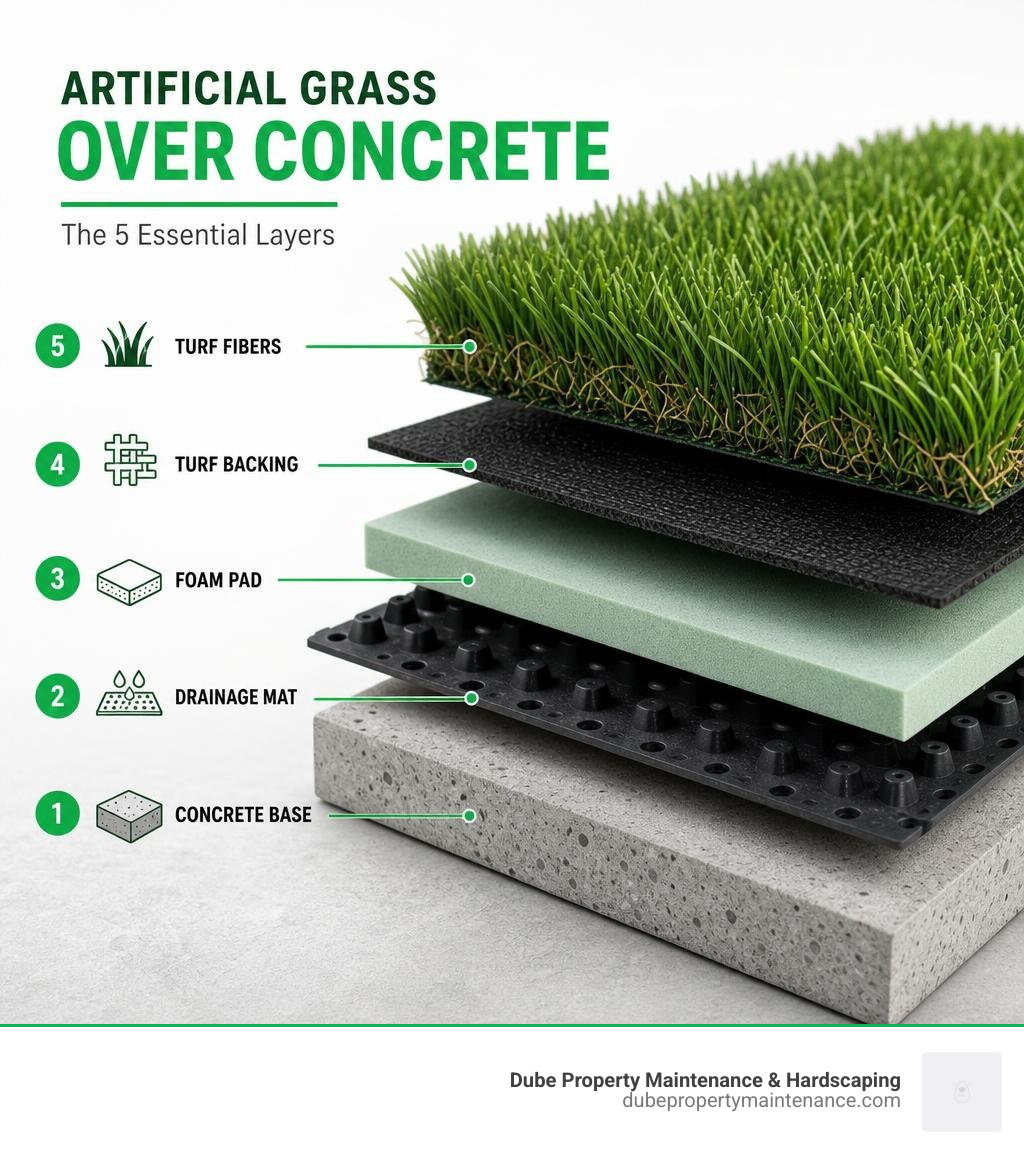
Absolutely. In fact, utilizing an existing concrete slab as a foundation for your synthetic lawn has several major advantages over traditional soil-based installations. Because concrete is already compacted and level, it eliminates the need for heavy excavation, hauling away tons of dirt, and importing crushed stone sub-bases.
When you install artificial grass over concrete, you gain an incredibly durable, year-round green space. Premium synthetic turf systems are designed to withstand heavy foot traffic, intense UV exposure, and the harsh New England winters of the Merrimack Valley. According to industry data, turf installed over concrete can easily last 15 to 20 years with minimal maintenance.
Beyond longevity, the benefits of converting hard, gray concrete into a vibrant green oasis are substantial:
To understand all the design possibilities and structural benefits of this transition, you can explore this Can You Install Artificial Grass Over Concrete? (Full Guide) for deeper technical insights.
You cannot simply roll out synthetic grass like a living room rug and expect it to look or perform well. The secret to a flawless, long-lasting installation lies entirely in the preparation of the concrete substrate.
Before any turf is laid, the concrete must undergo a thorough inspection and preparation phase:
Unlike soil, solid concrete does not naturally absorb water. Therefore, managing water runoff is the single most critical factor in a successful concrete turf installation. If water has nowhere to go, it will trap moisture beneath the backing, rotting the adhesive and creating a breeding ground for mold, mildew, and bacteria.
First, check the natural slope of your concrete. Standard patios and pool decks are built with a 1% to 2% slope to direct water away from residential structures. You can easily test this by spraying the bare concrete with a garden hose and watching where the water flows.
If you discover low spots or areas where water pools, you must implement active drainage solutions:
For a detailed breakdown of how to test and address these issues, refer to this practical guide on How to Install Artificial Grass on Concrete.
Installing synthetic turf directly onto hard concrete is not recommended. Over time, the rough texture of the concrete will act like sandpaper against the backing of the turf, causing it to wear down prematurely. Furthermore, a direct-to-concrete install feels incredibly hard underfoot and can be dangerous if children fall.
To prevent this, we install a high-quality underlayment. The two primary options are closed-cell foam shock pads and plastic drainage tiles:
| Underlayment Type | Primary Material | Thickness Range | Best Used For | Key Benefits |
|---|---|---|---|---|
| Foam Shock Pads | Closed-cell polyethylene | 5mm – 15mm | Playgrounds, family patios, recreational areas | Excellent shock absorption, soft underfoot feel, protects turf backing |
| Drainage Tiles/Mats | Rigid perforated plastic | 1/2″ – 1″ | Flat balconies, pet runs, rooftops, pool surrounds | Maximum lateral water flow, prevents pooling, highly durable |
For the ultimate setup, many homeowners choose a combination pad—a perforated foam shock pad that provides both cushion and drainage. This ensures the turf feels like a natural, springy lawn while allowing water to escape freely.

While a small, simple concrete step might seem manageable, executing a flawless installation over a large patio or pool deck is a highly technical process. Our professional crews in Methuen, MA and Pelham, NH follow a rigorous, multi-step process to ensure a beautiful, long-lasting finish:
The edges and seams are the most common failure points in any synthetic turf installation. If the perimeter is not secured with absolute precision, moisture and temperature fluctuations will cause the edges to curl, creating a major tripping hazard.
To ensure your installation stands the test of time, we utilize specialized tools and strict curing protocols:

When planning a synthetic turf project in Massachusetts or New Hampshire, regional climate conditions must dictate your material choices. In towns like Andover, MA and Salem, NH, our soils and hardscapes experience dramatic freeze-thaw cycles.
If water gets trapped beneath your turf on a concrete pad during a freezing winter night, it will expand, cracking the concrete and breaking the adhesive bond. This is why investing in high-drainage, premium turf with a robust backing and a dedicated drainage underlayment is absolutely essential for our region.
Additionally, we highly recommend incorporating these projects into your broader outdoor design plans. Combining your synthetic lawn with professional hardscaping services—such as custom stone borders or paver pathways—creates a stunning, cohesive look.
The total cost of installing synthetic turf over concrete depends on several variables, including the condition of your existing concrete, the quality of the turf selected, the underlayment requirements, and the overall complexity of the layout.
Please note: The pricing ranges listed below represent average industry costs compiled from publicly available online data. They do not reflect the actual rates or guaranteed pricing of Dube Property Maintenance & Hardscaping.
Based on general online industry averages, the cost to install synthetic turf over an existing concrete base typically ranges from $22.00 to $65.00+ per square foot.
One of the greatest joys of artificial grass over concrete is how incredibly easy it is to maintain. However, “low maintenance” does not mean “no maintenance.” To keep your turf looking lush, vibrant, and odor-free for its entire 15-to-20-year lifespan, follow these simple care guidelines:
Yes, a shock pad underlayment is highly recommended. Concrete is a completely unforgiving, rock-hard surface. Installing turf directly over it results in a stiff, uncomfortable feel underfoot. A shock pad protects the backing of your turf from abrasive wear against the concrete, provides essential safety cushioning for children and pets, and dramatically improves the overall comfort of your outdoor space.
Water drains through the perforated backing of the synthetic turf. Once it passes through the turf, it hits the concrete base. If the concrete has a natural slope, the water will run laterally off the sides. If the concrete is flat or has low spots, a perforated drainage tile system or a series of drilled drainage holes must be installed to prevent water from pooling and causing mold.
While it is technically possible to install turf yourself on a very small, flat, uncomplicated concrete slab (like a single step or a small landing), we strongly advise hiring a professional for larger areas. Managing complex drainage issues, applying self-leveling compounds, cutting seams seamlessly, and applying the precise compression force required for a permanent adhesive bond are incredibly difficult tasks. A poor DIY install often leads to lifting edges, visible seams, trapped water, and voided product warranties.
Converting your cold, gray concrete patio, balcony, or pool deck into a lush, evergreen canopy of synthetic turf is one of the best investments you can make for your property. By opting for a professional installation, you ensure that your new lawn is perfectly sloped, beautifully seamed, and built to withstand the harshest New England winters for decades to come.
At Dube Property Maintenance & Hardscaping, based in Methuen, MA, we pride ourselves on delivering comprehensive, high-quality outdoor solutions. From initial concrete assessment and advanced drainage design to precision turf laying and custom hardscaping borders, our professional team serves homeowners and businesses throughout the Merrimack Valley, including Pelham, NH, Andover, MA, and Salem, NH.
Beyond synthetic turf, we provide year-round landscape construction and comprehensive lawn care services to keep your entire property looking its absolute best.
Ready to transform your concrete into a vibrant, maintenance-free oasis?
Contact us today at +978-689-0612 or fill out our online contact us form to schedule your professional consultation!
