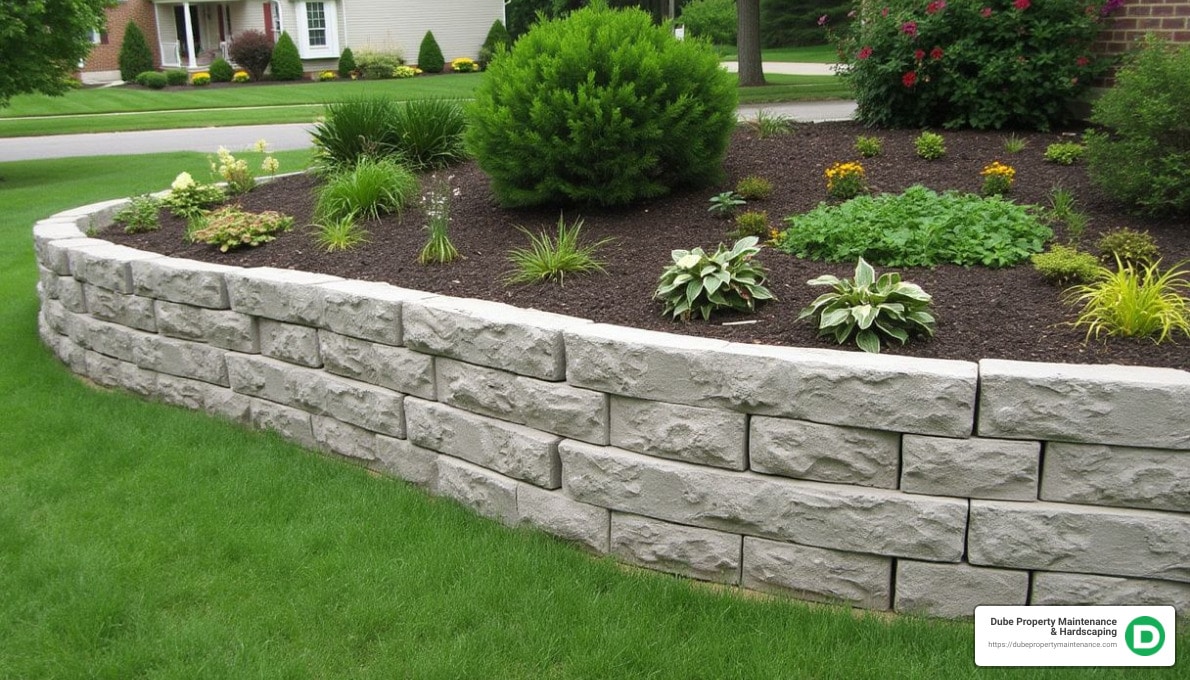

Concrete retaining wall block is a versatile hardscape feature that not only helps manage soil erosion and water runoff but also adds a touch of elegance to your outdoor space. Whether you’re a homeowner looking to beautify your garden or a business owner aiming to create a welcoming outdoor area, these blocks offer a perfect blend of functionality and aesthetic appeal.
Quick Benefits of Concrete Retaining Wall Blocks:
– Prevents soil erosion: Keeps your landscape stable and reduces erosion risks.
– Improves drainage: Efficiently manages water runoff and minimizes water damage.
– Improves aesthetics: Provides a clean, modern look that can be custom to any design.
– Low maintenance: Long-lasting and requires minimal upkeep compared to other materials.
Concrete retaining wall blocks are a crucial part of any landscape improvement plan. They help shape your terrain, create distinct garden areas, and provide essential structural support. From creating terraced gardens to preventing soil erosion on slopes, these blocks can transform any outdoor space into a functional and neat area.
Concrete retaining wall block terms simplified:
– how to build a landscape block retaining wall
– interlocking retaining wall blocks
When it comes to concrete retaining wall blocks, there are several types to consider, each with its own set of benefits. Let’s explore the three main types: poured concrete, interlocking blocks, and large concrete blocks.
Poured concrete is a cost-effective option that provides a uniform and sleek look. This type of retaining wall is created by pouring concrete into a mold on-site, allowing for a seamless and continuous structure.
Materials: Poured concrete walls are made from a mix of cement, sand, gravel, and water. This mixture is poured into forms and left to cure, resulting in a solid, monolithic wall.
Durability: These walls are highly durable and can withstand significant pressure from soil and water. They are less likely to crack or shift over time compared to other materials.
Aesthetics: Poured concrete offers a clean and modern appearance. It can be textured or colored to match your landscape design.
Cost-effective: Poured concrete is generally more affordable than other materials due to its ease of installation and the availability of raw materials.
Interlocking concrete blocks are designed for ease of installation and flexible design. These blocks “lock” together, providing a sturdy and stable structure without the need for mortar.
Materials: Made from high-strength concrete, these blocks have a unique shape that allows them to fit together securely.
Durability: Interlocking blocks are very durable and can handle heavy loads. They are designed to resist movement and erosion, making them ideal for retaining walls.
Aesthetics: These blocks come in various colors, textures, and shapes, allowing for creative and visually appealing designs. You can easily customize your wall to match the rest of your landscape.
Ease of installation: One of the biggest advantages of interlocking blocks is their straightforward installation process. They can be assembled quickly, saving both time and labor costs.
Large concrete blocks, often referred to as “big blocks,” are suitable for large-scale projects requiring high stability.
Materials: These blocks are made from dense, heavy concrete, providing exceptional strength and stability.
Durability: Large concrete blocks are extremely durable and can support massive amounts of weight. They are ideal for retaining walls that need to withstand significant pressure from soil and water.
Aesthetics: While they may not offer as many design options as interlocking blocks, large concrete blocks can still be textured or colored to improve their appearance. They provide a robust and industrial look that can be appealing in certain settings.
Suitable for large projects: Due to their size and strength, large concrete blocks are perfect for large-scale retaining wall projects. They offer high stability and are less likely to shift or settle over time.
By understanding the different types of concrete retaining wall blocks, you can select the best option to meet your project’s needs. Whether you prioritize cost, durability, or aesthetic appeal, there’s a concrete block solution for every landscape.
When planning a retaining wall project, understanding the cost per square foot is crucial for effective budgeting. Concrete retaining wall blocks generally range from $16 to $30 per square foot. This includes the cost of the blocks themselves and may vary based on the design and texture you choose.
For example, decorative blocks can cost around $12 per block, while plain gray concrete blocks might be as low as $3.40 per block.
Labor costs also play a significant role. Hiring a professional to install a retaining wall can cost between $50 to $75 per hour. If your project requires a structural engineer, expect to pay $100 to $200 per hour for their expertise.
When comparing concrete blocks to other materials like wood, stone, and metal, several factors come into play: cost, durability, and maintenance.
Wood retaining walls are often the least expensive, ranging from $10 to $28 per square foot. However, they require regular maintenance and are prone to rot and insect damage.
Natural stone walls offer a timeless look but come with a higher price tag, typically $25 to $75 per square foot. They are highly durable and require less maintenance than wood, but installation can be labor-intensive.
Metal retaining walls, such as those made from steel, are durable and resilient. Costs for metal walls can range significantly, from $15 to $150 per square foot, depending on the type of metal used. For instance, COR-TEN® steel walls cost between $35 and $135 per square foot.
Installation costs for concrete retaining wall blocks can vary based on the complexity of the project and the type of blocks used. Interlocking blocks, for example, are easier and faster to install, potentially reducing labor costs.
Here’s a breakdown of what you might expect to spend:
In summary, while the initial costs of concrete blocks might be higher than wood, they offer greater durability and lower maintenance. Natural stone provides an neat look but at a higher price, and metal walls offer exceptional durability with a wide cost range.
By considering these factors, you can make an informed decision that balances cost with the long-term benefits of your retaining wall.
When installing a concrete retaining wall block, proper preparation and techniques can make a world of difference. Here are some crucial tips to ensure your project is successful.
Good drainage is essential. Without it, water can build up behind the wall, increasing pressure and causing potential failure.
Steps for ensuring proper drainage:
Proper drainage not only prevents erosion but also extends the longevity of your retaining wall.
Accurate leveling and alignment are key for both functionality and aesthetics.
Steps to achieve perfect leveling and alignment:
These steps ensure your wall is not only sturdy but also visually appealing.
While DIY projects can be rewarding, consulting with a professional can save time and prevent costly mistakes.
When to seek professional help:
To maximize the lifespan of your retaining wall, follow these best practices:
By following these tips, your concrete retaining wall block installation will be both durable and beautiful, enhancing your landscape for years to come.
When it comes to cost, concrete retaining wall blocks can be more economical than poured concrete walls, depending on the project scope. The cost per square foot for concrete blocks ranges from $1,000 to $2,300 for a DIY project, and $2,200 to $4,000 for professional installation.
In comparison, poured concrete walls can be more expensive due to higher labor costs and the need for additional materials like forms and reinforcements.
The best block for a retaining wall depends on your specific needs.
For most homeowners, concrete blocks are a popular choice due to their balance of cost, durability, and aesthetic options.
Absolutely, you can build a retaining wall with concrete blocks, and many DIY enthusiasts take on this project.
Steps for a DIY retaining wall:
For walls over 4 feet high, or with complex designs, it’s best to consult with a professional to ensure stability and compliance with local regulations.
By following these steps, you can create a functional and visually appealing retaining wall with concrete retaining wall blocks.
Concrete retaining wall blocks offer a range of benefits that make them an excellent choice for enhancing your outdoor space. Let’s explore how they contribute to erosion control and aesthetic appeal.
One of the primary functions of a retaining wall is to prevent soil erosion. Concrete retaining wall blocks are particularly effective at this. They stabilize the soil, making them ideal for sloped landscapes.
Concrete retaining wall blocks aren’t just functional; they also improve the visual appeal of your outdoor spaces.
Concrete retaining wall blocks are not just about looks; they add significant functionality to your landscape.
Retaining walls made from concrete blocks can lift the overall look and feel of your landscape.
Concrete retaining wall blocks offer a blend of functionality and aesthetic appeal that can significantly improve your landscape. Whether you’re looking to control erosion, add visual interest, or increase property value, these blocks are a versatile and effective solution.
Choosing concrete retaining wall blocks is a long-term investment that pays off in multiple ways. These blocks offer a blend of functionality, durability, and aesthetic appeal that can significantly improve your landscape.
Concrete retaining wall blocks are built to last. With proper installation and maintenance, they can remain functional and attractive for decades. This longevity makes them a cost-effective choice in the long run. While the initial investment might be higher than other materials, the reduced need for repairs and replacements over time justifies the cost.
Moreover, a well-constructed retaining wall can add up to 15% to your property’s value. This is because they make the landscape more functional, visually appealing, and safe. Potential buyers often see these walls as a valuable addition, making your property more attractive on the market.
At Dube Property Maintenance & Hardscaping, we specialize in creating stunning and functional retaining walls that lift the beauty and usability of your property. With over 30 years of experience, our skilled team ensures that every wall we build is both aesthetically pleasing and structurally sound.
Our process includes:
Ready to improve your landscape with a concrete retaining wall? Contact us today for a free consultation and let’s bring your outdoor dreams to life!

Investing in a concrete retaining wall block system is a decision that offers both immediate and long-term benefits. From preventing soil erosion to adding a touch of elegance to your outdoor space, these walls are a versatile solution that stands the test of time. Trust Dube Property Maintenance & Hardscaping to make your landscape change a reality.