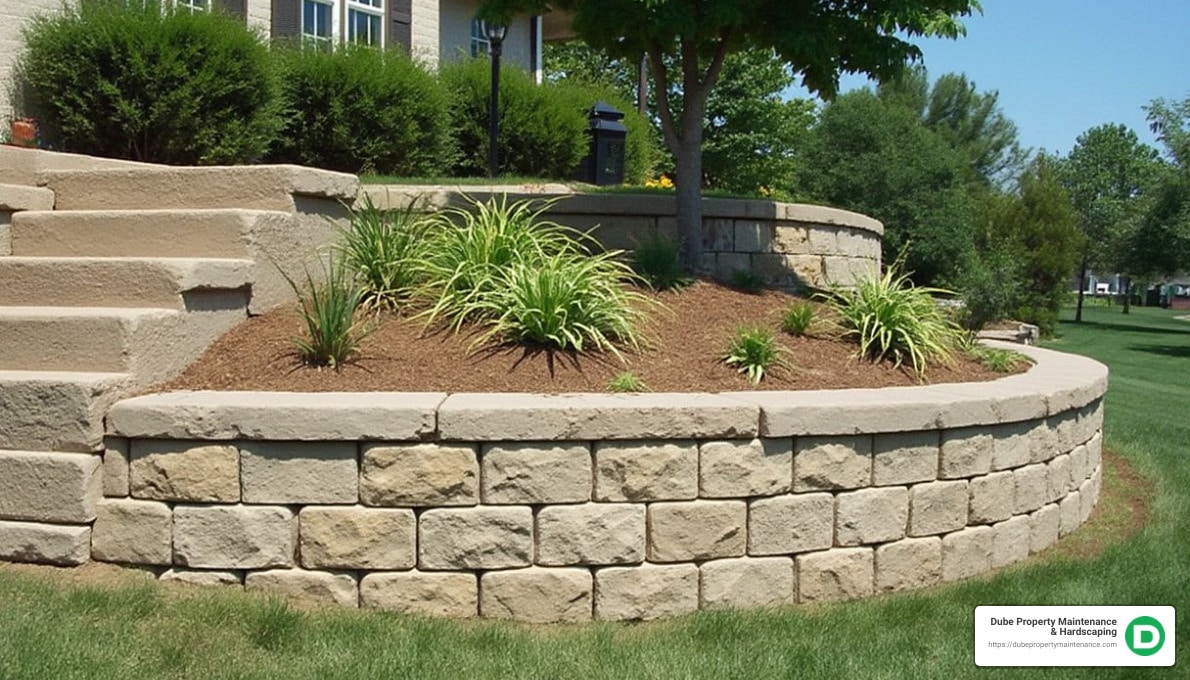
Concrete Retaining Wall: Top Techniques for 2024 Success
Mastering Concrete: Techniques for Durable Retaining Walls
Concrete retaining wall structures are marvels of modern outdoor design, offering both functionality and beauty to landscape projects. These versatile walls serve multiple purposes:
Prevent soil erosion
Manage water runoff
Create level terraces on sloped yards
Concrete retaining walls are not only structural necessities; they can be aesthetically appealing when incorporated into your property. This adaptability makes them a popular choice for homeowners and businesses aiming to blend environmental stewardship with style.
In Methuen, MA, where landscapes endure harsh winters and fluctuating weather, retaining walls are essential. They help maintain lush landscapes year-round and ensure efficient water management. This robustness and low maintenance make concrete retaining walls an excellent investment, combining resilience and curb appeal for any outdoor area.
When it comes to concrete retaining walls, understanding the different types, materials, and design considerations is key to creating a durable and visually appealing structure.
Types of Concrete Retaining Walls
Poured Concrete Walls
These walls are formed by pouring concrete into molds on-site. They are prized for their strength and seamless appearance. Poured concrete allows for customization with colors and textures, making it ideal for modern homes. However, they require precise construction methods and skilled labor to avoid issues like cracking.
Concrete Block Walls
Concrete block walls, often made from CMUs (concrete masonry units), are popular for their ease of installation and cost-effectiveness. These walls are constructed by stacking blocks and securing them with mortar or other systems. They offer design flexibility and can be finished with various textures and colors.
Sleeper Retaining Walls
Sleeper walls use horizontal concrete beams, known as sleepers, to retain soil. They are typically used in areas with limited space and are effective for smaller retaining projects. This type is less common but can be a practical solution in specific scenarios.
Choosing the Right Material
Selecting the right material for a concrete retaining wall involves considering factors such as strength, durability, and aesthetics.
Strength: Concrete is inherently strong, making it suitable for retaining large amounts of soil. Reinforcement with rebar or steel can improve its load-bearing capacity.
Durability: Concrete is resistant to weathering and pests, providing a long-lasting solution. Proper curing and maintenance can extend its lifespan even further.
Aesthetics: Concrete can be finished in various ways to match your landscape design. Options include smooth finishes, stamped patterns, and colored concrete for added visual interest.
Design Considerations
Designing a concrete retaining wall requires careful planning of shape, size, and placement.
Shape: The wall’s shape should complement the landscape and serve its intended function. Curved walls can add a dynamic element, while straight walls offer a clean, modern look.
Size: The wall’s height and thickness depend on the amount of soil to be retained and the wall’s purpose. Taller walls may require additional reinforcement or engineering.
Placement: Strategic placement is crucial for both functionality and aesthetics. Consider the wall’s location in relation to water flow, adjacent structures, and the overall landscape design.
Understanding these elements ensures that your concrete retaining wall is not only functional but also improves the beauty of your outdoor space.
Installation Techniques for Concrete Retaining Walls
Building a concrete retaining wall involves meticulous preparation, precise construction, and thoughtful finishing. Let’s break down each step to ensure your wall stands the test of time.
Site Preparation
Before any construction begins, proper site preparation is crucial. This step sets the foundation for a stable and long-lasting wall.
Grubbing: Start by clearing the site of any existing vegetation, roots, and debris. This process, known as grubbing, helps create a clean slate for construction.
Topsoil Removal: Remove the top layer of soil to reach a stable subgrade. This ensures that the wall’s base will rest on solid ground, preventing future settling.
Debris Clearance: Clear away any remaining rocks, branches, or debris that might interfere with the wall’s integrity. A tidy site facilitates smooth construction and prevents complications later on.
Construction Process
Once the site is ready, it’s time to move on to the construction phase, which involves several key steps:
Footings: Dig and pour concrete footings that will support the wall. These footings should extend below the frost line to prevent shifting during freeze-thaw cycles.
Forms: Build forms to shape the poured concrete. Forms ensure that the wall maintains its designed shape and size.
Rebar Reinforcement: Place rebar within the forms to reinforce the concrete. Rebar adds tensile strength, preventing cracks and enhancing the wall’s durability.
Pouring Concrete: Pour the concrete into the prepared forms. Ensure even distribution and remove any air pockets by vibrating the concrete.
Curing: Allow the concrete to cure properly. Curing is critical for achieving maximum strength and preventing premature cracking.
Finishing Touches
After the concrete has cured, focus on the finishing touches to protect and beautify your retaining wall:
Waterproofing: Apply a waterproofing membrane to the wall’s surface. This step helps prevent moisture infiltration, which can lead to deterioration over time.
Drainage: Install a drainage system to manage water flow behind the wall. Proper drainage reduces hydrostatic pressure and prevents water from compromising the wall’s stability.
Surface Finishing: Choose a finishing option that complements your landscape. Options include smooth trowel finishes, textured surfaces, or decorative overlays.
By following these steps, you can ensure that your concrete retaining wall is both functional and visually appealing. Proper installation techniques not only improve the wall’s longevity but also its aesthetic value, adding to the overall charm of your outdoor space.
Costs and Budgeting for Concrete Retaining Walls
Creating a concrete retaining wall can be a significant investment, so understanding the costs and how to budget effectively is crucial. Let’s explore the factors that influence costs and some tips to help you budget wisely.
Cost Factors
Material Costs: The type of concrete and any additional materials like rebar, drainage pipes, and waterproofing membranes affect the overall cost. Concrete blocks, for instance, may range from $20 to $35 per square foot, depending on quality and design.
Labor Costs: Labor is another major cost component. Professional installation can range from $14 to $46 per square foot. The complexity of the design and local labor rates will impact these costs.
Design Complexity: More intricate designs or taller walls require more materials and labor, increasing the cost. Simple, straight walls are generally more economical.
Site Conditions: Preparing a site with challenging terrain or poor soil conditions can add to the cost. Additional work, like grubbing or extensive debris clearance, may be necessary.
Budgeting Tips
DIY vs. Professional Installation: While tackling the project yourself can save money, professional installers bring expertise that can prevent costly mistakes. Consider your skill level and the wall’s complexity when deciding.
Material Choices: Opting for standard concrete blocks rather than custom or decorative options can reduce costs. However, ensure the materials meet your durability and aesthetic needs.
Timing: Plan your project during the off-season when contractors might offer discounts. Additionally, purchasing materials in bulk or during sales can lead to savings.
Do Some Prep Work: If you’re hiring professionals, you can save on labor costs by doing some of the site preparation yourself, like clearing debris or removing topsoil.
By understanding these cost factors and budgeting tips, you can make informed decisions that align with your financial plan. Building a concrete retaining wall doesn’t have to break the bank if approached thoughtfully.
Maintaining and Repairing Concrete Retaining Walls
Keeping your concrete retaining wall in top condition requires regular maintenance and timely repairs. Let’s dive into how you can keep your wall sturdy and looking great.
Routine Inspection and Maintenance
Routine inspections are crucial for spotting potential issues early. Walk along your wall and look for signs of trouble, like cracks or tilting.
Cleaning: Dirt and debris can accumulate on your wall, leading to stains and potential damage. A simple wash with water and a mild detergent can keep your wall clean. Avoid using harsh chemicals that might erode the concrete.
Sealing: To protect your wall from moisture, apply a concrete sealer every few years. This prevents water from seeping in and causing cracks or weakening the structure.
Checking for Cracks: Small cracks can lead to bigger problems if not addressed. Use a flashlight to inspect for any cracks, especially after heavy rains or freezing temperatures.
Common Repair Needs
Even with regular maintenance, your wall might need repairs from time to time. Here are some common issues and how to tackle them:
Cracks: If you find cracks, fill them with a concrete patching compound. For larger cracks, professional help might be necessary to ensure the wall’s integrity.
Tilting: A leaning wall usually indicates a problem with the foundation or drainage. This is a serious issue that often requires professional intervention to address the underlying cause and stabilize the wall.
Drainage Issues: Proper drainage is essential to prevent water buildup behind the wall, which can lead to pressure that causes bulging or cracking. Make sure drainage pipes are clear and functioning. If water is pooling, you might need to install or repair drainage systems.
Next, we’ll tackle some frequently asked questions about these structures to help you further master the art of concrete retaining walls.
Frequently Asked Questions about Concrete Retaining Walls
What is the ideal thickness for a concrete retaining wall?
The thickness of a concrete retaining wall is crucial for its stability. Generally, the top of the wall should be at least 12 inches thick. This ensures enough space for proper concrete placement and reinforcement. However, the required thickness can vary based on factors like soil type, wall height, and exposure conditions. For walls over four feet tall, consultation with a professional is advisable to determine the exact specifications.
How do you ensure proper drainage behind a retaining wall?
Proper drainage is key to preventing damage to your retaining wall. Without it, water can accumulate behind the wall, leading to pressure buildup and potential failure. Here’s how to ensure effective drainage:
Weep Holes: These are small openings in the wall that allow water to escape. Place them every 4-6 feet along the base of the wall.
Gravel Backfill: Use gravel behind the wall to facilitate water movement. This helps channel water toward the drainage pipe.
Drainage Pipe: Install a perforated drainpipe at the base of the wall. It should be surrounded by gravel and positioned to direct water away from the wall.
Regularly check these components to ensure they are clear of debris and functioning correctly.
Can a concrete retaining wall be decorative?
Absolutely! A concrete retaining wall can be both functional and decorative. You have several options to improve its appearance:
Textured Finishes: Use form liners to create patterns or textures on the wall’s surface.
Coloring: Concrete can be dyed in various colors to match your landscape design.
Incorporating Plants: Design the wall with built-in flower beds or planters to add greenery and soften its look.
These aesthetic options not only beautify your space but can also increase property value. With the right design, your retaining wall can be a stunning focal point in your landscape.
Next, we’ll summarize key points and highlight how Dube Property Maintenance & Hardscaping can help you with your retaining wall needs.
Conclusion
In summary, concrete retaining walls are a versatile and essential part of landscape design. They prevent soil erosion, manage water runoff, and create usable outdoor spaces. Whether you’re considering a poured or block wall, it’s important to choose the right materials, ensure proper design, and follow best practices during installation.
At Dube Property Maintenance & Hardscaping, we understand the complexities involved in building durable and visually appealing retaining walls. Our team of professionals is dedicated to providing high-quality, comprehensive outdoor solutions custom to your needs. From site preparation to finishing touches, we ensure that every step of your project is handled with precision and care.
If you’re ready to improve your landscape with a stunning concrete retaining wall, contact us today. Let us help you transform your outdoor space into a beautiful, functional area you can enjoy for years to come.
For 25+ years Dube Property Maintenance & Hardscaping has provided top-rated residential and commercial landscape design, installations, hardscaping, irrigation systems and commercial snow and ice management. Our hardscaping division proudly serves the Merrimack Valley, Middlesex and Essex County and Southern, NH regions, transforming outdoor spaces into stunning works of art.