

Building a retaining wall is one of the most impactful hardscaping projects you can tackle, changing sloped, unusable land into functional outdoor spaces while preventing costly soil erosion. Here’s what you need to know to get started:
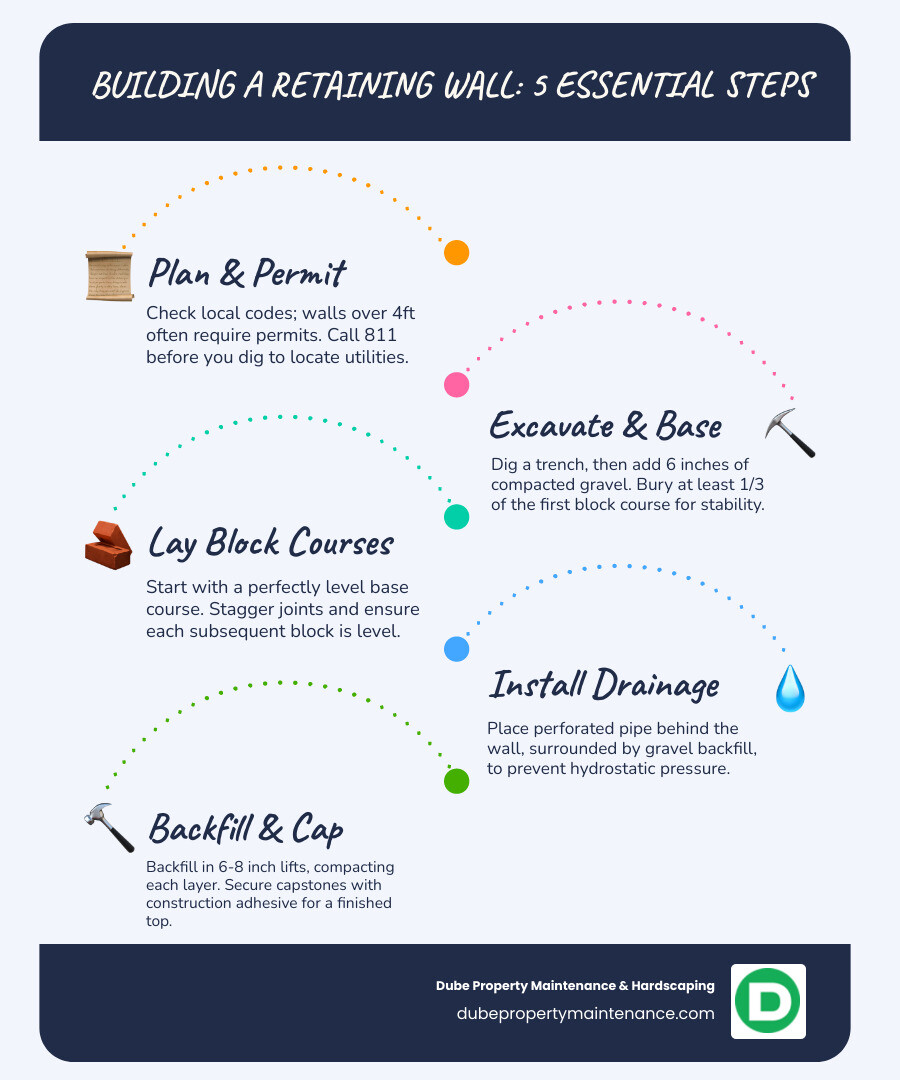
Quick Guide to Building Retaining Wall:
When contemplating how to build a retaining wall, you may imagine how firm and solid it’ll appear from the front, or how great the new garden will look above it. But unless you give serious thought to what goes on behind and below the wall, the retaining wall design may not look good for long.
The truth is, retaining walls do far more than hold back soil. They reclaim valuable outdoor space, create stunning terraced gardens, prevent erosion on hillsides, and add significant curb appeal to your property. Whether you’re a homeowner in Andover, North Andover, Haverhill, Methuen, or Salem, NH looking to tame a sloped yard, or a business owner seeking to maximize usable space, understanding the fundamentals is critical.
The difference between a wall that lasts decades and one that fails within a few years often comes down to three things: a properly compacted base, effective drainage systems, and correct material selection. Poor drainage alone is the leading cause of retaining wall failure, as water buildup behind the wall creates immense pressure that can cause bulging, cracking, and complete collapse.
If you would like to dig deeper into how retaining walls resist soil pressure, the basic principles of lateral earth pressure are explained clearly on this retaining wall overview. Combining that foundational knowledge with professional hardscaping expertise is the best way to ensure your project is safe and long‑lasting.
This guide will walk you through everything you need to know about building a retaining wall that stands the test of time, from understanding soil pressure and material options to the step-by-step construction process and knowing when to call in professional expertise.
Common building retaining wall vocab:
Before breaking ground, it’s crucial to understand the types, materials, and forces at play. A successful retaining wall is one that is designed with its function and environment in mind, blending strength with style.
In Massachusetts and southern New Hampshire, walls must also stand up to freeze–thaw cycles, heavy spring rains, and occasional snow loads. Those regional conditions make professional design and installation especially valuable for homeowners in Andover, North Andover, Haverhill, Methuen, and Salem, NH.
At its core, the primary function of building a retaining wall is to hold back soil, preventing erosion and managing changes in elevation. This is especially vital in areas with sloped terrain, common across Massachusetts and New Hampshire, where soil erosion can be a persistent problem. By holding back soil, a retaining wall can create more usable, flat space in a sloped yard, making it perfect for gardens, patios, or play areas.
Beyond basic soil retention, retaining walls offer a surprising array of creative design options and functionalities. They can:
These creative applications demonstrate that building a retaining wall is not just about structural necessity; it’s about enhancing the beauty and functionality of your property. For more ideas on how hardscaping can transform your outdoor space, explore our hardscaping services.
When considering building a retaining wall, it’s important to understand the fundamental difference between gravity and reinforced walls. This distinction often dictates the design, materials, and whether professional engineering is required.
Gravity walls rely on their sheer mass and weight to hold back soil. They are typically constructed from heavy materials like large concrete blocks, natural stone, or even boulders. The weight of the wall itself, combined with the weight of the soil directly above its base, provides the stability needed to resist the lateral pressure of the retained earth. Gravity walls are generally best suited for shorter walls, typically under 4 feet in height, where the soil pressure is less intense.
Reinforced walls, on the other hand, incorporate additional elements to increase their structural integrity, allowing them to be built taller and withstand greater pressures. The most common form of reinforcement for segmental block walls is geogrid mesh. This durable, synthetic material is laid horizontally between courses of blocks and extends back into the soil behind the wall. The geogrid interlocks with the soil, creating a reinforced soil mass that acts as a coherent, stable unit, effectively increasing the wall’s resistance to overturning and sliding.
As a general rule, for walls over 4 feet in height, geogrid reinforcement is often required. The taller the wall, the more reinforcement and engineering will be necessary. These taller, reinforced designs often require specific engineered plans to ensure they meet safety standards and local building codes, especially in our Massachusetts and New Hampshire service areas where soil conditions and freeze-thaw cycles can impact stability.
If you are interested in the engineering concepts behind these designs, organizations like the National Concrete Masonry Association provide technical resources that explain how geogrid and block systems work together. Homeowners do not need to master these details, but your contractor should be fluent in them.
The choice of material for building a retaining wall significantly impacts its appearance, durability, and cost. Here is a look at common options and their characteristics:
| Material | Pros | Cons |
|---|---|---|
| Segmental Concrete Blocks | Versatile, DIY-friendly for small projects, cost-effective, and available in a wide range of styles and colors. Ideal for many residential applications in communities like Methuen, Andover, and Haverhill. | Can look manufactured and may require reinforcement for taller walls. |
| Natural Stone | Extremely durable, offers a unique and high-end aesthetic, and is very long-lasting. Works beautifully with traditional New England architecture in towns such as North Andover and Salem, NH. | More expensive and labor-intensive to install, requiring more skill. |
| Poured Concrete | Very strong and durable, and can be formed into custom shapes. Suitable for situations where a clean, modern look or higher structural capacity is desired. | Can have an industrial look and requires professional installation with formwork. |
| Timber | Provides a natural, rustic look and often has a lower initial cost. | Prone to rot and insect damage, resulting in a shorter lifespan than masonry options, especially in damp or poorly drained soils. |
| Boulders | Extremely durable with a natural and rustic appearance, excellent for large-scale projects or properties with significant grade changes. | Requires heavy machinery to place, can be expensive, and installation is complex. |
For most homeowners, the best choice balances aesthetics, budget, and long-term performance. A professional hardscaping contractor can walk you through samples on-site and recommend materials that complement your home and landscape.
Several variables influence the overall investment for building a retaining wall:
Online sources commonly estimate that professionally installed residential retaining walls can range anywhere from a few thousand dollars for a short decorative wall to tens of thousands of dollars or more for tall, engineered systems with steps, terraces, and drainage improvements. These are broad, internet-based averages only and do not represent the actual pricing of Dube Property Maintenance & Hardscaping. The exact investment for your property in Methuen, Andover, Haverhill, North Andover, or Salem, NH will depend on an on-site assessment and a detailed, customized quote.
For information on how retaining walls interact with other masonry elements on your property, see our masonry services.
