

Brick retaining walls are sturdy structures designed to hold back soil and prevent erosion while adding architectural beauty to your property. They serve both functional and aesthetic purposes in landscape design.
“A retaining wall is only as straight and solid as the base it’s built on.”
Key Features of Brick Retaining Walls:
| Feature | Description |
|---|---|
| Purpose | Holds back soil on slopes, prevents erosion, creates level areas |
| Height Range | Typically 2-4 feet for DIY projects; taller walls require professional engineering |
| Materials | Clay bricks or concrete bricks designed for structural support |
| Durability | 50-100+ years with proper construction and maintenance |
| Average Cost | $15-150 per square foot depending on materials and complexity |
Brick retaining walls do much more than just hold back earth – they transform sloped, unusable areas into functional outdoor spaces. Whether you’re looking to create a terraced garden, level a sloping yard, or add distinctive visual elements to your landscape, a well-built brick wall delivers both strength and style.
When properly constructed, these walls can withstand significant pressure from soil and water while maintaining their structural integrity for decades. The key lies in thorough planning, proper foundation preparation, and effective drainage systems.
Unlike some retaining wall materials, brick offers timeless appeal that complements virtually any architectural style. The natural texture and warm tones of brick create an inviting atmosphere that improves your entire property.

Brick retaining walls word guide:
– block retaining wall
– front yard retaining wall landscape ideas
– stone wall
Brick retaining walls are carefully engineered structures designed to hold back soil and keep slopes from eroding. Unlike a simple decorative garden wall, these structures have a much tougher job. They must withstand a surprising amount of pressure—did you know that a four-foot-high retaining wall can hold back up to 20 tons of saturated soil? That certainly puts things into perspective!
At their core, these retaining walls serve two main purposes. First, they’re great for creating flat, usable areas on slopes—turning a challenging yard into a beautiful, functional space you can enjoy. Second, these structures play a vital role in preventing soil erosion by stabilizing hillsides and managing water runoff effectively.
But let’s face it, functionality doesn’t mean your retaining wall needs to look dull! One of the biggest perks of brick retaining walls is the aesthetic charm they bring to your yard. These walls can lift your landscape design, adding crisp, clean lines and warmth. Bricks never go out of style, blending seamlessly with traditional or modern homes and adding a timeless touch to your outdoor spaces.
Of course, looks aren’t everything—structural integrity matters too. Mike Edwards, founder of DIY Doctor and a building technology expert, sums it up perfectly: “Soil is very heavy—over one tonne per cubic metre—so any garden retaining wall must be built strong enough to withstand significant pressure while remaining attractive.”
When choosing the material for your retaining wall, brick offers several great advantages over other options out there. Here are some reasons why homeowners and professionals alike love brick retaining walls:
For starters, brick is known for its superior durability. When built correctly, brick retaining walls can easily last 50 to 100 years—or even longer! Bricks are naturally resistant to fire, pests, rot, and extreme weather conditions. Investing in brick is like choosing strength and peace of mind for decades to come.
Another great benefit is brick’s aesthetic versatility. Available in tons of colors, textures, and sizes, brick lets you truly customize the look of your landscape. Whether you prefer classic red bricks or contemporary neutral shades, you can find the perfect match to boost your curb appeal and home value.
Brick is also a champion for structural strength. It has great compressive strength—perfect for handling the pressure exerted by heavy soil. With a solid foundation and proper drainage, brick walls deliver outstanding stability, giving you confidence in their long-term performance.
And you’ll definitely appreciate brick’s low maintenance nature. Unlike timber walls that can rot, warp, and require regular staining or sealing, brick retaining walls ask very little of you. A little occasional cleaning and quick inspections are all that’s needed to keep them looking good as new.
Plus, choosing brick can offer important environmental benefits. Brick is made from natural clay—an abundant, sustainable resource. You can even find reclaimed or recycled bricks, making your brick retaining wall an eco-friendly landscaping choice.
Research from This Old House reinforces this point: while proper construction is crucial, brick’s natural qualities make it ideal for long-lasting, dependable retaining walls.
Before diving head-first into your brick retaining walls project, there are a few crucial things to consider to ensure your wall stands strong and stays trouble-free for decades.
One of your first stops should be your local building codes and permits. Most towns have guidelines about retaining wall heights. Typically, walls higher than three or four feet will require permits and professional engineering. At Dube Property Maintenance & Hardscaping, we always recommend checking your local building regulations, especially if you’re in Methuen, Lawrence, Andover, or other Massachusetts and New Hampshire communities we serve.
Speaking of professionals, seeking a professional consultation is strongly recommended. Even if you’re tackling a smaller wall yourself, an expert can help you identify potential issues related to your soil type, slope, drainage needs, and structural requirements. For walls higher than four feet, professional engineering becomes a necessity—for safety and compliance.
Also, keep wall height limitations in mind. Taller walls face greater soil pressure, which means they need additional structural support. As a rule of thumb, DIY walls should typically be limited to 3-4 feet high. If you need taller walls, consider terracing (multiple shorter walls) or hiring professional experts, like our team at Dube Property Maintenance & Hardscaping, to ensure a safe and attractive result.
Don’t overlook the importance of a thorough soil assessment. Different soils exert different amounts of pressure on walls. Clay soils retain water and can create more intense pressure than sandy soils. Knowing your soil type helps determine the right wall thickness and drainage planning.
And speaking of drainage—it’s crucial for the health of your retaining wall. Proper drainage planning prevents water from accumulating behind your wall, which can dramatically increase pressure and cause structural failure. As one industry expert famously put it, “Water is the number one enemy of retaining walls.”
Finally, before breaking ground, always call 811. This free service identifies underground utilities on your property, preventing costly damage and keeping you safe as you dig.
Taking these key considerations seriously will help you build a beautiful, durable, and worry-free brick retaining wall that you’ll enjoy for many years.

Proper planning is the secret sauce behind every successful brick retaining wall project. Whether your goal is controlling erosion, creating a flat space for your dream patio, or simply beautifying your landscape, good planning ensures your wall will serve its intended purpose beautifully—and safely—for years to come.
Before you start laying bricks, take some time to analyze your site carefully. Assess the slope, determine the exact height and length the wall needs to be, and consider any drainage challenges you might face. Ask yourself questions like: Is erosion control my main priority, or am I aiming to create a usable, level garden area? Do I need special drainage behind the wall to avoid excess pressure?
Designing your brick retaining wall doesn’t need to be complicated. Start by measuring the area precisely. Determine both the length and height you require. Taller walls need deeper foundations. A good general rule is to build your foundation at least one foot deep for every foot of wall height. For example, a three-foot-high wall should have a minimum foundation depth of around one foot below ground level.
Next, plan the wall thickness. A helpful guideline is to make the wall at least one-quarter the thickness of the soil height it will retain. If your wall holds back about four feet of soil, then a thickness of roughly one foot is recommended.
Using stakes and string, mark out exactly where you want your wall to go. This simple step will give you a clear visual layout and help you spot potential issues like slopes, dips, or unexpected obstacles early on. Don’t forget to allow for any curves or corners in your design—these will require extra care and may impact your material calculations.
Of course, aesthetics matter! Think ahead about decorative patterns you might like, such as running bond or basketweave, and decide whether you’d like to include capstones or coping stones to give your wall a polished appearance.
For taller retaining walls (over four feet), it’s a wise move to consult a professional engineer. Expert advice ensures your wall is structurally sound and meets local building codes. At Dube Property Maintenance & Hardscaping, we’re always happy to provide design consultations and professional guidance to homeowners around Methuen, Lawrence, Andover, and surrounding areas.
Selecting the right type of brick is crucial for the long-term durability and appearance of your retaining wall. Here’s a quick overview of your best choices:
Engineering Bricks are specially made for strength and durability. They come in two main classes: Class A (the strongest, lowest water absorption) and Class B (still sturdy, but slightly more water-absorbing). These bricks are ideal for walls that must withstand significant soil pressure and moisture.
Concrete Bricks offer exceptional strength and are a great, cost-effective option. They come in various textures and colors, giving you plenty of aesthetic flexibility.
Clay Bricks provide traditional charm but can vary widely in strength. For retaining walls, always choose clay bricks specifically rated for exterior structural use to ensure they can handle tough outdoor conditions.
Reclaimed Bricks give your project character and sustainability benefits but should be checked carefully for structural integrity before use in retaining walls.
When narrowing down your choices, consider bricks with a compressive strength rating of at least 5000 PSI. Aim for bricks with low water absorption and high frost resistance—particularly important here in New England, where freeze-thaw cycles can cause damage. And don’t forget about aesthetics! Choose a color and texture that complements your home’s exterior and landscape design.
For more detailed guidance, explore our helpful page on Retaining Wall Blocks.
Before grabbing your gloves and breaking ground, gather all the necessary equipment and materials. Having everything ready beforehand makes the entire process seamless and enjoyable.
You’ll need tools like shovels and spades for excavation, a wheelbarrow to move materials easily, and a tamper for compacting soil and gravel. A mason’s level (ideally a 4-foot one), a tape measure, string line, and stakes are essential for precise layout and alignment. Keep a brick hammer, chisel, rubber mallet, and trowel handy for laying and shaping bricks. And never skip on safety—grab protective gloves, sturdy boots, and eye protection.
As far as materials go, you’ll obviously need your selected bricks (it’s smart to purchase around 10% more than you think you’ll need to cover cuts and any accidental breakage). Other essential materials include a quality mortar mix (typically Type N or S), Portland cement, masonry sand, gravel or crushed stone for proper drainage and foundation stability, landscape fabric, drainage pipes, and capstones or coping stones for the finishing touches. If your walls exceed three feet tall, consider including rebar or reinforcement mesh for added strength.
Preparation and planning are the keys to a smooth build. At Dube Property Maintenance & Hardscaping, we’ve seen how much easier a project becomes when homeowners take the time to plan well. And don’t worry—if you ever realize you’d like professional support along the way, our expert team is always ready to help transform your vision into reality.

You’ve completed your planning, gathered your materials, and prepared your site—now it’s time to build your beautiful and sturdy brick retaining wall. Follow this straightforward, step-by-step guide to ensure a wall that not only improves your landscape but also lasts for decades.
The foundation is the cornerstone (literally!) of your retaining wall. As our team at Dube Property Maintenance & Hardscaping always says, “A solid wall starts with a rock-solid foundation.” Begin by marking out your wall using stakes and a string line. Dig a trench that’s about twice as wide as your wall will be. For depth, aim for at least 6 inches plus half the height of your bricks—typically around 8-12 inches total.
After digging, compact the soil at the bottom of the trench thoroughly. Next, pour in a layer of gravel that’s 4-6 inches thick. This gravel layer provides excellent drainage and stability. Compact the gravel well, and add a 1-inch layer of sand on top, leveling it carefully. For taller walls (over 2 feet), consider pouring a concrete footing for extra support. Finally, lay a perforated drainage pipe at the base, ensuring it slopes away from the wall to direct water safely.
Take your time here—every minute spent perfecting your foundation pays off later when your wall withstands years of pressure from soil and water without budging.
Now you’re ready to set your first row of bricks. The first course is crucial—it determines how your entire wall turns out. Mix your mortar (Type S is ideal for strength) to a peanut-butter-like consistency, thick enough to hold its shape but easy to spread.
Spread a 1-inch-thick layer of mortar along your prepared foundation, placing only enough for a few bricks at a time. Set your first brick firmly into the mortar, gently tapping it with a rubber mallet to ensure good contact.
Use your mason’s level to make sure it’s perfectly level front-to-back and side-to-side. Continue placing bricks, spacing them about 3/8 inch apart, using your string line as a guide to keep things straight.
After setting several bricks, fill in the vertical joints with mortar, packing it well. Complete the entire first course carefully, cutting bricks to size with a chisel and hammer if necessary.
With your first course beautifully level and straight, building upward becomes significantly easier. Before starting your next course, gently brush away any debris from the top surface of your bricks.
Lay the second course using a staggered joint pattern (running bond), starting with half a brick to avoid aligning vertical joints. This pattern adds strength and resilience to your brick retaining wall.
Apply about an inch of mortar, then set each brick carefully. Check frequently with your level to maintain a neat, even appearance.
For walls over two feet tall, consider adding galvanized metal reinforcement mesh every 2-3 courses. This helps your wall handle soil pressure better.
As you go higher, lean each new course slightly back into the slope (about 1 inch back for every 12 inches in height). This lean, called a “batter,” helps your wall resist the force of the soil behind it naturally.
Every few feet, leave small drainage openings, called weep holes, by skipping mortar in a vertical joint or inserting short pipes. These little openings let water escape from behind the wall, relieving pressure and extending your wall’s life.
Once you’ve built several courses, use a jointing tool to smooth and shape your mortar joints neatly. It gives your wall a clean, finished look and helps protect the mortar from the elements.

There’s a saying at Dube Property Maintenance & Hardscaping: “When you’re building walls, managing water is half the battle.” Proper drainage is essential to prevent your wall from bulging or failing under water pressure.
Behind your wall, build a drainage zone at least 12 inches wide using crushed gravel. Line this zone with landscape fabric on the soil side to prevent clogging. At the bottom of this gravel zone, your perforated drainage pipe (installed in the foundation step) should collect runoff and direct it safely away from your wall.
Regularly incorporate weep holes to let accumulated water escape safely. As you build, add gravel behind each course to maintain drainage integrity. Finally, slope the soil surface behind the wall gently away (at least 1 inch per foot) to carry surface runoff away from your structure.
Efficient backfilling helps your wall remain sturdy and upright over the years. Add your backfill soil in thin layers—about 4-6 inches at a time. Compact each layer gently but thoroughly using a hand tamper or compactor.
Choose well-draining soil if possible, as heavy clay soils retain water and put extra pressure on your wall. Be careful not to disturb your gravel drainage layer or filter fabric as you backfill.
Once you’ve reached the desired level, shape the soil so it’s sloped gently away from your wall. Allow some extra soil to compensate for natural settling, and consider temporary erosion control methods like straw or mulch if heavy rains are likely.

You’re almost done! Adding capstones transforms your functional retaining wall into an eye-catching landscape feature.
Choose capstones (or coping stones) that complement your brick selection. These stones should overhang your wall slightly (1-2 inches) to direct water away, protecting both bricks and mortar. Set the capstones into a layer of mortar, ensuring they’re level and aligned.
Create a slight slope on the capstones to ensure proper water runoff. Fill the joints between your capstones neatly with mortar to prevent moisture intrusion. Once the mortar has firmed up slightly, clean off any excess carefully with a stiff brush.
For additional protection and beauty, consider sealing your finished wall with a high-quality masonry sealer. It helps your wall resist weather damage, stains, and moisture buildup.
Complete your project by landscaping around your new brick retaining wall, adding mulch, ground cover, or flowers to finish off the look. Just be sure to keep larger shrubs and trees at a safe distance to avoid root damage.
As one of our happy customers in North Andover recently said, “The capstones really made our retaining wall look fantastic and complete—it’s now the centerpiece of our garden!”
If you need more information or assistance, our expert team at Dube Property Maintenance & Hardscaping is always here to help. We serve Methuen, Lawrence, Andover, and surrounding towns in Massachusetts and New Hampshire, providing expert guidance and professional results every time.
Building brick retaining walls can be an incredibly rewarding project, enhancing both the beauty and functionality of your landscape. But as with any construction project, you might encounter a few obstacles along the way. Don’t worry—every challenge has a solution! Here’s a friendly guide to tackling the most frequent issues and building a wall you’ll be proud to show off.
One of the biggest concerns when building a retaining wall is managing soil pressure. Soil can become very heavy, especially when saturated with water after heavy rainfall. To effectively counteract this pressure, consider building your wall with a slight backward lean—known as a “batter”—and make sure your wall thickness matches the recommended guideline (calculate this by dividing your garden’s depth by four). For taller walls over 2 feet, reinforcement methods such as galvanized mesh or rebar can provide additional structural strength.
Another common worry homeowners face is leaning or bulging walls—a clear indication the wall isn’t properly handling the pressure from behind. Fortunately, you can easily avoid this by laying a solid, well-compacted foundation that extends below your local frost line (around 3-4 feet deep here in Massachusetts and New Hampshire). Additionally, using quality materials like Type S mortar specifically designed for retaining walls, building the bricks in a staggered running bond pattern, and incorporating a slight batter will reinforce stability.
Drainage might sound like a minor issue, but in reality, poor drainage is the number one enemy of retaining walls. When water builds up behind your wall, it significantly increases the pressure your wall must bear—sometimes by over 30%! To address drainage concerns, install a sufficient drainage layer of gravel behind your wall, add a perforated drainage pipe at the base, and create weep holes in the brickwork. Be sure to line this drainage system with landscape fabric to keep soil from clogging the gravel. Also, grading the surface behind the wall at least 1 inch per foot for a minimum of 6 feet away will effectively divert surface water.
Here in our New England climate, frost heave is another pesky challenge we have to consider. Frost heave happens when water in the soil freezes and expands, potentially pushing your wall upward and causing cracks or instability. To prevent frost heave, ensure your foundation extends below the frost line (again, typically 3-4 feet in Massachusetts and New Hampshire). Proper drainage and selecting high-quality frost-resistant bricks and mortar also go a long way in protecting your wall through harsh winters. For extreme weather conditions, adding rigid foam insulation behind the wall can provide even more protection.
As one of our landscaping experts here at Dube Property Maintenance & Hardscaping likes to joke: “If your current retaining wall is starting to resemble the Leaning Tower of Pisa—it’s definitely time for an upgrade!” In fact, we’ve helped plenty of homeowners in Methuen and surrounding areas replace their failing walls with beautifully engineered brick retaining walls that stand strong for decades.
To enjoy a retaining wall that looks great and lasts for generations, ensuring its structural integrity is essential. It all begins with a deep, solid foundation. Your foundation should reach below the frost line to avoid shifting and cracking during freeze-thaw cycles. As a general guideline, foundation depth should be at least one-tenth of your wall’s height plus the thickness of the foundation itself.
Choosing the right wall thickness also plays a critical role in stability. A simple rule of thumb is dividing your wall height by four. For example, if you have a 4-foot-tall retaining wall, aim for at least a 12-inch thickness.
If your wall is taller than 2 feet, consider adding reinforcements like galvanized mesh every few rows of bricks, or even rebar anchored into the foundation. These improvements provide extra support and confidence that your wall will stay sturdy through years of heavy soil pressure and harsh weather.
At Dube Property Maintenance & Hardscaping, we emphasize the importance of quality workmanship. Consistent, full mortar joints, proper staggering of brick joints in a running bond pattern, careful leveling, and timely compaction of backfill are essential details that contribute significantly to the longevity of your wall. Also, incorporating a slight batter (around 1 inch lean per 12 inches of vertical height) greatly improves the stability and resilience of your wall—especially essential for taller walls.
Ensuring structural integrity isn’t just about strength—it’s about peace of mind. A well-built retaining wall not only functions as intended but also becomes a beautiful, worry-free focal point of your landscape.
We really can’t say this enough: good drainage is absolutely critical for brick retaining walls. When water gets trapped behind your wall, it significantly increases the soil pressure against it—potentially causing bulging, leaning, or even collapse. Beyond just structural risks, poor drainage can also degrade mortar joints, damage bricks, and cause unsightly staining or efflorescence.
If you’re wondering how to spot drainage issues, here are a few telltale signs: water seeping through the mortar joints, white powdery stains (efflorescence) appearing on the brick face, bulging sections of the wall, cracks in masonry joints, or standing water pooling behind the wall after rainfall.
Fortunately, effective drainage is achievable with a few simple yet critical strategies. First, always place a gravel drainage zone of at least 12 inches wide behind the wall, lined with landscape fabric. This setup allows water to flow away freely without clogging with soil. Next, install a perforated drain pipe at the base, sloping at least 1/4 inch per foot, directing water safely away from your wall. Don’t forget to include weep holes approximately every 4 feet along the wall, about one-third up from the base, ensuring trapped water can easily escape.
Additionally, proper surface grading behind your retaining wall is crucial. Make sure the ground slopes gently away from your wall (around 1 inch per foot for at least 6 feet), so surface water moves away rather than pooling behind it. For taller walls or in areas prone to significant water accumulation, you might also consider vertical chimney drains within the backfill to further protect your structure.
Want to explore more detailed drainage solutions? Check out our comprehensive guide on How to Build a Retaining Wall for extra tips and tricks.
Remember—investing in proper drainage might seem like a small detail, but it will dramatically extend the life and beauty of your brick retaining wall. At Dube Property Maintenance & Hardscaping, we’re always here to help you create landscape solutions that last.
With proper care, your beautiful brick retaining wall will remain sturdy, attractive, and functional for many decades. Don’t worry—maintenance doesn’t have to be complicated or demanding. A little routine attention goes a long way!
Here’s how to keep your wall in fantastic shape:
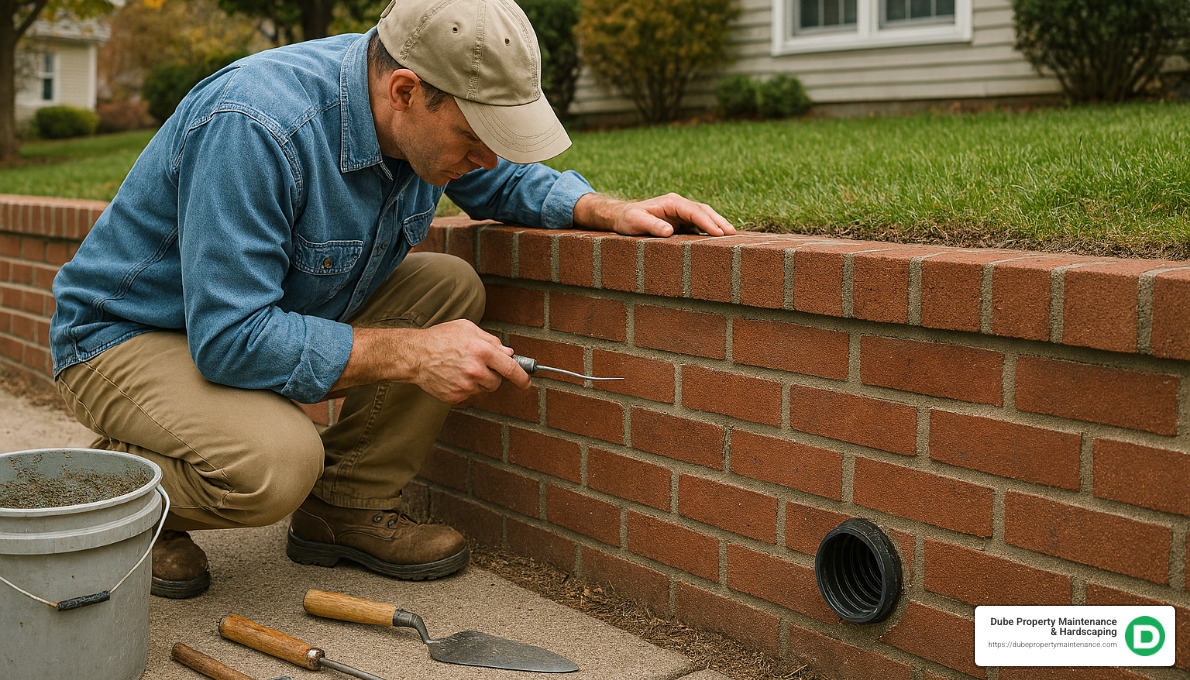
Set aside some time each spring and fall for a quick checkup. Walk along your wall, giving it a careful look. Keep an eye out for cracked or crumbling mortar joints, areas that appear to be bulging or leaning, or any signs of water seeping through.
You may also notice efflorescence—those white, powdery mineral deposits that show up on bricks sometimes. It’s harmless, but indicates moisture behind the wall that you’ll want to address. Also, don’t forget to clear any clogged weep holes or drainage areas, and watch for erosion or vegetation popping up in unwanted places.
If you catch cracks early, you can fix them quickly and cheaply before they turn into a bigger headache. Start by gently chiseling out any loose mortar around the crack, then clean the area with a wire brush. Slightly dampen the area to help the fresh mortar bond well. Prepare a small batch of Type N or Type S mortar and pack it firmly into the crack with a pointing trowel.
Smooth it out to match the surrounding mortar and let it cure according to the mortar manufacturer’s instructions. It’s a satisfying weekend project and makes your wall look good as new.
When it comes to cleaning your brick retaining wall, simplicity is best. Start with a garden hose fitted with a spray nozzle and a stiff-bristle brush for general dirt and grime. For tougher stains or algae, mix water with a mild detergent and scrub gently.
If you’ve got that white efflorescence buildup, a gentle solution of 1 part white vinegar to 10 parts water usually does the trick. Stay away from powerful pressure washers, as they can damage mortar joints and brick surfaces. Gentle cleaning helps preserve your wall’s beauty and integrity.
Water is your retaining wall’s biggest enemy, so actively managing moisture is crucial. Keep your drainage system clear and functioning properly, and make sure the ground behind the wall slopes away at least 1 inch per foot for about 6 feet. Applying a breathable masonry sealer every 5 to 10 years is another great way to protect against moisture infiltration and extend your wall’s longevity.
Plants add beauty to your landscape, but not when they’re growing out of your wall! Pull out any vegetation sprouting up in joints or cracks immediately. Over time, roots can expand and put pressure on the bricks.
Try to keep larger shrubs at least 3 feet away from the wall, and for trees, a distance of at least 15 feet is ideal. For mature trees that are already close by, you might want to consider installing a root barrier to protect your wall from invasive roots.
New England winters can be harsh on your outdoor features, including your brick retaining walls. Avoid using de-icing salts near your wall—they can harm mortar joints and bricks. After heavy snowfalls, clear snow buildup from behind and around the wall. This reduces excessive moisture and prevents added pressure against the structure.
And once spring arrives, check your drainage system again to make sure it’s clear of winter debris and ready for the rainy months ahead.
One of our long-standing customers in Andover summed it up nicely:
“Our brick retaining wall has stood strong for over 15 years with minimal maintenance. The key has always been addressing small issues quickly and keeping drainage clear.”
With these simple steps, you’ll be well on your way to a lasting, beautiful, and worry-free retaining wall. And if you ever feel uncertain or find a bigger issue, don’t hesitate to reach out to our friendly experts at Dube Property Maintenance & Hardscaping. We’re always here to help keep your landscape looking its best!
When homeowners ask me about costs for brick retaining walls, I always explain that pricing varies tremendously based on your specific project. Think of it like buying a car – there’s a basic model and then there’s the luxury version with all the bells and whistles.
Based on internet data, you can expect to pay anywhere from $15 to $150 per square foot for a standard brick retaining wall. Most homeowners end up spending between $25-75 per square foot for a well-built wall with proper drainage. For those seeking premium designs with high-end materials or complex features, costs can climb to $150-450 per square foot at the high end.
What drives these price differences? Several key factors come into play:
Wall dimensions make a huge impact – taller walls need thicker bases and possibly engineering expertise, which increases your investment. Brick selection matters too, with engineering bricks typically costing more than standard varieties, while beautiful reclaimed or specialty bricks can significantly increase your materials budget.
Your property conditions play a major role as well. If your yard is steeply sloped or difficult to access, labor costs will increase. Similarly, sites requiring extensive excavation will add to your bottom line. Don’t forget about drainage systems – proper water management is essential but adds to both material and labor costs.
For a typical 4-foot-high by 20-foot-long brick retaining wall with standard drainage features, internet data suggests you might spend between $6,000-$15,000. More complex or premium projects could reach $30,000-$45,000 or more.
I should note that these figures represent average costs based on internet data and not actual costs for Dube Property Maintenance and Hardscaping. For a precise estimate custom to your specific Methuen area project, I’d recommend reaching out to us for a personalized consultation.
This is one of the most common questions I hear from DIY enthusiasts, and my answer always prioritizes safety: for self-built brick retaining walls, stick to a maximum height of 2-3 feet.
There’s a good reason for this limitation. A 4-foot wall can hold back an astonishing 20 tons of saturated soil – that’s roughly the weight of five full-size SUVs pressing against your wall! When improperly designed, walls can fail dramatically, potentially causing property damage or even injuries.
Beyond safety concerns, most local building departments require permits and professional engineering for walls exceeding 3-4 feet. These regulations aren’t arbitrary – they exist to protect homeowners and the public.
Taller walls also introduce significant technical challenges. They require deeper foundations that extend below the frost line, proper reinforcement techniques like rebar or geogrid, more sophisticated drainage systems, and precise structural calculations. Without professional training, these elements are difficult to execute properly.
If you’re dreaming of a taller landscape feature, consider these homeowner-friendly alternatives:
Create a terraced design with multiple shorter walls (2-3 feet each) separated by attractive planting beds. This approach is not only more DIY-friendly but often more visually interesting than a single tall wall.
You might also consider a collaborative approach – have professionals handle the critical foundation and structural work, then complete the more straightforward aspects yourself. Many of our Methuen clients have found this hybrid approach satisfying and cost-effective.
For walls over 3 feet, I always recommend at least consulting with a professional. At Dube Property Maintenance & Hardscaping, we provide engineering guidance for retaining walls throughout Massachusetts and New Hampshire, ensuring your project is both beautiful and structurally sound for decades to come.
The permit question often catches homeowners by surprise, and the answer is: it depends on your specific project and location. Permit requirements for brick retaining walls vary significantly, even between neighboring towns in Massachusetts and New Hampshire.
In most municipalities, you’ll likely need permits if your wall exceeds 3-4 feet in height (measured from the bottom of the footing to the top of the wall). Walls supporting structures like driveways or patios, affecting drainage patterns, located near property lines, or in environmentally sensitive areas like wetlands typically require permits regardless of height.
When permits are required, you’ll generally need to provide documentation such as site plans showing the wall location and dimensions, cross-section drawings with construction details, drainage plans, and for taller walls, soil analysis and structural calculations. Walls over 4 feet typically require a professional engineer’s stamp on the plans.
I’ve seen the consequences of skipping permits firsthand, and they’re never pretty. Homeowners might face fines, be forced to remove or modify non-compliant walls, encounter complications during property sales, face liability issues if the wall fails, or find their insurance won’t cover damages related to unpermitted structures.
One client in Andover learned this lesson the hard way – they built a beautiful 5-foot wall without permits, only to find during a property survey for a home sale that they needed to obtain retroactive permits, which required costly modifications to meet code.
Having served communities throughout Massachusetts and New Hampshire for years, including Methuen, Lawrence, Andover, and surrounding towns, I’ve noticed permit requirements can vary dramatically within just a few miles. That’s why at Dube Property Maintenance & Hardscaping, we always recommend checking with your local building department before breaking ground.
Our team can help steer the sometimes confusing permit process, ensuring your project meets all local requirements while saving you potential headaches down the road. A quick consultation with local officials up front can save significant time, money and stress later.
Building brick retaining walls is a rewarding project that beautifully combines practicality with design. Done right, these walls won’t just hold back soil or prevent erosion—they’ll improve your landscape’s beauty and boost your home’s value.
The key to a successful project is taking it step by step—starting with careful planning. Take your time deciding how tall, long, and thick your wall should be. Think about how it fits into your overall landscaping vision. Thorough planning upfront means fewer headaches down the road.
Equally important is creating the right foundation. A solid base that sits below your area’s frost line provides vital support, preventing issues like frost heave or wall shifting later on. No shortcuts here—your foundation sets the tone (and sturdiness!) for the entire wall.
Quality materials make a huge difference as well. Selecting durable bricks, the right mortar mix, and effective drainage materials helps your wall stand strong against harsh New England weather. You want your wall to last decades, not just seasons.
And speaking of tough New England weather—never underestimate the importance of drainage! Proper drainage solutions behind your wall help manage water efficiently. Good drainage is like the unsung hero of your retaining wall: nobody notices it when it works, but everyone notices when it doesn’t.
Of course, skilled construction techniques are crucial too. Building with proper bricklaying methods, consistent mortar joints, and incorporating a slight backward lean (called a “batter”) helps withstand soil pressure and ensures structural integrity. Take your time here—the difference between an okay wall and a fantastic one often comes down to careful craftsmanship.
Don’t forget regular maintenance! Inspecting your wall a couple times a year allows you to catch minor issues before they become big problems. Early crack repairs, keeping drainage clear, and protecting bricks from winter weather all keep your wall looking and performing at its best.
For DIY enthusiasts, building a brick retaining wall that’s around 2-3 feet tall is manageable. But once you start looking at walls above that height, it’s time to call in the professionals. Taller retaining walls not only require permits, but come with structural complexities that are best left to experienced experts.
At Dube Property Maintenance & Hardscaping, we’ve been proudly building beautiful and durable brick retaining walls for homeowners and businesses in Methuen, Lawrence, Andover, and surrounding communities for years. Our team combines solid engineering skills with an eye for design, ensuring your retaining wall is both functional and beautiful.
Whether you’re ready to roll up your sleeves for a smaller DIY project or you’re looking for professional help, we hope this guide made building your retaining wall feel less overwhelming and more exciting.
Want to learn more about how Dube Property Maintenance & Hardscaping can help with your project? Check out our Retaining Wall services page or simply reach out—we’d be more than happy to provide a personalized consultation.
Your landscape deserves a retaining wall built to last—a wall that doesn’t just hold back soil but also adds charm, character, and value to your home. With proper planning, quality materials, careful craftsmanship, and regular maintenance, your brick retaining wall will beautifully serve your property for generations to come.
