
Brick outdoor kitchens combine timeless style with serious durability, making them one of the smartest investments for your backyard. But before you start mixing mortar, it’s crucial to understand both the sizzling benefits and potential challenges.
The outdoor kitchen trend has exploded across Massachusetts and New Hampshire, with homeowners finding that cooking outdoors isn’t just about grilling anymore. Today’s outdoor kitchens rival their indoor counterparts in functionality and style, featuring everything from pizza ovens and smokers to full refrigeration and wine storage. Among all the material choices available, brick continues to dominate for homeowners who want maximum durability and classic appeal.
What makes brick so special? Unlike wood that warps and rots, or metal that corrodes and dents, brick actually improves with age. The natural weathering process creates character and patina that improves rather than detracts from your investment. This is particularly important in New England, where outdoor structures face some of the harshest weather conditions in the country.
Quick Answer: Pros vs Cons of Brick Outdoor Kitchens
✅ Major Advantages:
– Extreme durability – second only to concrete blocks
– Fire-resistant – non-combustible and highly heat-resistant
– Freeze-thaw proof – perfect for northern climates like Massachusetts
– No separate finish needed – structure and appearance in one
– Customizable colors and patterns
– Superior heat retention – ideal for consistent cooking temperatures
– Low maintenance – minimal upkeep compared to wood or metal
– Increases home value – permanent improvement that buyers love
❌ Key Drawbacks:
– Heavy construction – requires concrete footing 12″ below frost line
– Labor-intensive – challenging DIY project for most homeowners
– Higher upfront cost – professional labor can be 5-6x material costs
– Style changes – permanent design may go in and out of fashion
– Skilled labor required – finding qualified masons can be challenging
– Weather delays – mortar work requires specific temperature conditions
The research shows that brick is one of the most durable building materials for outdoor kitchens, with the ability to withstand harsh freeze-thaw cycles that would damage other materials. A DIY brick outdoor kitchen can cost as little as $500 in materials, but most homeowners invest $8,000-$25,000+ for professional installation, with high-end projects reaching $50,000 or more.
As one expert noted: “Nothing beats concrete as a substrate for tile” – and brick offers similar reliability for the long haul. The thermal mass properties of brick also make it ideal for outdoor cooking applications, as it absorbs heat during the day and releases it slowly, creating more consistent cooking temperatures than other materials.
Modern brick outdoor kitchens also offer incredible versatility in design. From traditional red brick that complements colonial architecture to sleek, contemporary designs using specialty bricks in unique colors and textures, the possibilities are nearly endless. Many homeowners are surprised to learn that brick can be painted, stained, or treated with various finishes to achieve exactly the look they want.

Basic brick outdoor kitchen vocab:
– brick exterior fireplace
– modern outdoor fireplace
Picture this: February in Massachusetts, snow everywhere, and your neighbor’s wooden outdoor kitchen is already warping. Meanwhile, your brick outdoor kitchen looks exactly the same as the day it was built. That peace-of-mind explains why, when clients ask Dube Property Maintenance & Hardscaping what we’d build in our own backyards, we almost always say “brick.”

Extreme durability in New England freeze-thaw cycles
Non-combustible for true fire safety
Structure and finished look in the same material
Superior heat retention for pizza ovens & grills
Virtually no annual maintenance
Boosts resale value with permanent curb appeal
Heavy—needs a footing 12 in. below frost line
Labor-intensive (professional masons strongly recommended)
Higher upfront cost than wood or metal
Mortar joints near the coast need periodic repointing
The look is essentially permanent, so choose colors you can love for decades
| Material | Upfront Cost* | Expected Lifespan | Fire Safety | Climate Performance | DIY Difficulty | Upkeep |
|---|---|---|---|---|---|---|
| Brick | High | 50+ yrs | Excellent | Excellent | Very Hard | Low |
| Wood | Low | 10-15 yrs | Poor | Fair | Moderate | High |
| Metal | Medium | 15-25 yrs | Good | Fair (rust) | Easy | Medium |
| Concrete | Medium-High | 30+ yrs | Excellent | Very Good | Hard | Low |
Average cost ranges based on internet data, not* Dube pricing.
Bottom line? For homeowners around Methuen, Andover, Salem NH, and the rest of our service area, brick delivers longevity and safety no other material can match—especially when winter temps swing 30 degrees in a single day.
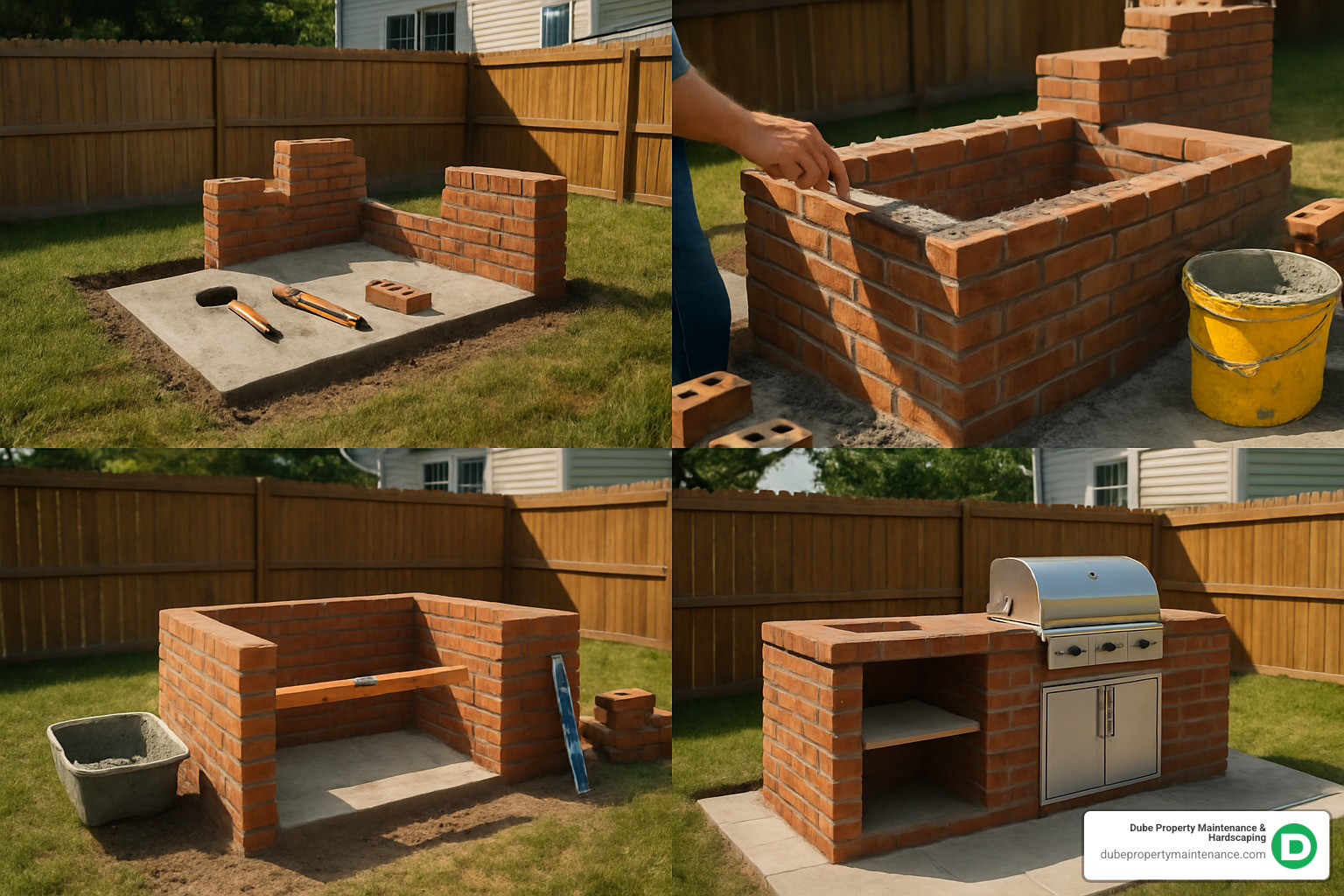
Proper planning prevents 90 % of project headaches. Use this condensed road map to keep your build on track.
DIY works when you have masonry experience, time, and patience. Expect materials around $2 k–$8 k and weeks of labor. Professional installs typically run $8 k–$25 k+ (internet averages, not Dube pricing) but include expertise, speed, and warranties. For curved walls, integrated fireplaces, or tight timelines, hiring a mason is worth every penny—ask about our outdoor kitchen builders near me service.
• Pull permits early—most towns require them for footings and utilities.
• Provide GFCI outlets, shut-off valves, and 36 in. clearance around cooking surfaces.
• Size hoods/chimneys to your grill BTU load and prevailing wind direction.
Find more technical detail in this masonry oven safety research.

L-Shape – most requested; keeps chef in the conversation and provides generous prep space.
U-Shape – maximum storage and counter area (needs a wide patio).
Straight Island – perfect for compact yards; pair with bar seating.
Maintain at least 36 in. of clearance for safe traffic flow.
• Built-in grill (verify exact cut-out before laying brick)
• Optional pizza oven—leave space now even if you add it later
• Sealed storage bays for tools/propane
• Sink or ice bin with winter shut-offs
• Low-voltage task and ambient lighting
For more inspiration browse our outdoor kitchen design gallery.
• Classic red with light mortar = traditional New England vibe
• Matching mortar for a sleek modern feel
• Limewash or color-wash for softer, aged character
• Blend brick with natural stone or stainless accents to echo other hardscaping
Tie everything together with coordinated fire pits or fireplaces—see our custom outdoor fire pits.
| Project Type | Materials* | Typical Installed* |
|---|---|---|
| Basic DIY grill island | $500–$2 k | – |
| Mid-range pro build | $2 k–$6 k | $8 k–$25 k |
| Luxury showpiece | $6 k–$15 k | $25 k–$50 k+ |
Averages based on internet data, not* Dube pricing; high-end figures are 3× or more than mid-range to reflect premium options.
• Brick veneer over CMU—same look, 30–50 % less weight/cost.
• Reclaimed brick—adds character and can cut material spend by 20–40 %.
• Modular kits—pre-engineered pieces shorten labor time.
• Phase the build—start with core grill station, add pizza oven or bar later.
Explore our ready to install outdoor kitchen solutions if speed is priority.
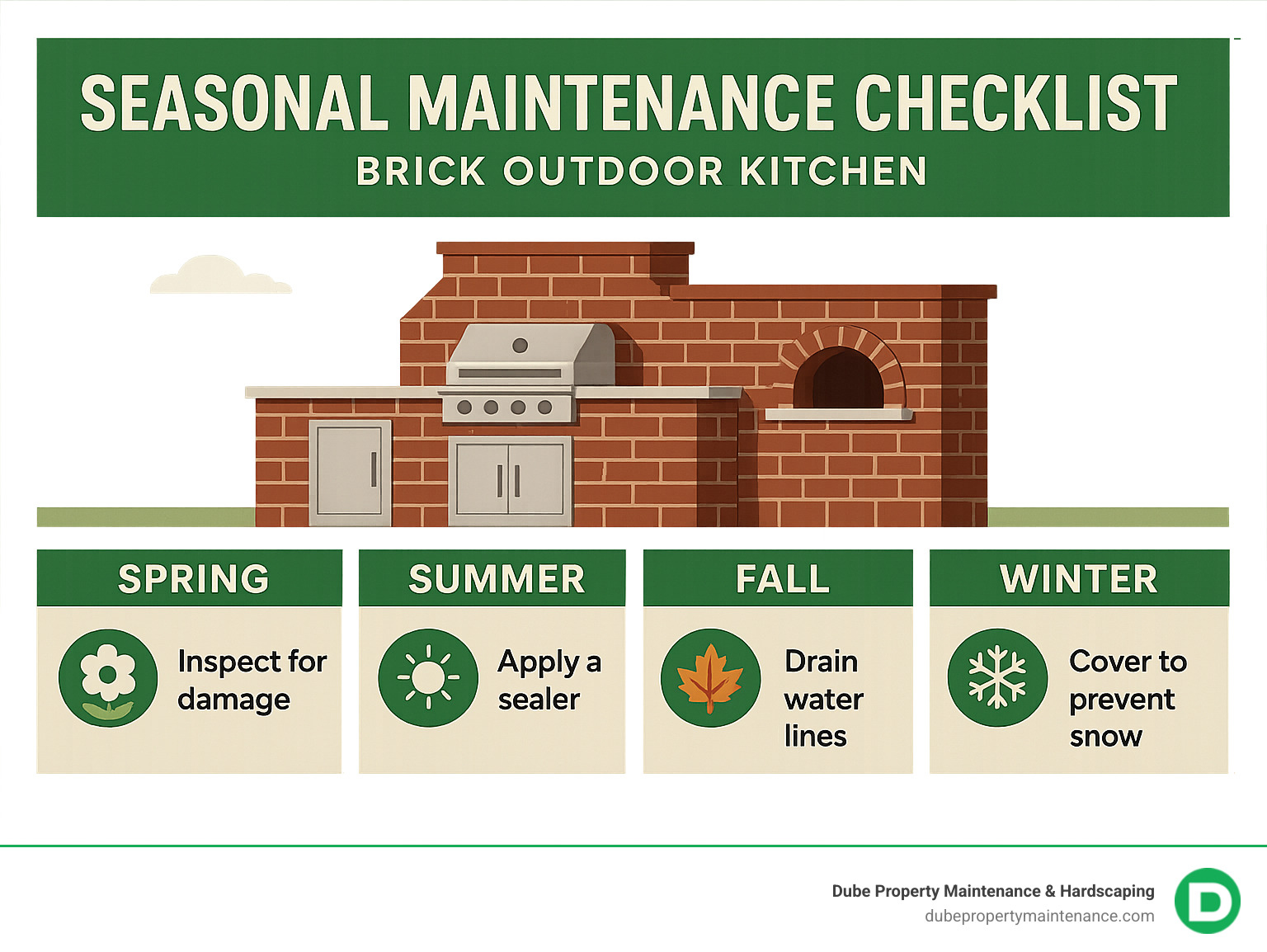
Spring – inspect mortar, clean surfaces, test utilities.
Summer – deep-clean & repoint any loose joints.
Fall – drain water lines, cover or store appliances.
Winter – monitor snow/ice, keep covers secure.
• Footings below frost line (30–48 in. in our service area) stop heaving.
• Coastal homes need marine-grade hardware and occasional mortar sealing.
• Windbreaks and pergolas extend cooking time without trapping moisture.
For additional regional ideas, check this helpful resource.
The short answer is: probably yes. Most cities and towns require permits for permanent brick outdoor kitchen installations, and there’s good reason for this – these structures are heavy, involve utilities, and become permanent parts of your property.
Here in Massachusetts and New Hampshire, we’ve found that permit requirements typically cover setback distances from property lines (usually 10-15 feet), height restrictions to avoid blocking neighbors’ views, and safety requirements for utility connections like gas lines, electrical work, and plumbing.
Don’t try to skip this step. Getting caught building without permits can mean tearing down your beautiful new kitchen and starting over. We always recommend checking with your local building department during the planning phase – they’re usually helpful and can save you headaches later.
The permit process also ensures your brick outdoor kitchen meets local fire codes and structural requirements, which protects both you and your neighbors.
Absolutely, but here’s the thing – it’s much easier and cheaper to plan for it from the beginning. We’ve added pizza ovens to existing brick outdoor kitchens, and while it’s definitely possible, it involves some serious work.
Adding a pizza oven later means modifying the existing structure to handle the extra weight (pizza ovens are heavy!), cutting into your beautiful brickwork to add chimney and ventilation systems, and potentially reinforcing the foundation if it wasn’t designed for the additional load.
The trickiest part is making the new brickwork match the existing structure. Brick ages and weathers, so getting a perfect match can be challenging even with the same brick supplier.
If you’re on the fence about a pizza oven, consider leaving space and rough plumbing during initial construction. You can always add a portable pizza oven first to see how much you’ll actually use it before committing to a built-in version.
This is one of the best parts about choosing brick – with proper construction and reasonable maintenance, your brick outdoor kitchen should easily last 50+ years. We’ve seen well-built brick structures from the 1960s that are still going strong.
The key factors that determine longevity are foundation quality (remember that 12-inch below frost line requirement we mentioned?), proper mortar mixing and application, and regular maintenance like repointing joints every 10-15 years.
Climate plays a role too. Here in New England, our freeze-thaw cycles actually work in brick’s favor compared to other materials. Brick can absorb water and release it without the cracking problems that destroy wood or poorly made concrete.
Quality of initial construction matters most. A properly built brick outdoor kitchen is essentially permanent – it becomes part of your property’s infrastructure just like your house foundation. That’s why getting the foundation and structural work right the first time is so important.
The appliances will need replacement every 10-20 years depending on use and weather exposure, but the brick structure itself should outlast several generations of grills and refrigerators.
Your backyard has the potential to become something truly special. A well-designed brick outdoor kitchen doesn’t just add cooking space – it creates a year-round gathering place where families connect and memories are made. For homeowners in Massachusetts and New Hampshire, brick offers the perfect combination of extreme durability and timeless appeal that can handle our challenging New England weather.
The investment is significant, and we won’t sugarcoat that fact. Between materials, labor, and proper foundation work, you’re looking at a substantial commitment. But here’s what makes it worthwhile: brick outdoor kitchens consistently boost home values while providing decades of reliable service. When you consider the 50+ year lifespan compared to wood alternatives that need replacement every 10-15 years, the math starts to make sense.
The construction process requires real expertise. This isn’t a weekend DIY project for most homeowners – the precision needed for proper mortar joints, structural integrity, and utility integration demands professional skill. But that investment in quality craftsmanship pays dividends in fire safety, weather resistance, and cooking performance that inferior materials simply can’t match.
Whether you’re envisioning intimate family pizza nights or hosting large summer gatherings, your brick outdoor kitchen becomes the natural heart of outdoor entertaining. The thermal mass of brick creates better cooking temperatures, while the non-combustible construction gives you peace of mind around high-heat appliances.
Climate considerations matter tremendously in our region. Proper foundation work below the frost line, quality mortar joints, and understanding how freeze-thaw cycles affect masonry – these details separate successful installations from costly failures. The good news? Brick is specifically designed to handle these challenges when installed correctly.
For additional inspiration on how brick features can work together in your outdoor space, explore our modern outdoor fireplace ideas to see the full potential of coordinated hardscaping.
At Dube Property Maintenance & Hardscaping, we’ve guided countless homeowners through this exciting process. Our team understands the unique demands of New England construction and the importance of getting every detail right the first time. From initial design concepts to final appliance installation, we handle the complexity so you can focus on planning your first outdoor feast.
Ready to transform your backyard into the entertaining space you’ve always wanted? Let’s discuss how we can turn your brick outdoor kitchen vision into a beautiful, functional reality that will serve your family for generations to come.
