

A brick lawn edge creates a clean, defined border between your lawn and garden beds, making yard maintenance significantly easier. Installing one is a straightforward DIY project that involves digging a shallow trench, creating a stable base, and laying bricks in your desired pattern.
Quick Installation Overview:
As one experienced landscaper shared: “If you do them in mortar then they’ll stay in place for at least a decade if not longer.” However, even a well-installed dry-laid edge provides years of reliable service with proper preparation.
Beyond looks, a brick edge serves as a mowing strip, letting you run your mower wheels right along the border to eliminate most string trimming. It also acts as a natural weed barrier between your lawn and planting beds.
Whether you choose a classic flat-laid style or a decorative angled pattern, brick edging adds a crisp, finished look that lifts your landscape.

A freshly installed brick lawn edge instantly makes your landscape look more polished and intentional. Bricks offer a timeless, classic look that complements any home style. Over time, they develop a natural patina, adding to their character.
Properly installed brick edging is incredibly durable, withstanding harsh freeze-thaw cycles that can damage other materials. This means your borders stay neat year after year. A well-installed brick edge can last for decades, unlike other materials that need frequent replacement. Both clay and concrete pavers are designed for excellent weather resistance.
Lawn maintenance becomes much easier. A flat-laid brick edge acts as a mowing strip, allowing you to run your mower wheels right over it, which eliminates most trimming. The solid barrier also prevents grass from creeping into flower beds and serves as an effective weed barrier, meaning less time weeding and more time enjoying your yard.
For homeowners ready to explore comprehensive outdoor changes, our hardscaping services can help you envision how brick edging fits into a larger landscape design.
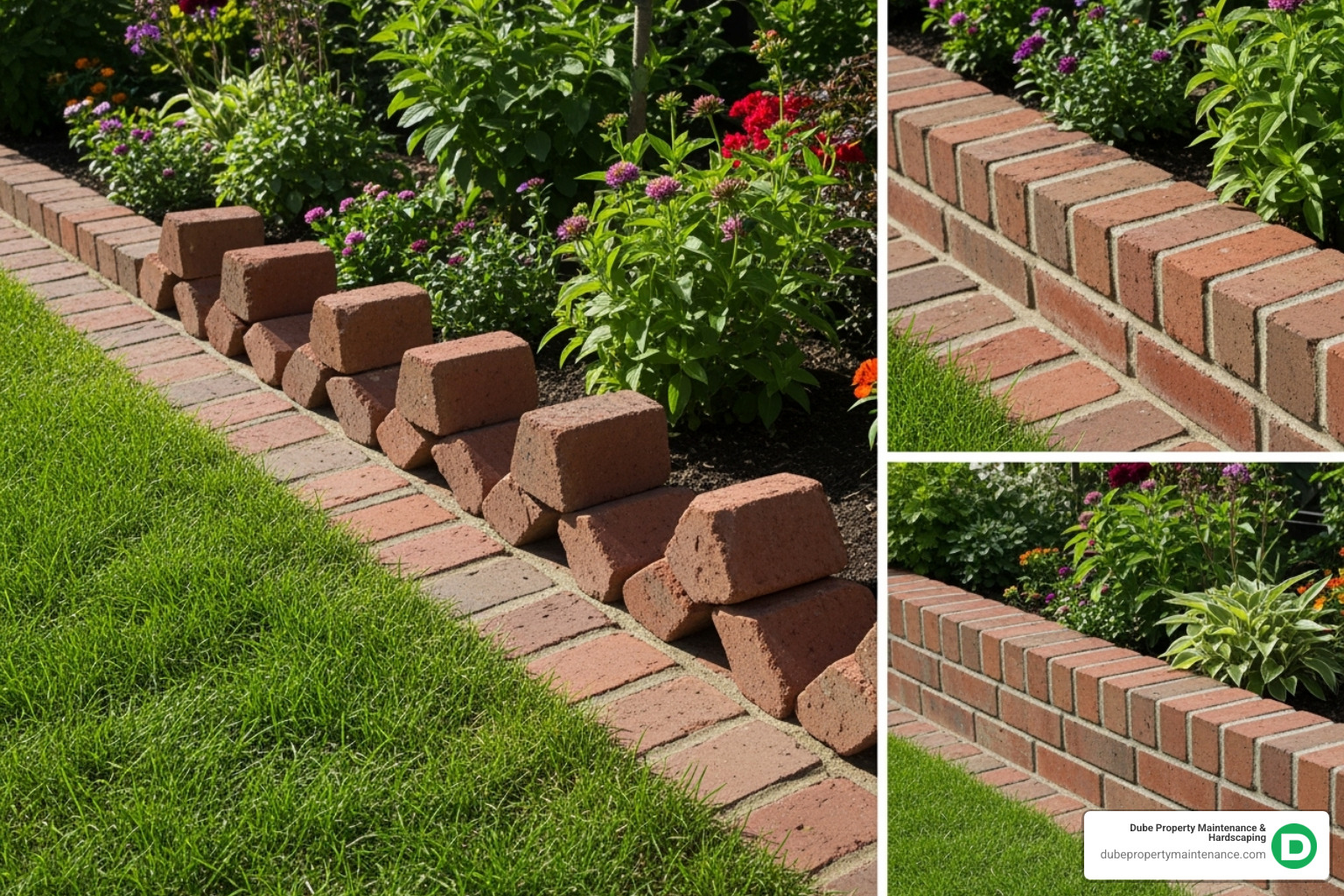
Brick offers creative freedom, with several styles to match your landscape’s personality.
Choosing between clay and concrete pavers is a key decision.
Clay pavers, or “real brick,” offer authentic charm with earthy tones. Many are severe-weather rated bricks for harsh climates and develop a beautiful patina as they age.
Concrete pavers offer incredible variety in color and texture, mimicking natural stone or wood. Their uniform size can simplify DIY installation.
Both materials are durable and weather-resistant. Costs vary depending on the specific product, but both are a solid long-term investment in your property.
For detailed guidance on selecting the perfect materials for your project, check out our comprehensive guide on Choosing the Perfect Pavers: Materials and Styles.
Proper preparation saves time and frustration. Having all your tools and materials ready before you start a brick lawn edge project is key to a smooth installation. Avoid mid-project trips to the hardware store by getting organized first. For larger projects, consider material delivery and check stock availability in advance.

These tools will make the job easier and safer. Work gloves and safety glasses are non-negotiable.
The quality of your materials determines the longevity of your brick lawn edge.
Installing a brick lawn edge is a satisfying DIY project that can transform your yard. Plan for a full weekend to do the job right. There are two main installation approaches: dry-laid and mortar-set.
Dry-Laid vs. Mortar-Set: Which Path Should You Take?
| Feature | Dry-Laid Method | Mortar-Set Method |
|---|---|---|
| Durability | Good, especially with proper base and polymeric sand. Flexible. | Excellent, highly rigid and permanent. “At least a decade if not longer.” |
| Cost | Generally lower material cost (no cement/mortar needed for bonding). | Higher material cost (cement/mortar, potentially rebar). |
| Skill Level | Easier for DIYers; more forgiving of minor imperfections. | Requires more masonry skill; precision is key. |
| Repairability | Easier to remove and re-level individual bricks if shifting occurs. | Difficult to remove or adjust; requires breaking mortar bond. |
| Weed Control | Polymeric sand significantly inhibits weeds. | Mortar prevents weeds entirely in joints. |
| Drainage | Excellent, as water can permeate through sand and gravel layers. | Less permeable; drainage needs to be considered in trench design. |
| Frost Heave | Susceptible if base isn’t sufficiently deep and compacted for climate. | Less susceptible due to rigid bond, but base still crucial. |
The dry-laid method is ideal for most DIY projects, offering a great balance of durability, cost, and ease of repair. This guide focuses on the dry-laid technique.
Proper planning is the most important step and saves time later. Use stakes and string for straight lines and a garden hose to lay out curves. Adjust the layout until you are satisfied with the look from all angles. Mark your layout with spray paint or a string line. To calculate the number of bricks, divide the total edge length in inches by the width of one brick and add 10% extra for cuts and spares. Finally, consider how the edge will meet corners and other features, and plan for soil disposal.
For similar planning strategies, check out our guide on Paver Walkway Installation.

Aim for a trench 4 to 6 inches deep to allow for the base material and the brick. In climates with frost, digging into the subsoil below the topsoil is crucial for stability. Make the trench about 2 inches wider than your brick (e.g., a 6-inch trench for a 4-inch brick) to allow for adjustments. Use a sharp spade to cut and remove sod cleanly. Use a trowel to level the bottom of the trench, as an uneven bottom will result in an uneven edge. Save the excavated soil for backfilling.
A stable base is the key to a long-lasting brick lawn edge and prevents shifting. To prevent frost heave, you must create a base that drains well. Add a 2 to 3-inch layer of paver base (crushed, angular gravel), which locks together when compacted. Compact the base thoroughly with a hand tamper until it is rock-solid. On top of the compacted base, add a 1-inch layer of leveling sand and compact it lightly to create a firm, even bed for the bricks.
This foundation work mirrors what we do for larger projects. Learn more about creating stable foundations for retaining walls.

Work carefully to ensure a straight, level edge. Set the first brick carefully at a corner or visible end to use as a reference. Use the mason’s line as a guide for height and alignment. Gently tap each brick into the sand bed with a rubber mallet, adjusting until its top aligns with your line. Check for level across the tops of the bricks every few feet, adjusting individual bricks by adding or removing sand underneath. Place bricks snugly together with minimal gaps. The final edge should be flush with the lawn to create a mowing strip.
These final steps will secure your edge and give it a polished look. Backfill the trench on both sides of the bricks with the excavated soil, packing it firmly to provide support. Use polymeric sand to fill the joints; this special sand hardens when wet, locking the bricks together and inhibiting weed growth. Sweep the sand over the bricks, working it deep into the joints until they are full. Gently mist the joints with water to activate the polymers. Immediately sweep or blow any excess sand off the brick surfaces before it hardens. Allow the sand to cure for 24-48 hours before walking on the edge.
Let’s cover the details for creating professional-looking curves and corners, plus tips for long-term maintenance for your brick lawn edge.

With the right techniques, you can create smooth curves and crisp corners for a professional finish.
This kind of detailed work is similar to what we do on more complex projects like our walkways and steps.
While not zero-maintenance, caring for your brick lawn edge is simple and ensures it stays looking great.
Here are answers to common questions about installing a brick lawn edge.
Whether to use mortar depends on your goals for durability and permanence.
For most homeowners, we recommend the dry-laid approach for its balance of durability, cost, and ease of maintenance.
The cost of a brick lawn edge project varies based on the type of brick and the complexity of the design (e.g., straight lines vs. curves).
Based on general internet data for DIY material costs, you can expect to spend anywhere from $4 to $15 per linear foot, with premium materials and complex installations reaching even higher. This wide range reflects the variety of brick types available, the depth of base materials needed for your climate, and the quality of finishing materials like polymeric sand.
Please note that these are average costs based on general market data and don’t reflect actual pricing for Dube Property Maintenance & Hardscaping services. For a precise quote custom to your specific project, location, and design preferences, it’s always best to get a direct estimate from professionals who can assess your unique situation.
In climates with freeze-thaw cycles, preventing your brick lawn edge from shifting and heaving depends entirely on building a proper foundation from the start.
First, dig your trench deep enough to get past the topsoil, which holds water and expands when it freezes. Reaching the more stable subsoil is key.
Next, install a proper base. A 2 to 4-inch layer of compacted paver base (crushed gravel) provides a stable, well-draining foundation. Top this with 1 inch of leveling sand to create a smooth bed for the bricks.
Thoroughly compacting each layer of the base is critical. A dense base prevents water from penetrating and freezing, which is the primary cause of heaving. Following these preparation steps will help your brick lawn edge stay level through years of New England winters.
A brick lawn edge is a rewarding project that adds timeless beauty and structure to your landscape. By following the steps for proper base preparation and installation, you can create a professional-looking border that lasts for years. The secret to a long-lasting edge is the foundation. Proper digging and compaction are essential for preventing issues like frost heave, especially in the New England climate.
The benefits are immediate: easier mowing, fewer weeds, and improved curb appeal that transforms your entire property.
If a DIY project of this scale feels overwhelming, or if you want to guarantee a flawless result, professional installation is an excellent option. The expert team at Dube Property Maintenance & Hardscaping can design and build the perfect hardscape features for your home. With years of experience creating stunning outdoor spaces throughout the Merrimack Valley and southern New Hampshire, we understand exactly what it takes to create borders that stand up to our unique climate challenges while delivering that polished look you’re after.
Learn more about our paver installation services and let us help you achieve the landscape of your dreams.
