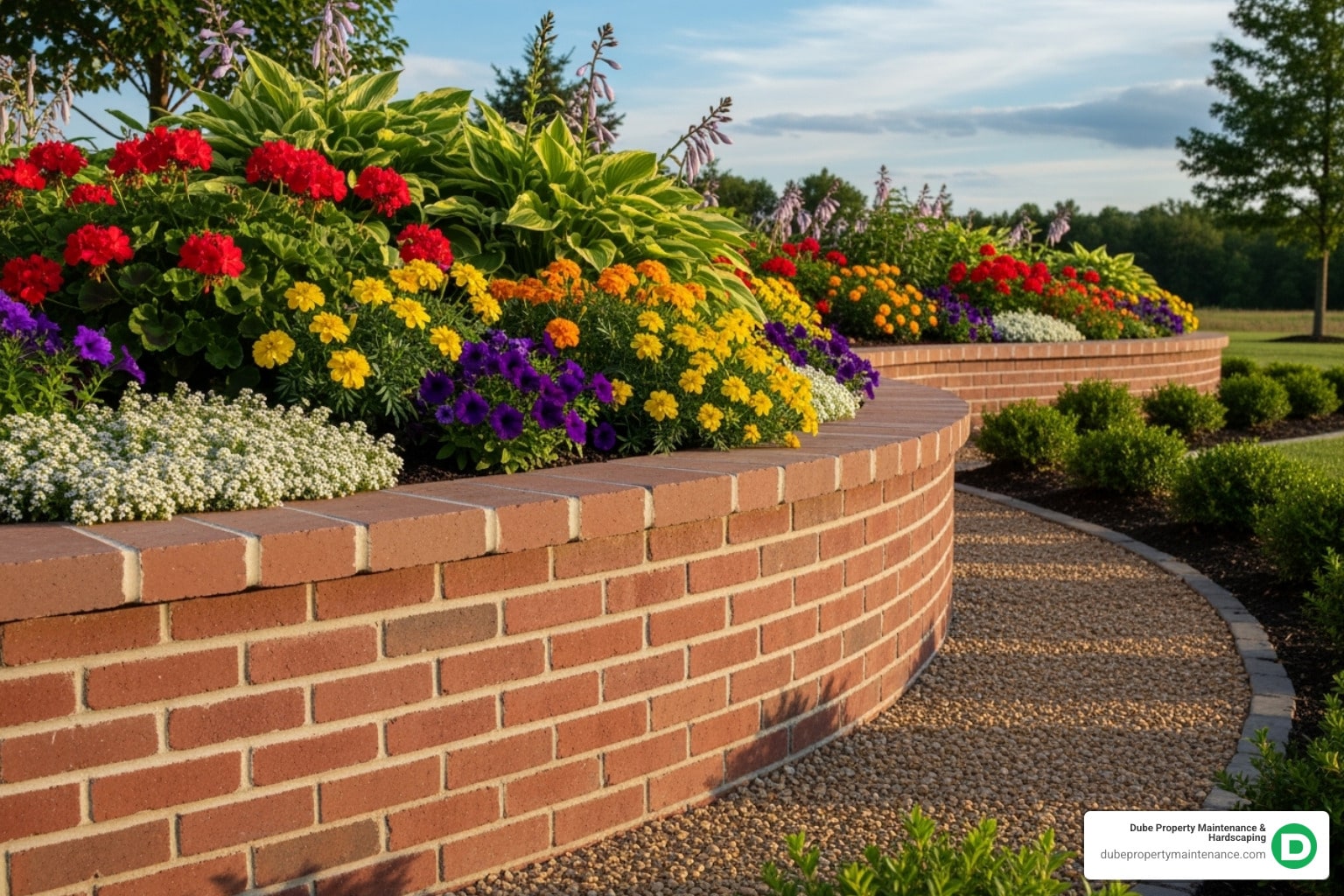

Brick for retaining wall construction offers a perfect blend of structural integrity and timeless aesthetic appeal. Whether you’re managing a sloped yard, creating terraced gardens, or defining outdoor living spaces, the right material transforms your landscape’s function and beauty.
Quick Selection Guide for Brick Retaining Walls:
Retaining walls are essential for preventing soil erosion, creating usable flat areas from uneven terrain, and managing ground elevation changes. The material you choose directly impacts your wall’s durability, installation complexity, and maintenance. Concrete blocks are a top choice for their strength, weather resistance, and simpler installation compared to traditional masonry.
Modern interlocking systems have revolutionized DIY retaining wall construction with features that eliminate the need for mortar while ensuring stability. However, walls over 4 feet present serious engineering challenges and typically require permits and professional design due to significant soil pressure.
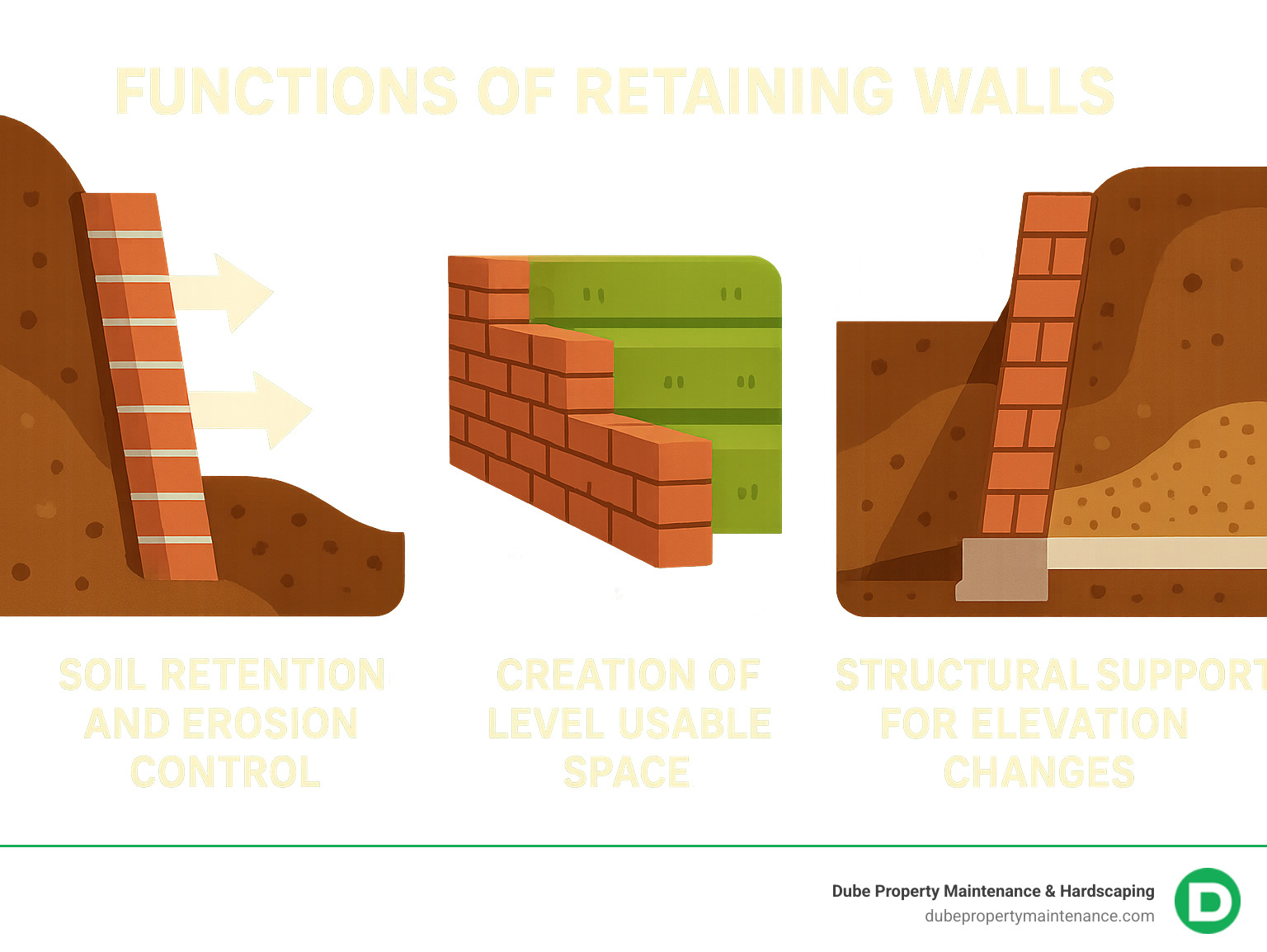
Basic brick for retaining wall vocab:
A retaining wall is more than a decorative border; it’s an engineered structure designed for soil retention. On a hillside, it acts as a strong barrier to hold back soil and prevent erosion control, protecting your property investment. Retaining walls also excel at creating level ground from challenging terrain, turning a steep slope into a terraced garden, a level patio, or expanded lawn space. Our Landscape Retaining Walls service focuses on designing systems that blend beauty with these critical structural demands.
Many homeowners confuse retaining walls with garden walls. A garden wall is typically under 2 feet tall and serves a decorative purpose, like defining a flower bed. A true retaining wall carries a significant structural load, and the pressure it must resist increases exponentially with height. This is why engineering requirements are crucial for walls over 2-4 feet, which often need robust foundations, proper drainage, and professional permits. Garden walls are for decoration; retaining walls provide serious structural support.
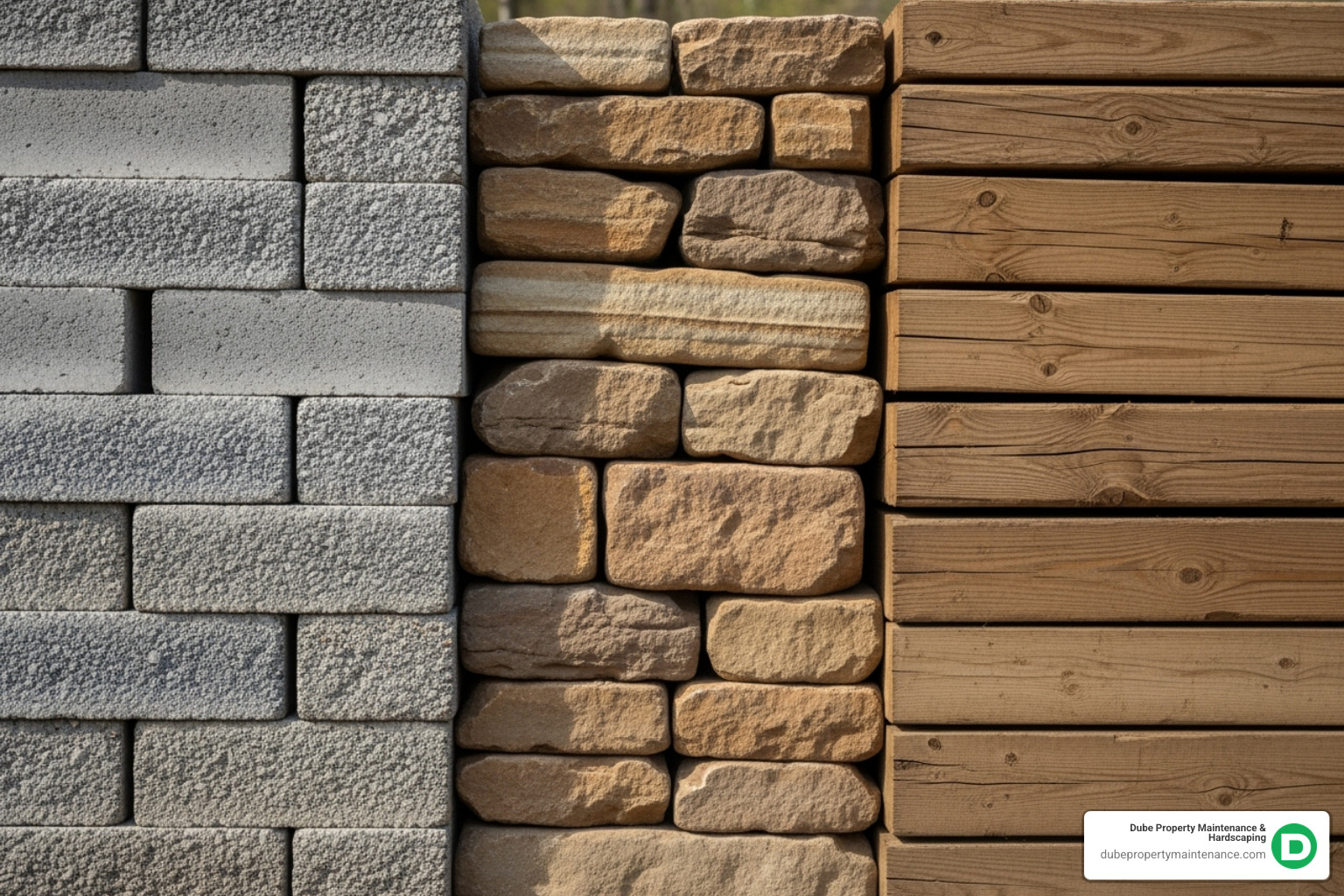
Choosing the right material for your brick for retaining wall project is key. Here are the most popular choices:
Concrete blocks are a top choice for their strength, weather resistance, and straightforward installation. They are durable, low-maintenance, and ideal for walls under 4 feet unless reinforced.
A Stone Retaining Wall offers timeless, natural beauty but requires skilled masonry and comes at a higher price point.
Treated timber provides a rustic look and is budget-friendly for DIY projects. However, wood requires more maintenance and has a shorter lifespan due to potential rot and pests.
Gabion walls (wire cages filled with rocks) offer excellent drainage and a modern or natural look, depending on the fill material.
Each material option has its pros and cons. The best choice matches your site conditions, budget, and aesthetic goals.
When selecting a brick for retaining wall construction, you must balance structural strength, durability, and visual appeal. A key metric is compressive strength, measured in PSI (pounds per square inch), which indicates how much pressure the material can handle. What appears to be a traditional brick wall might be an engineered concrete block designed to mimic a classic look. Our Retaining Wall Blocks combine structural performance with timeless aesthetics.
A traditional solid brick wall uses multiple courses of brick to create a cavity wall. While authentic, the block core wall method is often more practical. This approach uses concrete masonry units (CMU) for the structural core and applies a brick veneer to the visible face. This method is highly cost-effective as it uses less brick. It also simplifies waterproofing, which can be applied to the core before the veneer. From a structural integrity standpoint, the CMU core is engineered for retaining walls, with hollow cores for steel and concrete reinforcement, creating an incredibly strong structure. Our Brick Retaining Walls often use this hybrid approach.
PSI indicates how much pressure your brick for retaining wall material can withstand. For most residential walls up to 4 feet, a PSI requirement of 1,500 to 2,000 is adequate for typical soil and weather resistance. Premium blocks can exceed 5,000 PSI, offering superior durability against freeze-thaw cycles. Wall height directly impacts PSI needs, as taller walls face more pressure. Higher PSI contributes to longevity, meaning a stronger block can last decades longer with less maintenance, justifying the investment.
Interlocking mechanisms like built-in lips and pins have simplified DIY retaining wall construction. This ease of installation is a major benefit over traditional masonry, which requires mortar and advanced skills. These mortarless systems eliminate mess and allow the wall to handle minor settling without cracking. The built-in setback feature creates a natural backward lean into the soil, increasing strength. This design ensures the entire wall acts as an integrated unit, providing excellent stability when properly installed.
Building your own retaining wall up to 4 feet high can be a rewarding DIY project. Anything taller typically requires professional engineering. For more details, see our How to Build Retaining Wall guide.

Proper planning and preparation are essential.
Your first course is the most critical. Remove any rear lips from the blocks so they sit flat. Place the first block and use your level to ensure it is perfectly level side-to-side and front-to-back. Each subsequent block must be level with its neighbors. Use a rubber mallet to make minor adjustments.
For strength, staggering joints on subsequent rows, so each block sits over the joint of the two blocks below it. As you stack subsequent rows, ensure the interlocking system engages securely. Keep each course clean of debris before adding the next. Apply construction adhesive to the top two courses and the capping stones to lock them in place.
Water creates hydrostatic pressure and is the biggest threat to a retaining wall.
Proper drainage is the difference between a wall that lasts for decades and one that fails in a few years.

A well-built retaining wall can be a stunning landscape feature. However, even confident DIYers can make costly mistakes. Knowing the possibilities, pitfalls, and when to seek professional help is key. Our Hardscaping Services guide homeowners through these decisions.
Retaining walls are versatile design tools.
Avoid these common pitfalls that can lead to wall failure:
It’s smart to call a professional in certain situations:
Our Retaining Wall Contractor team understands New England’s unique challenges and can ensure your project is a success.
Here are answers to common questions we receive from homeowners in Methuen, MA, and Southern New Hampshire.
For DIY projects, we strongly recommend sticking to a maximum height of 3 to 4 feet. The soil pressure against a wall increases exponentially with height. Walls taller than this typically require building permits and professional engineering to ensure they are safe and comply with local codes in areas like Andover, MA, and Salem, NH. A professional can design a taller wall that is both beautiful and structurally sound for decades.
The best base is a level trench filled with 4 to 6 inches of compacted, crushed stone or gravel. The trench should be about twice the width of your blocks. Use angular, crushed stone, not rounded river rock, as it locks together to create a stable platform. Compaction is a critical step that prevents future settling and ensures your wall remains level. This gravel base also provides essential drainage.
Yes, absolutely. Every retaining wall, regardless of its size, needs proper drainage to prevent failure. Without it, water builds up, creating hydrostatic pressure that can cause a brick for retaining wall to bulge, crack, or collapse. A 12-inch-wide layer of gravel backfill behind the wall, combined with a perforated drainage pipe at the base, will safely channel water away and ensure the longevity of your wall.
A successful retaining wall project depends on smart choices from the start. The key takeaways are clear:
While DIY walls under 4 feet can be a rewarding project, taller or more complex walls require professional expertise. The Dube Property Maintenance & Hardscaping expertise is invaluable for navigating local New England soil conditions, climate, and building codes. We ensure every brick for retaining wall we build combines structural integrity with stunning visual appeal.
Ready to transform your landscape? Contact our expert team for your landscape retaining wall project and let’s build something that lasts.