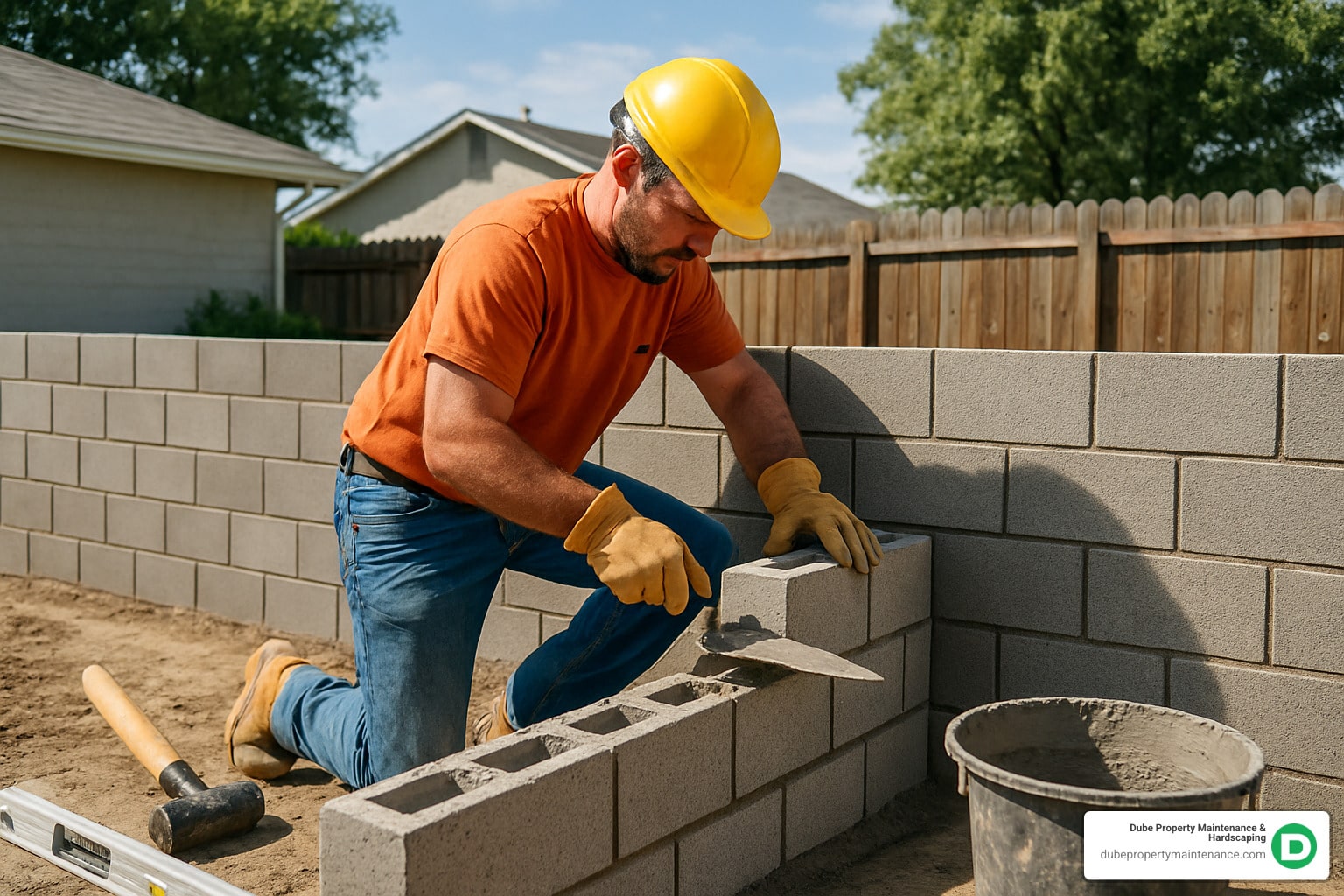

Block wall contractors near me are your go-to professionals for building durable, attractive walls that protect your property and improve your outdoor space. Whether you need erosion control, privacy fencing, or decorative garden walls, the right contractor makes all the difference.
Quick Answer: What to Look For in Block Wall Contractors:
Based on research data, building a block wall costs between $20 to $50 per square foot on average, with premium materials reaching up to $150 per square foot. Wood alternatives cost $10 to $40 per square foot but last only 5-20 years compared to concrete’s 50-100 year lifespan.
The challenge isn’t just finding contractors – it’s finding quality ones. Walls over 3 feet generally require engineering by a qualified civil engineer, and some municipalities require engineering for walls as low as 2 feet. This means you need contractors who understand both construction and local regulations.

Block wall contractors near me further reading:
When you’re searching for block wall contractors near me, you’re looking for skilled professionals who can transform your property with durable, attractive masonry solutions. At Dube Property Maintenance & Hardscaping, we handle everything from retaining walls that stop erosion to decorative walls that improve your outdoor space.
We manage the entire process – from permits to final cleanup. The beauty of working with experienced masonry services professionals is understanding that each wall type serves a specific purpose. A privacy wall around your pool needs different construction than a retaining wall holding back a hillside.
More info about retaining wall services and More info about masonry services provide detailed information about our comprehensive offerings.
Concrete blocks are the workhorses of the masonry world. These concrete masonry units (CMUs) handle New England’s brutal winters, summer heat, and everything Mother Nature throws at them. While wood fencing rots and vinyl cracks, concrete blocks keep performing year after year.
Decorative blocks prove that functional doesn’t have to mean boring. Split-face blocks add texture that catches light beautifully, while smooth blocks create clean, modern lines that work with contemporary landscaping.
Segmental walls use an interlocking system that doesn’t require mortar. Gravity walls use their weight to hold back soil, ideal for shorter walls up to 4 feet. Cantilever walls use reinforced concrete and engineering for taller applications.
Erosion control is the most critical reason people call us. A properly built retaining wall becomes your property’s protection against soil erosion, saving driveways, foundations, and gardens.
Property boundaries get major upgrades with block walls. Unlike wooden fences that deteriorate, concrete block walls maintain their appearance for decades.
Garden walls create raised planting beds while adding visual interest. Commercial fencing provides durability and security for retail and industrial facilities. Pool safety applications require walls meeting strict codes while remaining attractive.
For comprehensive hardscaping solutions, visit hardscaping companies.
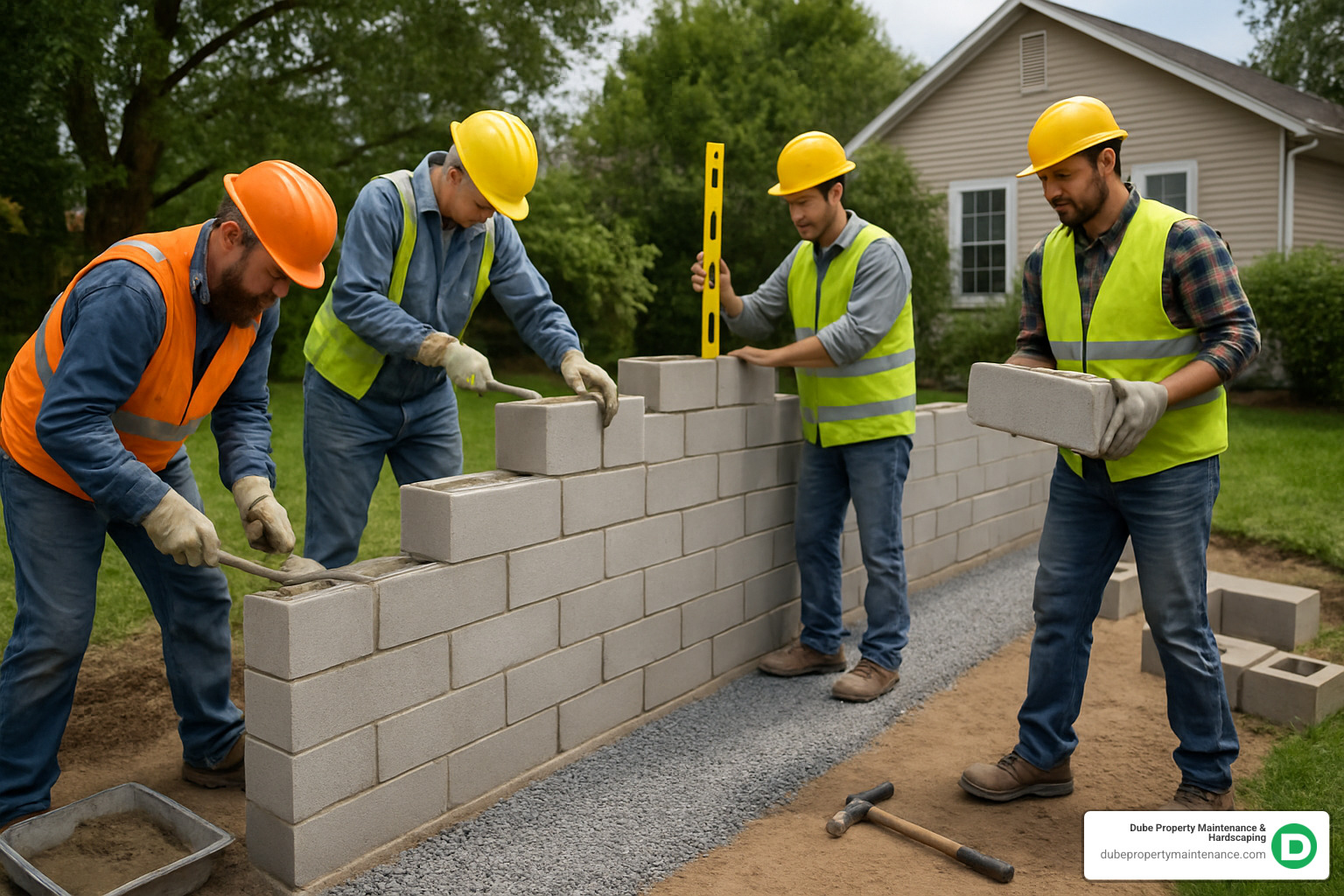
Finding great block wall contractors near me starts with understanding what separates professionals from pretenders. Licensing means your contractor knows Massachusetts building codes and won’t leave you with permit violations. Insurance coverage protects everyone – when contractors carry liability and workers’ compensation, you’re not liable for injuries or property damage.
Local experience matters enormously for block walls. New England’s freeze-thaw cycles and soil conditions require specific knowledge. You want contractors who understand our climate challenges and design accordingly.
Manufacturer certifications show contractors have invested in proper training. Companies like Allan Block and Unilock offer programs teaching installation techniques and quality standards.
Don’t skip references and portfolio reviews. Seeing completed projects similar to yours builds confidence, while talking to previous customers reveals how contractors handle challenges and stand behind their work.
More info about hardscaping companies explains what comprehensive providers should offer.
Bonded contractors provide extra financial protection if problems arise. Liability insurance should cover property damage and personal injury with appropriate coverage amounts. Always verify through current insurance certificates.
Building permits knowledge separates professionals from amateurs. Walls over certain heights require permits and engineering, with requirements varying by municipality. Your contractor should handle these details seamlessly.
Engineering requirements become critical for taller walls or challenging soil conditions. The best contractors employ engineers or maintain relationships with qualified structural engineers.
Workmanship warranties of at least 2 years demonstrate quality confidence. Manufacturer-authorized contractors often provide longer warranties backed by both contractor and manufacturer.
Unlicensed contractors create liability risks and potential code violations. Door-to-door sales tactics rarely lead to quality work – reputable contractors stay busy through referrals. Cash-only payments should raise immediate red flags.
Pressure tactics with artificial deadlines indicate contractors prioritizing sales over satisfaction. Unrealistic timelines that seem too good to be true usually are – proper installation requires time for site preparation and careful construction.

Understanding how block wall contractors near me approach installation helps you know what to expect. The process begins with excavation – digging foundation trenches 12-18 inches deep, reaching below the frost line to prevent freeze-thaw damage.
Footings preparation creates the stable foundation. Most block walls need 12 inches of compacted crushed stone, though taller walls require concrete footings. Drainage installation happens during construction with geotextile fabric, crushed stone backfill, and drainage pipes channeling water away from the wall.
These average costs are based on internet research data and are not actual costs for Dube Property Maintenance & Hardscaping services. Your specific project depends on site conditions, materials, and complexity.
Concrete blocks for standard retaining walls typically run $20 to $50 per square foot installed, with premium decorative materials reaching $60 to $150 per square foot.
Installation costs include excavation, foundation preparation, drainage, and skilled labor expertise. Material costs usually represent 30-40% of total investment, with remainder covering labor, equipment, and project management.
Labor rates for experienced masonry crews typically range $50 to $100 per hour for two-person teams, according to industry data.
Choosing the right landscape retaining wall contractors near me involves more than just comparing prices – it’s about finding contractors understanding the engineering behind lasting walls.
Wall height dramatically impacts investment because taller walls need deeper foundations and often require structural engineering. Exceeding 4 feet typically adds $1,000 to $3,000 for engineering services.
Site access significantly affects costs. Walls accessible to excavation equipment cost less than those requiring hand-digging and wheelbarrow transport through narrow gates.
Soil conditions determine underground requirements. Rocky soil means higher excavation costs, while clay soil demands improved drainage systems. Drainage requirements can add $5 to $15 per linear foot but prevent expensive failures.
Decorative finishes like stucco coatings or stone veneers can add $10 to $30 per square foot while significantly increasing property value.
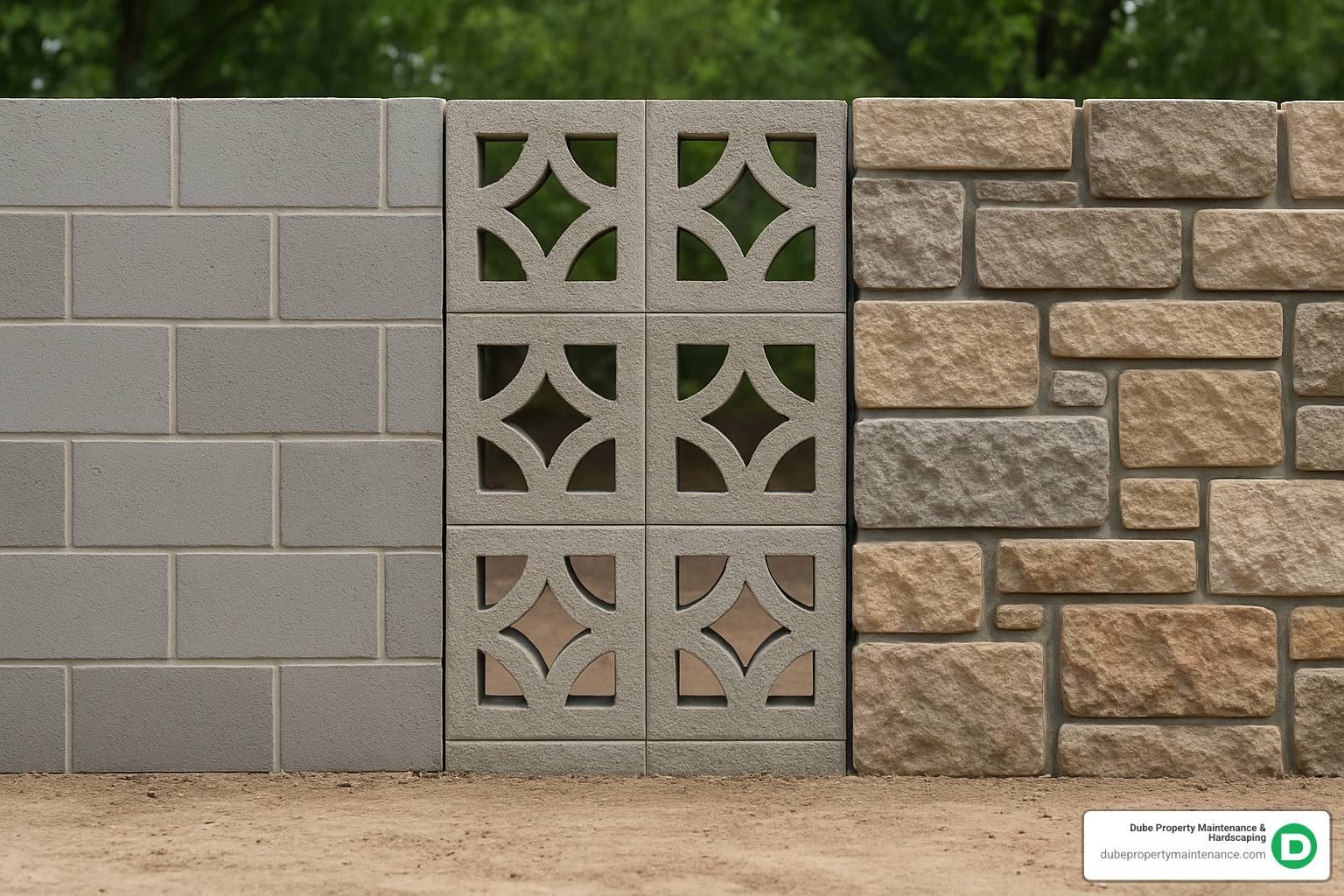
Selecting the right materials for your block wall needs to look great, fit your lifestyle, and last for years. At Dube Property Maintenance & Hardscaping, we’ve seen how the right material choice transforms simple retaining walls into stunning landscape features adding real property value.
Concrete masonry units (CMUs) remain the workhorses, offering incredible strength without breaking the bank. They’re surprisingly adaptable – paint them, stucco them, or leave them natural.
Natural stone brings timeless elegance requiring bigger upfront investment but delivering walls that outlast generations. Decorative blocks offer the perfect middle ground – split-face blocks create rugged, natural looks while smooth blocks deliver clean, contemporary lines.
Modern manufacturing provides variety beyond boring gray concrete – rich earth tones, subtle textures, and blocks mimicking natural stone at fraction of the cost.
Block wall contractors near me earn expertise understanding how materials perform in New England’s challenging climate. Weather resistance is essential for long-term success.
Freeze-thaw cycles are brutal in Massachusetts and New Hampshire. Quality concrete blocks handle hundreds of these cycles, while some natural stones require careful selection and installation.
Maintenance requirements affect long-term costs. Concrete blocks need occasional cleaning and resealing every decade. Natural stone walls require periodic repointing but age gracefully when properly maintained.
Structural integrity depends on matching materials to specific applications. Properly installed concrete block walls easily last 50-100 years with minimal maintenance.
More info about stone wall builders provides detailed natural stone information.
Color variations create walls feeling like they’ve always belonged rather than afterthoughts. Texture options completely transform wall personality – smooth surfaces create sophisticated looks while split-face designs add natural, organic feelings.
Cap stones protect wall investment from water damage while adding polished, professional appearance. Integrated lighting transforms walls into dramatic landscape features providing safety and beauty.
Stucco finishes provide unlimited color possibilities while adding weather protection. Brick veneers combine concrete block structural strength with classic brick appearance.

Understanding building codes and engineering requirements upfront saves time, money, and headaches. At Dube Property Maintenance & Hardscaping, we handle all paperwork so you don’t steer these requirements alone.
Building codes basic rule: most communities require permits for walls over 3-4 feet height. However, some towns require permits for any retaining wall regardless of height. Height restrictions exist to maintain neighborhood character and prevent safety hazards.
Setback requirements determine wall proximity to property lines, buildings, and utilities, preventing neighbor conflicts and ensuring maintenance access. Drainage compliance protects everyone from flooding – walls can’t redirect water onto neighboring properties.
More info about concrete retaining wall builders includes detailed engineering and permit requirements.
Wall height over 3-4 feet typically triggers engineering requirements, though some municipalities require engineering for walls as low as 2 feet. Engineering ensures walls safely handle soil pressure, water loads, and forces for decades.
Soil conditions can make shorter walls require engineering. Expansive clay that swells when wet, loose fill that shifts, or high groundwater creating pressure makes engineering essential regardless of height.
Load-bearing walls supporting driveways, patios, or structures always need engineering. Commercial applications face stricter safety standards, typically requiring engineering for all retaining walls.
Municipal requirements vary dramatically – some require engineering for any retaining wall, others allow homeowner-built walls to certain heights. Safety factors in engineered designs account for unexpected situations, ensuring 50-100 year performance.
Based on industry research data (not Dube Property Maintenance & Hardscaping pricing), block walls typically cost $20 to $50 per square foot for standard installations, with premium materials pushing costs to $150 per square foot or more.
Wall height plays a huge pricing role. Crossing the 3-4 foot threshold adds engineering requirements and deeper foundations – potentially $1,000 to $3,000 just for professional design work.
Site access affects budgets significantly. Equipment access costs less than wheelbarrow transport through backyards. Drainage requirements typically add $5 to $15 per linear foot but prevent expensive future failures.
Wood retaining walls cost $10 to $40 per square foot upfront but need replacement every 5-20 years. Concrete block walls last 50-100 years with minimal maintenance – real long-term value.
Probably yes, if your wall exceeds 3-4 feet tall. Height thresholds vary by municipality – most require permits for walls over 3-4 feet measured from lower grade. Some towns require permits for any retaining wall regardless of height.
Engineering requirements kick in around same height limits. Walls over 3-4 feet typically need structural engineering by qualified civil engineers. Some jurisdictions require engineering for walls as low as 2 feet.
Setback requirements determine proximity to property lines, utilities, and structures. Professional contractors handle permit applications, coordinate with engineers, schedule inspections, and ensure local compliance.
Simple gravity walls under 4 feet with straight runs typically take 2-5 days for walls up to 100 linear feet. Engineered retaining walls over 4 feet need 1-2 weeks including excavation, foundation work, and drainage installation.
Complex projects with curves, steps, or decorative features can take 2-4 weeks depending on scope. Permit approval adds 1-4 weeks before construction begins.
Weather conditions and soil conditions impact schedules. Seasonal considerations matter in New England – spring and fall offer optimal construction conditions.
Finding quality block wall contractors near me means looking for professionals who create lasting solutions protecting your property and adding value for decades.
Professional installation makes the difference between walls standing strong for generations versus cracking after the first harsh winter. When contractors understand engineering standards, local codes, and manufacturer specifications, your investment stays protected with proper warranty coverage.
Local expertise becomes especially important in New England, where contractors must understand freeze-thaw cycles, soil conditions, and drainage challenges. There’s a big difference between reading about these conditions and dealing with them for years.
Quality materials paired with skilled installation create long-term value. You might pay more upfront than the cheapest option, but when your wall looks great in 50 years while budget walls need replacement, you’ll appreciate that choice.
Proper permits and engineering requirements aren’t bureaucratic hassles – they’re your safety net. Professional contractors handle these details seamlessly, preventing liability issues or project delays.
At Dube Property Maintenance & Hardscaping, we’ve built our reputation combining old-school craftsmanship with modern techniques and materials. From initial site visits through final cleanup, our team handles every detail for smooth project completion.
Whether dealing with erosion problems, needing privacy screening, or wanting stunning landscape features, we have the experience and equipment to do it right the first time. We proudly serve homeowners and businesses throughout Methuen, MA and surrounding Massachusetts and New Hampshire communities.
More info about landscape retaining wall contractors provides deeper looks at our comprehensive hardscaping services and project showcases.
Ready to turn your vision into reality? Contact us today to discuss your block wall project and find why discerning property owners throughout the region choose Dube Property Maintenance & Hardscaping for their most important outdoor investments.