
Basal reinforcement geotextile is a high-strength synthetic fabric placed at the base of embankments to distribute loads and prevent failure on soft or unstable ground. When construction must happen over weak soils, these engineered textiles create a stable foundation that can mean the difference between project success and costly failure.
Key Facts About Basal Reinforcement Geotextile:
– Primary Function: Distributes vertical loads evenly across soft soil to prevent shearing and settlement
– Material Types: Woven polyester, multifilament yarns, or high-strength polypropylene
– Strength Range: 50 kN/m to 1,000 kN/m tensile strength depending on application
– Applications: Road embankments, retaining walls, building foundations, and void spanning
– Benefits: Reduces material costs by 30-60%, enables rapid construction, eliminates staged building
How It Works: The geotextile acts like a strong blanket under your foundation. When loads press down, the fabric spreads that weight across a wider area and provides tensile strength that soil alone cannot offer. This creates what engineers call a “composite structure” – soil and fabric working together.
For property owners in Methuen and surrounding areas, understanding basal reinforcement becomes crucial when dealing with New England’s variable soil conditions, from soft clays near water bodies to organic soils in low-lying areas.
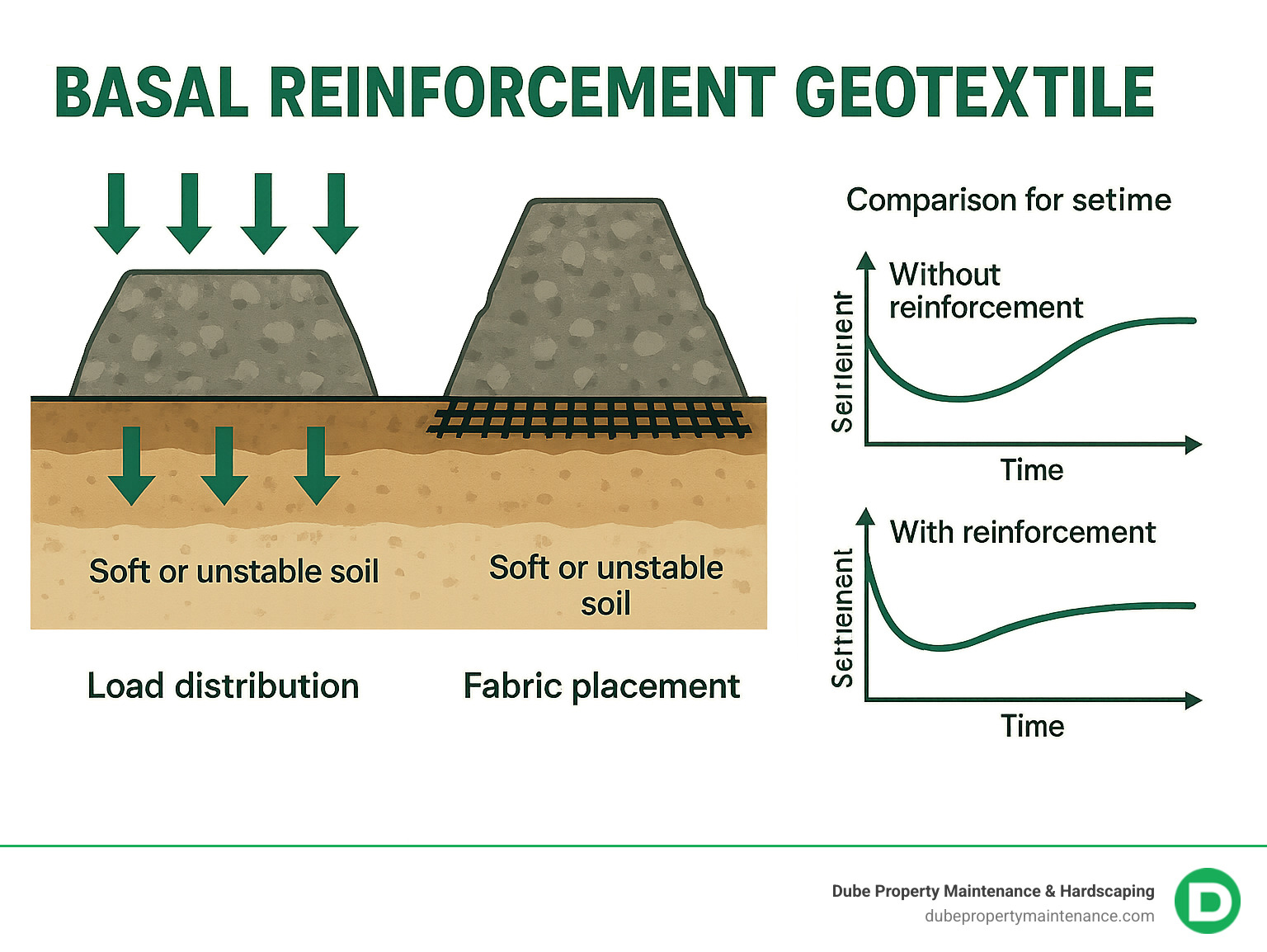
When you place a basal reinforcement geotextile on soft soil, three powerful mechanisms kick into action: mechanical interlock, tensioned membrane action, and load transfer.
Mechanical interlock occurs when aggregate particles lock into the fabric’s structure, creating massive friction between soil and fabric that prevents sliding or shearing.
Tensioned membrane action happens as loads press down – the geotextile stretches slightly and forms a bowl-shaped membrane that spreads concentrated loads across a much wider area. Scientific research on ground improvement shows this can reduce vertical stresses on weak subgrade by 50% or more.
Load transfer allows the fabric to move loads from weak spots to stronger foundation areas, creating “confinement” that holds everything together under pressure.
When loads hit, the geotextile immediately engages through mechanical interlock. As more load gets added, the fabric develops tensile strength up to 1,000 kN/m and forms a load-distributing membrane. Shear resistance prevents sliding failures, while confinement prevents soil particles from moving sideways under load, boosting bearing capacity by 200-300%.
A basal reinforcement geotextile handles multiple jobs simultaneously:
Separation prevents fine soil particles from migrating upward into aggregate, preventing “pumping” that turns everything to mush.
Reinforcement provides tensile strength to resist lateral spreading, especially crucial in soils with CBR values below 3.
Filtration keeps water flowing while holding soil particles in place through carefully engineered opening sizes.
Drainage allows water flow along the fabric surface, preventing dangerous pore pressure buildup.
Tensile membrane action distributes forces under load, creating a flexible membrane that spans voids or bridges soft spots.
Woven polyester (PET) geotextiles are the heavy lifters, handling tensile loads up to 1,200 kN/m with low elongation for immediate load response.
Multifilament geotextiles combine excellent mechanical strength with superior water flow properties, retaining 70% strength after 500 hours of UV exposure.
High-strength polypropylene offers solid performance at budget-friendly prices, working well in neutral to acidic conditions.
Geogrids create incredible mechanical interlock with stone through large openings (0.5-4 inches), forming locked composite materials.
Geocomposites combine geotextiles with drainage cores for multiple functions in one product.
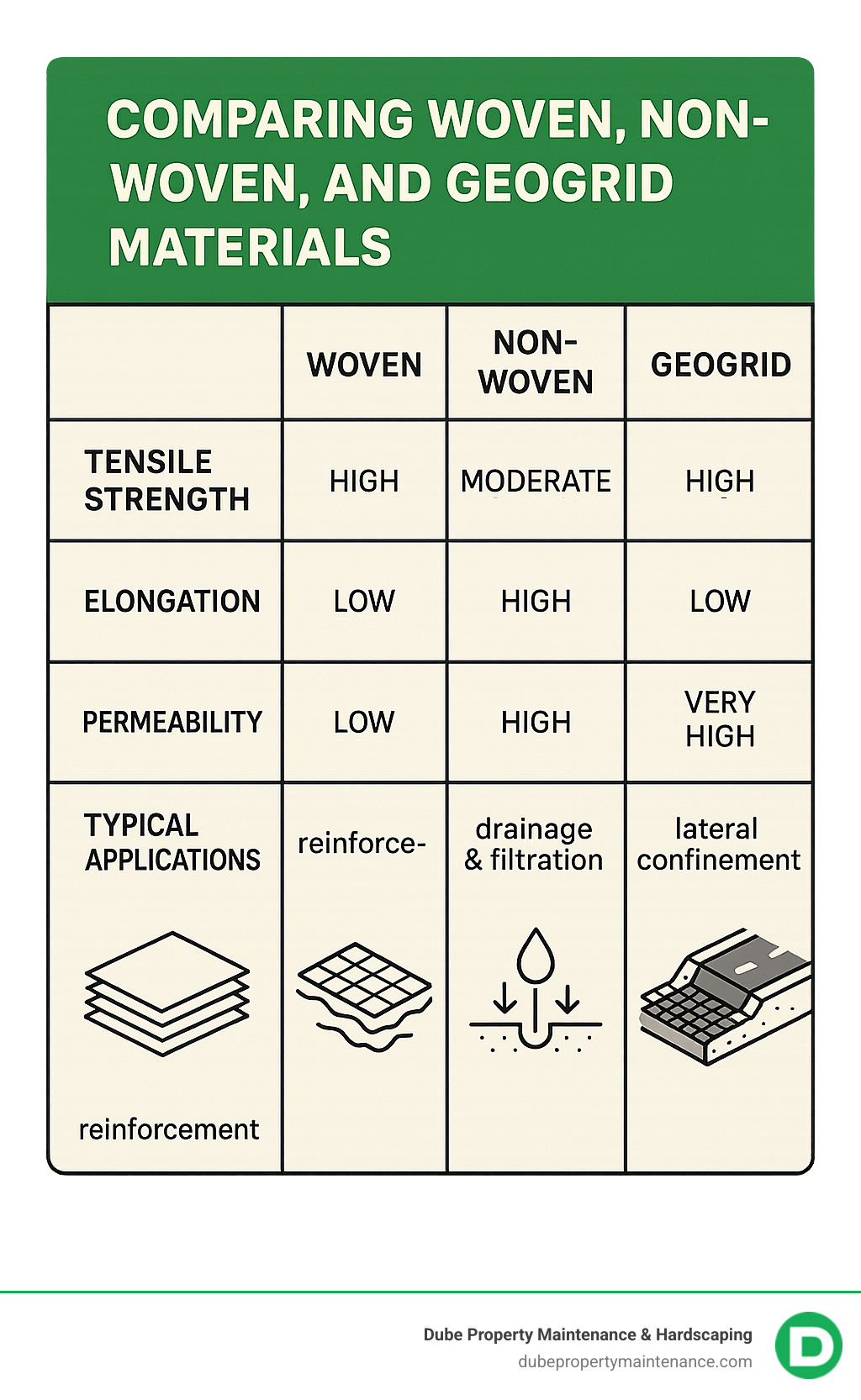
Start with your design tensile load based on embankment height, surcharge loads, and soil conditions. Apply safety factors of 1.5-1.75 for strength parameters.
The CBR (California Bearing Ratio) determines how much help you need. Basal reinforcement geotextile systems work on soils with CBR values as low as 0.25.
Elongation requirements matter – fabric needs 5-10% stretch to develop full strength. Consider service life carefully – quality polyester geotextiles last up to 120 years.
Light duty (50-100 kN/m): Low embankments, residential driveways
Medium duty (100-250 kN/m): Most commercial work, moderate embankments
Heavy duty (250-500 kN/m): High embankments, heavy traffic, very soft subgrades
Ultra-heavy duty (500-1,000 kN/m): Specialized applications, large void spanning
Design strength accounts for installation damage, creep, and safety factors – typically 20-40% of ultimate strength.
Proper basal reinforcement geotextile design starts with thorough soil borings to determine soil type, strength (CBR), and groundwater conditions. Use safety factors of 1.5-1.75 for most applications, higher for critical structures.
Adjacent fabric rolls need 3-foot minimum overlaps achieving 80% of fabric tensile strength. Basal reinforcement geotextile eliminates staged construction, allowing full-height building immediately instead of waiting months for soil consolidation.
For void spanning, the geotextile creates a tensioned membrane safely spanning openings. Extreme cases may require pile load transfer platforms where geotextile distributes loads to pile caps.
Site clearing: Remove vegetation, stumps, debris, and organic topsoil. Grade to proper elevations and install drainage systems.
Fabric deployment: Unroll in construction direction, maintain 3-foot overlaps, avoid walking on fabric. Secure temporarily with sandbags.
Initial fill placement: Place first 12-inch lift before allowing equipment on geotextile. Use end-dump techniques, keep dump piles under 3 feet, use low ground pressure equipment.
Compaction: Use smooth-drum rollers initially, limit rut depth to 3 inches, place subsequent lifts in 8-12 inch thicknesses.
Factory quality assurance ensures products meet ASTM standards. Request certified test data for tensile strength, elongation, and permeability.
Field testing includes on-site tensile strip tests and wide-width tensile tests for critical projects. Use field CBR probes to verify soil conditions during construction.
Installation monitoring watches for tears, punctures, or excessive deformation. Repair damage immediately using manufacturer-approved methods. Document everything with photographs and detailed records.
Highway and rail embankments showcase basal reinforcement’s capabilities, with projects like the A228 highway using tensioned membrane load transfer platforms over piles.
Airport runway construction demands absolute performance – the Oran airport project demonstrated how basal reinforcement geotextile meets stringent requirements while delivering significant cost savings.
Landfill applications combine soft foundation soils with heavy waste loads, requiring geotextiles that maintain integrity alongside liner systems.
Sinkhole bridging applications like the Garrion Bridge project successfully span mine-working voids, avoiding expensive grouting operations.
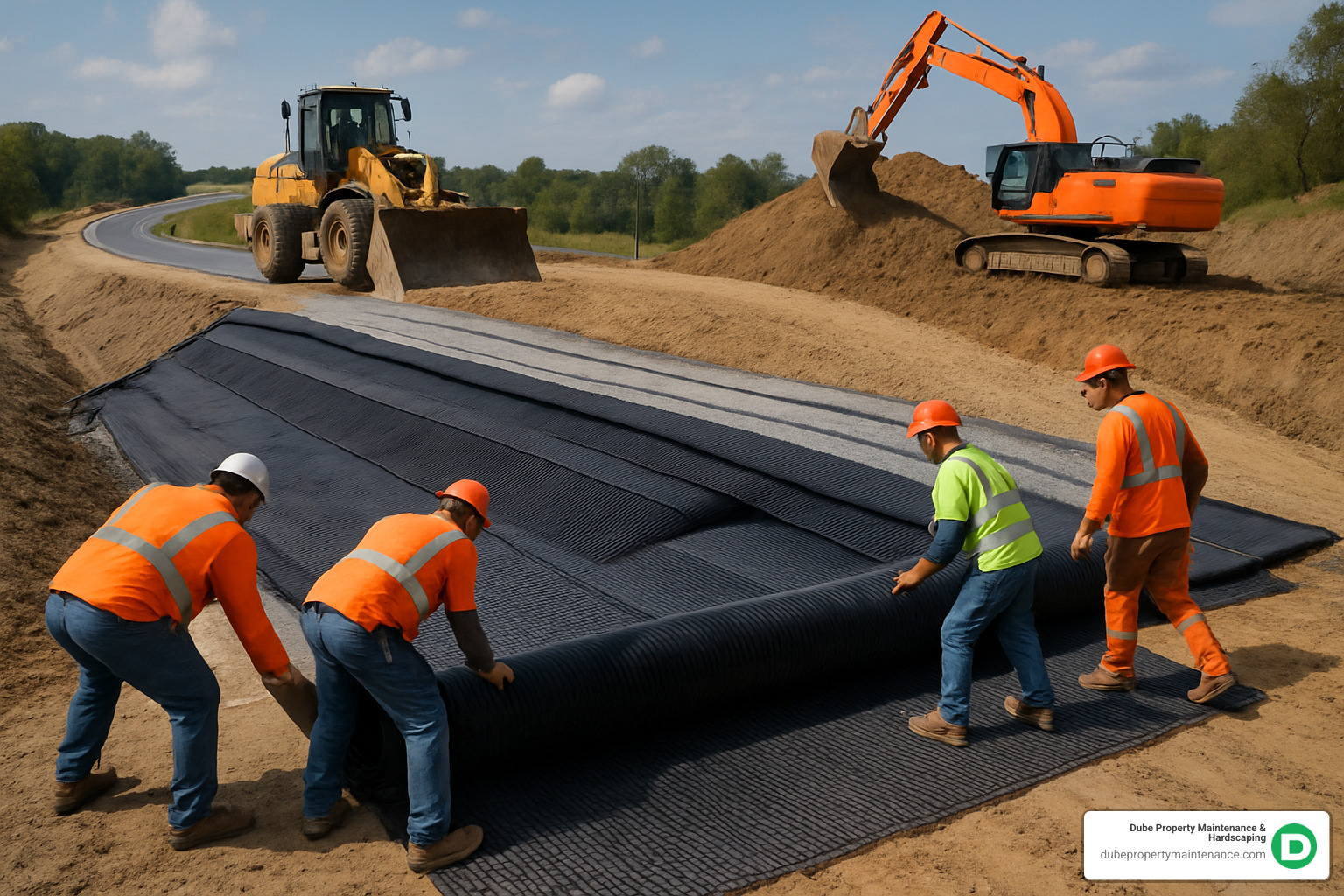
Scientific research on embankment loading documents how basal reinforcement reduces vertical displacements while improving safety factors.
Working with extremely soft clays transforms basal reinforcement geotextile from helpful to essential. Rapid construction becomes possible where traditional methods require months of staged building.
Load distribution spreads concentrated equipment loads over wider areas, allowing safe construction. Field measurements document stress reductions of 50% or more on underlying soft soil.
Design for very soft clays typically requires high-strength geotextiles (250 kN/m or higher) with low elongation characteristics.
Karst terrain and mining areas present challenging applications where ground might disappear overnight. Tensioned membrane design for void spanning requires careful analysis of void size, loads, and fabric properties.
Safe spanning capabilities are documented for voids up to 10-15 feet diameter. Monitoring requirements include long-term settlement monitoring and periodic surveys for early warning of developing problems.
Block retaining wall construction over soft soils benefits from basal reinforcement’s settlement control. Even small differential settlement can create serious structural problems in retaining walls.
Integration with drainage systems complements retaining wall drainage pipe systems, preventing fine soil migration while maintaining permeability.
Our experience with building a retaining wall projects shows how proper foundation reinforcement and drainage create long-lasting structures.
Basal reinforcement geotextile systems deliver cost savings of 30-60% in stone requirements through reduced excavation, faster construction, and lower haulage costs.
Environmental benefits include CO2 reductions from fewer quarry operations, less trucking, and reduced material consumption. Recyclability is improving as manufacturers design products with end-of-life considerations.
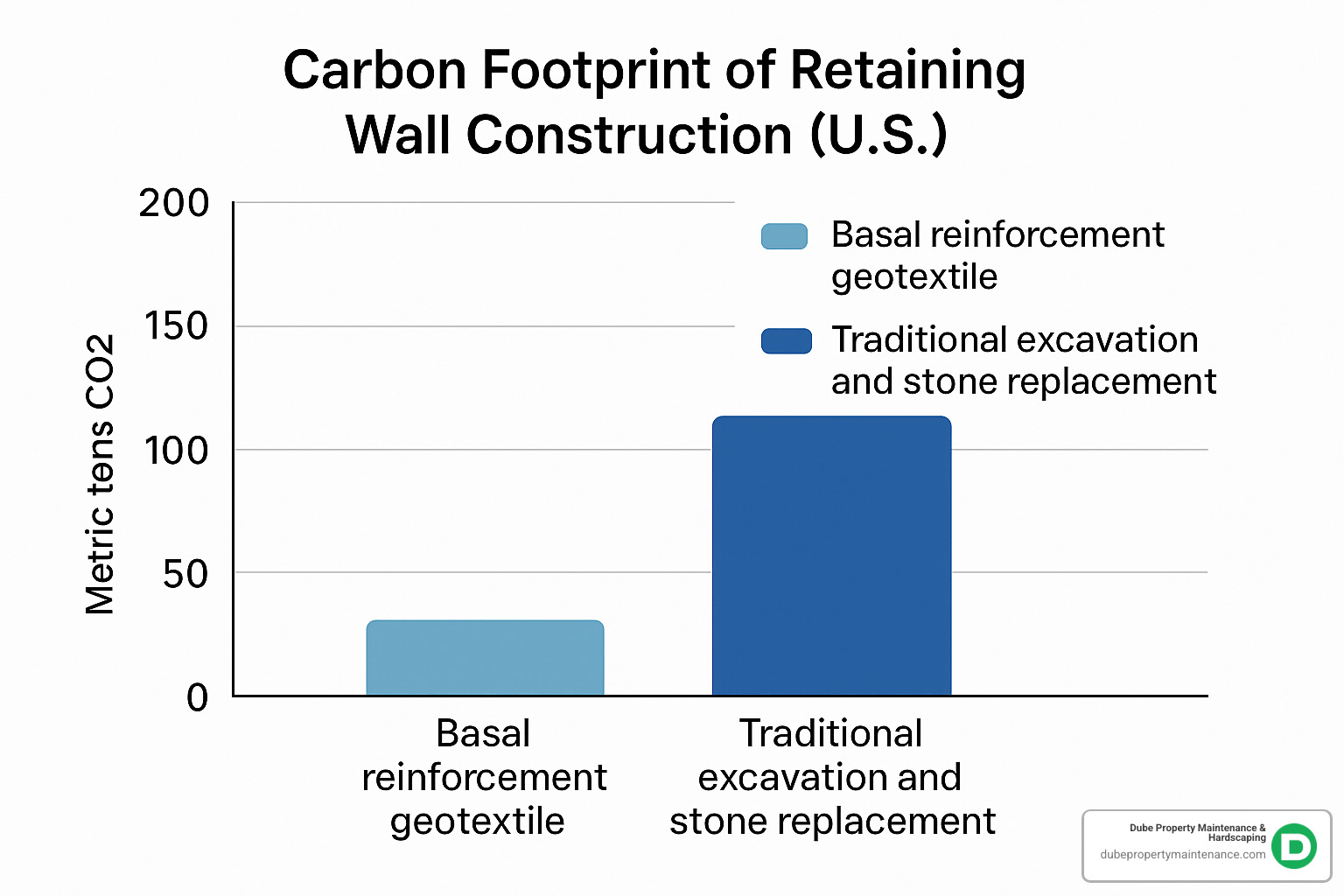
Material reduction drives most savings by eliminating expensive excavation and replacement. Transportation costs can represent up to half the total material cost.
Quality polyester geotextiles lasting 120 years create favorable design life versus embodied carbon equations, with payback typically happening within the first few years.
Edge peel requires proper edge treatment and adequate overlap. UV exposure demands rapid covering – quality fabrics retain 70% strength after 500 hours of exposure.
Installation damage from construction equipment needs prevention through appropriate fill materials and proper procedures. High pH soils favor polyester over polypropylene materials.
Most challenges are preventable with proper design, quality materials, and experienced installation.
Soft clays with CBR values below 1, peat and organic soils, and variable soil conditions across sites all benefit from reinforcement. The magic number is CBR 3 – below this, conventional construction gets problematic. Basal reinforcement geotextile systems handle subgrades with CBR values as low as 0.25.
Void-prone areas in karst terrain or historical mining locations need spanning capability. Even moderately soft soils benefit when time is critical and traditional staged construction isn’t feasible.
Start with load surcharge including fill material and live loads. Embankment height more than proportionally increases required strength. Apply safety factors of 1.5-2.0 accounting for installation damage, creep, and chemical degradation.
Many manufacturers provide design charts relating embankment height, soil strength, and required fabric strength. For critical structures, detailed finite element analysis provides the most accurate requirements.
Surface inspections should check for differential settlement, cracking, or drainage problems. Drainage maintenance prevents water buildup and potential instability. Periodic settlement surveys track long-term performance for critical structures.
Vegetation management maintains access and prevents root interference. Documentation of inspections and repairs proves valuable over time. Properly designed systems typically require minimal maintenance beyond normal site upkeep.
When facing challenging soil conditions, basal reinforcement geotextile systems offer proven solutions that make sense financially and environmentally. These battle-tested technologies reduce material costs by 30-60% while building faster and more sustainably.
Long-term stability and sustainability benefits – less excavation, fewer trucks, smaller carbon footprint – make these systems attractive for New England’s challenging conditions.
Professional design remains crucial since every site is different. At Dube Property Maintenance & Hardscaping, we integrate basal reinforcement with comprehensive site improvements. Whether dealing with challenging soils, planning retaining walls, or exploring landscape retaining walls, our team evaluates your specific situation and recommends the right solution.
The investment in proper foundation reinforcement pays dividends for years. By building stability from the ground up, you prevent future problems while creating reliable outdoor spaces that withstand New England’s freeze-thaw cycles and variable conditions.
