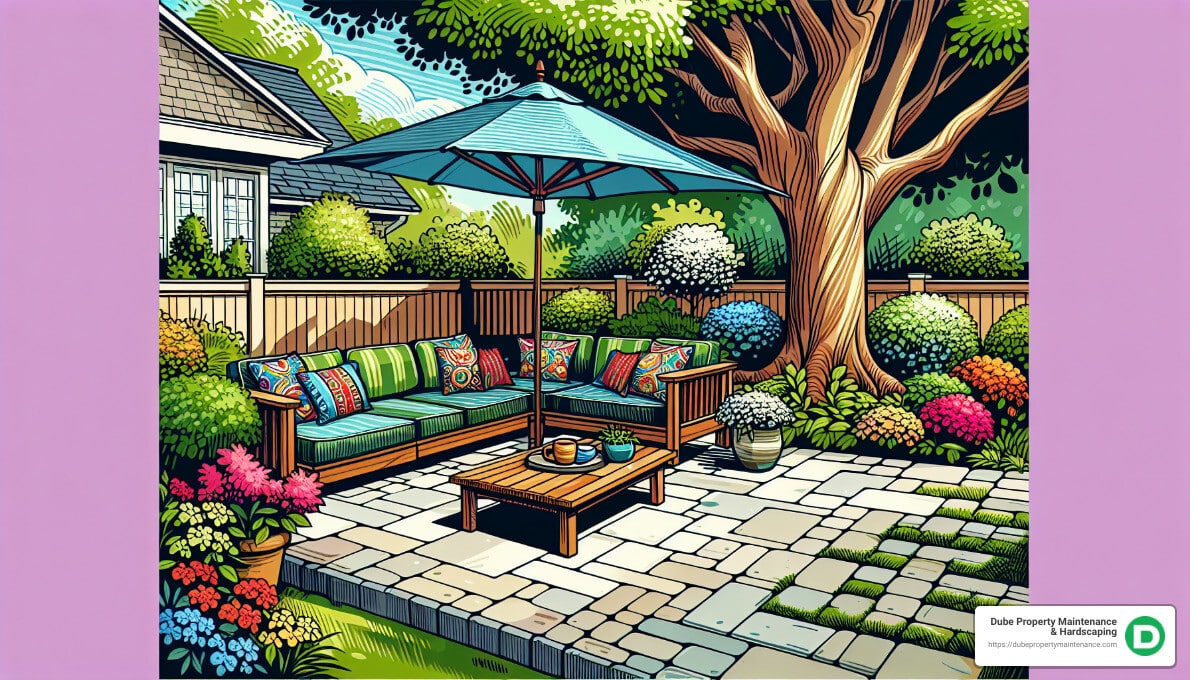

If you’re looking for backyard paver ideas, you’ve come to the right place. From creating an outdoor oasis perfect for summer parties to designing a cozy nook for evening relaxation, the right paver patio can transform your outdoor space. Let’s get right into some of the best ideas:
A well-designed paver patio is more than just a place to sit outside. It’s a seamless extension of your home where you can unwind, entertain, and enjoy the beauty of nature. Whether it’s the aged charm of brick in a classic herringbone pattern or the modern feel of gray concrete pavers, there’s an endless array of options to suit your taste and lifestyle.
The design of your patio isn’t just about looks. Thoughtful planning can make your outdoor space functional and comfortable year-round. By creating zones, incorporating various textures, and utilizing natural elements, you can craft an environment that’s as practical as it is beautiful.
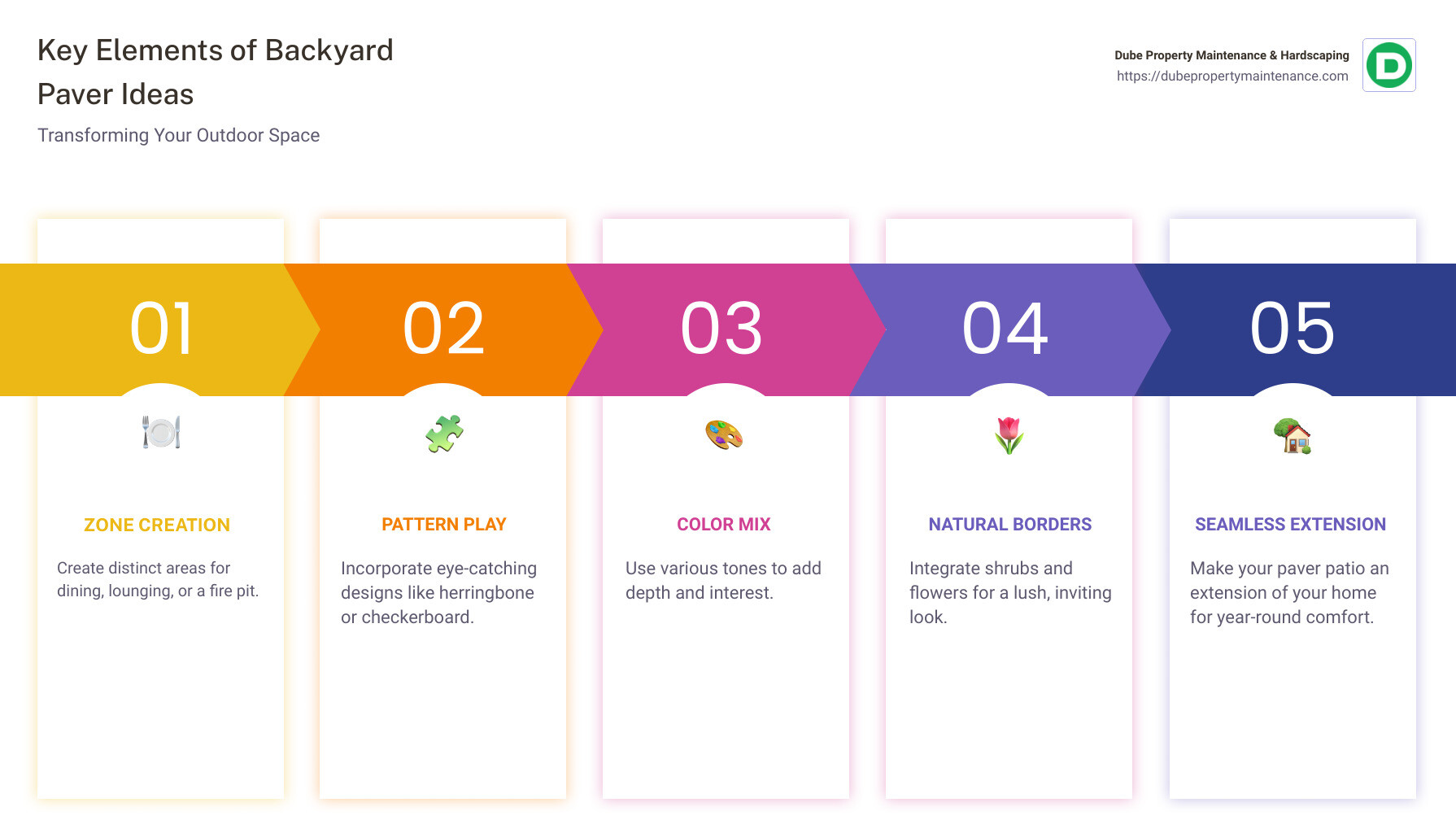
When picking out materials for your backyard paver ideas, it’s crucial to consider durability, aesthetics, budget, and climate. These factors help ensure your patio not only looks great but also stands the test of time.
Cobblestones
Cobblestones offer a rustic, old-world charm. They are incredibly durable and can handle heavy foot traffic. However, their uneven surface might not be ideal for areas where accessibility is a concern.
Concrete Pavers
Concrete pavers are popular because they are versatile and affordable. They come in many colors, shapes, and sizes. You can even customize them with patterns or textures like rock salt, stamping, or hand carving.
Brick Pavers
Brick pavers bring a classic and traditional look to your patio. They are slip-resistant and easy to replace if damaged. However, they offer fewer color options compared to other materials.
Flagstone
Flagstone is a natural stone with unique textures and colors. It’s durable and adds an elegant touch to any patio. However, it’s generally more expensive than other options and can be slippery when wet.
Pea Gravel
Pea gravel is a budget-friendly option that can fill gaps between pavers or cover large areas. It’s easy to install and allows for good drainage but may shift over time and require occasional leveling.
Stamped Concrete
Stamped concrete can mimic the look of more expensive materials like stone or brick. It’s a cost-effective way to get a high-end look. However, it can crack over time if not properly installed.
Interlocking Pavers
Interlocking pavers are designed to fit together like a puzzle, making them easy to install. They are durable and can be used to create intricate designs. They are also less likely to shift over time compared to loose materials like pea gravel.

Durability and Climate Considerations
When choosing materials, think about your local climate. For example, in areas with heavy rainfall, you’ll want pavers that offer good drainage and are slip-resistant. In colder climates, opt for materials that can withstand freeze-thaw cycles without cracking.
By considering these factors, you can select the perfect materials for your backyard paver ideas, ensuring a beautiful and lasting patio that fits your lifestyle and budget.
Creating a functional and visually appealing paver patio starts with smart design choices. Here are some backyard paver ideas to help you get started.
Layout and Traffic Flow
Good layout and traffic flow are key to a successful patio design. Think about how people will move through the space. Create clear pathways to direct traffic and avoid overcrowding.
Usage
Consider how you’ll use the space. Will it be for dining, lounging, or a mix of activities? Different areas can be defined using various paver patterns.
Visual Appeal
Paver patterns can dramatically change the look of your patio. Here are some popular options:
Adding natural elements can soften the look of your patio and blend it with the surrounding landscape.
Grass Borders
Grass borders around pavers can add a fresh, green touch. Strips of grass between pavers create a contemporary feel and help with drainage.
Stone Edges
Using stone edges around your patio can define the space and add a natural element. Stones like flagstone or river rock can complement the pavers and enhance the overall design.
Wood Accents
Wooden elements, such as benches or planters, can add warmth and contrast to the hard surfaces of pavers. Teak or cedar are good choices because they are durable and weather-resistant.
By thoughtfully combining these patterns and natural elements, you can create a patio that is not only functional but also a beautiful extension of your home.
Designing a paver patio can transform your outdoor space, no matter its size or shape. Here are some backyard paver ideas tailored for different spaces.
Maximizing Small Spaces
In small spaces, every inch counts. Use larger pavers to create a sense of openness. For example, a dining area over large pavers and slate rocks can feel distinct from a nearby lounging spot. This separation can make your small space feel larger and more functional.
Vertical Gardening
When floor space is limited, think vertical. Install vertical gardens or hanging planters to add greenery without taking up valuable ground space. This not only maximizes your area but also brings in natural elements.
Multi-Level Designs
Creating multi-level patios can add depth and interest to a small backyard. Use different paver patterns or colors to distinguish each level. For example, a herringbone pattern on one level and a running bond on another can create visual interest and define spaces.
Space-Saving Furniture
Opt for furniture that serves multiple purposes. Folding chairs, stackable stools, and built-in benches can save space while still providing ample seating. Hanging egg chairs or a teak swing can also add a cozy touch without crowding the area.
Outdoor Kitchens
For larger patios, consider installing an outdoor kitchen. Use durable pavers like flagstone or concrete to create a sturdy base. Integrate countertops, grills, and even sinks to make your outdoor space functional for cooking and entertaining.
Fire Pits
A fire pit can be a focal point in a large paver patio. Surround it with comfortable seating and use pavers to create a safe, flat surface around the fire. This can be a perfect spot for evening gatherings.
Integrated Seating
Built-in seating can blend seamlessly with your patio design. Use the same pavers or complementary materials to create benches. This not only saves space but also provides a cohesive look.
Creative Paver Layouts
Oddly shaped gardens can benefit from creative paver layouts. Use irregular paver stones like flagstone to create an organic, puzzle-like design. This can make the space feel more natural and less constrained by its shape.
Natural Borders
Leave borders around the fence for shrubs, flowers, and climbing vines. This can create a cozy, enclosed feeling and bring nature closer to your patio.
By implementing these backyard paver ideas, you can make the most of any outdoor space, whether it’s small, large, or uniquely shaped.
Preparation
Before you start, make sure to prepare the ground properly. This means clearing the area of any debris, leveling it, and adding a layer of gravel for drainage. Tools needed include a shovel, a level, and a tamper.
Installation Process
For a DIY project, follow these steps:
This process can take several days, depending on the size of your patio.
When to Call the Pros
If the project seems too big or complex, it’s best to hire professionals. They have the experience and tools to get the job done quickly and correctly. Plus, they can handle tricky issues like uneven ground or drainage problems.
Longevity
To ensure your paver patio lasts, regular maintenance is key. Sweep it regularly to remove debris and prevent stains.
Upkeep
Every few years, consider adding a sealant to protect against weather and wear. This keeps your pavers looking new and prevents color fading.
Cleaning Techniques
For basic cleaning, use a garden hose and a stiff brush. For tougher stains, a mixture of water and mild detergent should do the trick. Avoid using harsh chemicals that can damage the pavers.
Sealants
Applying a sealant helps protect your patio from stains and weather damage. It’s best to do this every 2-3 years. Make sure the patio is clean and dry before applying the sealant.
Repair Tips
Cracks or loose pavers can be fixed easily. For minor cracks, use a paver repair adhesive. For loose pavers, lift them, add more sand underneath, and tamp them back into place.
By following these tips, your paver patio will remain beautiful and functional for years to come.
When it comes to durability, cobblestones top the list. They can last up to 100 years, making them the most durable option available. Cobblestones are perfect for areas with heavy foot traffic or driveways.
Interlocking pavers are another strong choice. They can last up to 40-50 years with proper maintenance. These pavers are designed to fit together tightly, reducing the chances of shifting and making them ideal for patios and walkways.
Cost Comparison
Building a patio with pavers can be more expensive upfront compared to concrete. Pavers typically cost between $10 and $25 per square foot, including installation. Concrete, on the other hand, can range from $6 to $15 per square foot.
Long-Term Value
While concrete may be cheaper initially, pavers offer better long-term value. Pavers are easier to repair and replace, and they generally last longer than concrete. Concrete can crack over time and may require more frequent repairs.
Preparation Requirements
Laying pavers directly on dirt is not recommended. Doing so can lead to uneven surfaces and shifting pavers. Proper preparation is key for a stable and long-lasting patio.
Foundation Tips
By following these steps, you can ensure a durable and long-lasting paver patio.
Designing a paver patio can transform your outdoor space, making it functional and visually appealing. From choosing the right materials to selecting the perfect pattern, every decision you make plays a crucial role in the final outcome. Whether you’re working with a small backyard or a large patio, there are countless backyard paver ideas to suit your needs.
Let’s recap some of the key points:
The world of paver patios is evolving, with new trends emerging regularly. Here are a few to watch out for:
At Dube Property Maintenance & Hardscaping, we specialize in bringing your backyard paver ideas to life. Our team of experts is dedicated to creating beautiful, durable patios that enhance your outdoor living experience. From initial design to final installation, we handle every step with precision and care.
Ready to transform your outdoor space? Contact us today for a free consultation and let us help you create the perfect paver patio for your home.
By choosing Dube Property Maintenance & Hardscaping, you’re not just investing in a patio; you’re investing in a lifestyle.