
Backyard designs with retaining walls solve one of the biggest challenges homeowners face: turning unusable slopes into beautiful, functional outdoor spaces. Whether you’re dealing with erosion issues, wanting to create level areas for patios, or simply looking to add visual interest to your landscape, retaining walls offer both practical solutions and stunning design possibilities.
Top Backyard Retaining Wall Design Ideas:
– Two-tier garden terraces – Create multiple planting levels and prevent soil erosion
– Wall-meets-firepit lounges – Combine seating with cozy gathering spaces
– Curved seating borders – Add flowing lines while defining outdoor rooms
– Vertical green walls – Maximize planting space in compact yards
– Outdoor kitchen frames – Provide structural support and bar seating
– Waterfall spillway walls – Integrate water features for zen-like ambiance
Retaining walls are among the top 5 most popular hardscape features requested in backyard projects, with over 10,000 design photos available online showcasing their versatility. They don’t just hold back soil – they create opportunities for multi-level living spaces, built-in seating, raised garden beds, and dramatic landscape focal points.
The key is choosing the right material and design for your specific needs. Wood walls offer the most budget-friendly option, while stone and concrete blocks provide greater durability and design flexibility. Short walls of just 1-2 feet can be highly effective even on relatively flat terrain, helping keep costs manageable while still delivering major visual impact.
Important backyard designs with retaining walls terms:
– garden wall builders near me
– stone wall builders near me
– gabion wall builders near me
Let’s be honest – dealing with a sloped backyard can feel like you’re fighting an uphill battle (pun intended!). At Dube Property Maintenance & Hardscaping, we’ve helped countless homeowners in Methuen and beyond turn their challenging slopes into stunning outdoor spaces. Backyard designs with retaining walls aren’t just about holding back dirt – they’re about creating possibilities where none existed before.
Think of retaining walls as the unsung heroes of landscape design. They quietly manage soil erosion, handle water management like champions, tackle those tricky grade changes, and magically create usable space where you once had nothing but a frustrating hill. Whether you’re dreaming of timber charm, concrete block durability, natural stone elegance, gabion industrial chic, or corten steel modern flair, there’s a perfect match for your vision and budget.
The sustainability factor is huge too – properly designed walls prevent erosion and manage stormwater runoff, making your property more environmentally friendly. And let’s talk aesthetics – a well-designed retaining wall can become the showstopper of your landscape, not just a practical necessity.
Now, about those average costs – timber walls typically run $15-45 per square foot, concrete blocks $20-60 per square foot, and natural stone $25-75 per square foot based on internet research. These are general market estimates and not specific to Dube Property Maintenance & Hardscaping services. More info about retaining wall blocks
| Material | Durability | Maintenance | Cost Range* | Best For |
|---|---|---|---|---|
| Wood | 5-10 years | High | $15-45/sq ft | Budget projects, rustic charm |
| Stone | 50+ years | Low | $25-75/sq ft | Permanent, high-end landscapes |
| Block | 20-30 years | Low | $20-60/sq ft | DIY-friendly, versatile designs |
*Average costs based on internet data, not Dube Property Maintenance pricing
Here’s the thing about drainage issues – they don’t get better with time, they get expensive. If you’ve got water pooling near your foundation or soil washing away every time it rains, you’re looking at potential foundation damage down the road. A retaining wall with proper drainage can redirect that water and save you thousands in repairs.
Got a sloped backyard that’s basically unusable? Any slope steeper than 3:1 (that’s three feet across for every foot up) is asking for trouble without some kind of support. Even gentler slopes can benefit from terracing to create level spots for outdoor furniture or play areas.
Foundation protection is serious business. Soil movement might seem harmless, but it can compromise your home’s structural integrity over time. A retaining wall acts like a bodyguard for your foundation, keeping everything stable and secure.
Don’t overlook the magic of small yards either. Even a modest 1-2 foot retaining wall can create level areas for patios, fire pits, or that outdoor kitchen you’ve been dreaming about. Sometimes the smallest changes make the biggest difference.
Choosing the right material is like picking the perfect outfit – it needs to look great and perform well for years to come. Let’s break down what we’ve learned from decades of installations.
Durability varies wildly between materials. Timber gives you 5-10 years of service, which is perfect for temporary solutions or when budget is tight. Concrete blocks can last 20-30 years with minimal fuss, while natural stone walls can outlive your grandchildren with proper installation.
Maintenance levels are where some materials really shine. Stone and concrete blocks are basically “set it and forget it” solutions, while timber needs regular attention to prevent rot and insect damage. If you’re not into weekend maintenance projects, skip the wood.
Design flexibility is where things get fun. Concrete blocks offer incredible versatility with textures that mimic everything from natural stone to weathered wood. Natural stone brings timeless elegance that never goes out of style. Gabion walls create that cool industrial vibe that’s perfect for modern homes.
Longevity matters more than you might think. While timber walls cost less upfront, you might end up rebuilding them multiple times over the lifespan of a single stone wall. Sometimes spending more initially saves money in the long run – and eliminates future headaches too.
When it comes to backyard designs with retaining walls, the possibilities are truly endless. These hardworking structures can transform your outdoor space from ordinary to extraordinary, creating everything from cozy gathering spots to dramatic focal points. At Dube Property Maintenance & Hardscaping, we’ve helped countless homeowners find just how versatile retaining walls can be.
The beauty of retaining walls lies in their dual nature – they solve practical problems while adding serious style to your landscape. Whether you’re dealing with a steep slope or simply want to create more visual interest in a flat yard, these ten design ideas will inspire your next outdoor project.

Creating tiered terraces turns challenging slopes into gorgeous garden opportunities. This approach works wonders for preventing soil erosion while giving you multiple levels for different types of plants. The upper terrace might showcase colorful annuals that catch the eye, while the lower level houses sturdy perennials and shrubs.
What makes this design so appealing is how it creates depth illusion in your landscape. Even a modest backyard feels larger and more interesting when you add vertical layers. The terraced plant beds also make gardening easier on your back – no more bending down to tend ground-level gardens.
Nothing beats the magic of combining a retaining wall with a fire pit to create the ultimate social hub. This design is pure genius – the wall provides comfortable seating while holding back soil, and the fire pit becomes your outdoor room’s natural gathering point.
When planning this setup, make sure to use heat-proof blocks that can handle the high temperatures. Position your fire pit so the prevailing wind carries smoke away from the seating area. The result? A cozy spot where family and friends will naturally gravitate for evening conversations and marshmallow roasting.
Transform your retaining wall into a productive edible garden by incorporating raised beds directly into the design. This approach brings your vegetables and herbs up to a comfortable working height while creating clear boundaries in your landscape.
The beauty of planter-wall combinations lies in their practicality. You get better drainage for your plants, easier access for maintenance, and a structured look that keeps your garden organized. Consider adding a drip irrigation system during construction to make watering effortless.
Flowing lines create a much more natural feel than rigid straight walls. A curved retaining wall can gently separate different areas of your yard while providing built-in seating that feels organic and welcoming. This design works beautifully for creating an intimate family zone or wrapping around existing mature trees.
The key to successful curved walls is making them feel purposeful rather than random. They should guide the eye naturally through your landscape and create logical transitions between different outdoor spaces.
When yard space is at a premium, going vertical is a brilliant space-saving solution. Vertical green walls maximize your planting area while improving air quality around your outdoor living spaces. These living walls create stunning backdrops for patios and dining areas.
Choose plants that match your wall’s sun exposure – drought-tolerant succulents for sunny spots, or lush ferns and hostas for shadier locations. Built-in irrigation makes maintenance simple and ensures your vertical garden thrives year after year.
Strategic lighting transforms your retaining wall from a daytime landscape feature into nighttime architectural drama. LED caps built into the wall top create subtle evening ambience, while lights tucked between wall courses add depth and texture after dark.
Planning your electrical work during wall construction saves money and creates cleaner results than retrofitting later. Low-voltage LED systems are energy-efficient and provide decades of reliable illumination. Retaining Wall Lighting Ideas
The soothing zen sound of cascading water turns any retaining wall into a tranquil retreat. Water features integrated into wall designs provide natural cooling effects during hot summer months while masking neighborhood noise with gentle water sounds.
This design requires careful planning for water circulation, electrical connections, and seasonal maintenance. The textured surface of many wall materials works perfectly as a natural spillway, creating beautiful water patterns as it cascades down.
Retaining walls provide excellent structural support for outdoor kitchens while creating convenient bar seating for guests. The wall can house utilities, support countertops, and provide grill support while defining your cooking and entertaining area.
Make sure your wall system can handle the weight and heat from outdoor appliances. Concrete block systems typically work best for this application due to their superior strength and heat resistance.
Today’s wood-look concrete blocks deliver the best of both worlds – the visual warmth of natural wood with the durability of concrete. This fusion approach creates walls with rich warm tones that complement both traditional and contemporary home styles.
Modern manufacturing techniques can replicate the grain and character of natural wood while providing superior weather resistance and longevity. This style works particularly well when you want the cozy feel of wood without the ongoing maintenance requirements.
Create dramatic visual impact by using a clean retaining edge to separate your manicured formal lawn from naturalistic wild zones. This design creates the illusion of an infinity edge while providing practical separation between high-maintenance and low-maintenance landscape areas.
The clean line draws the eye across your landscape while creating striking contrast between different planting styles. This approach works especially well for homeowners who want both pristine lawn areas and natural, wildlife-friendly garden spaces.

Building a retaining wall isn’t just about stacking blocks and hoping for the best. At Dube Property Maintenance & Hardscaping, we’ve learned that the difference between a wall that lasts decades and one that fails in a few years comes down to getting the basics right from day one.
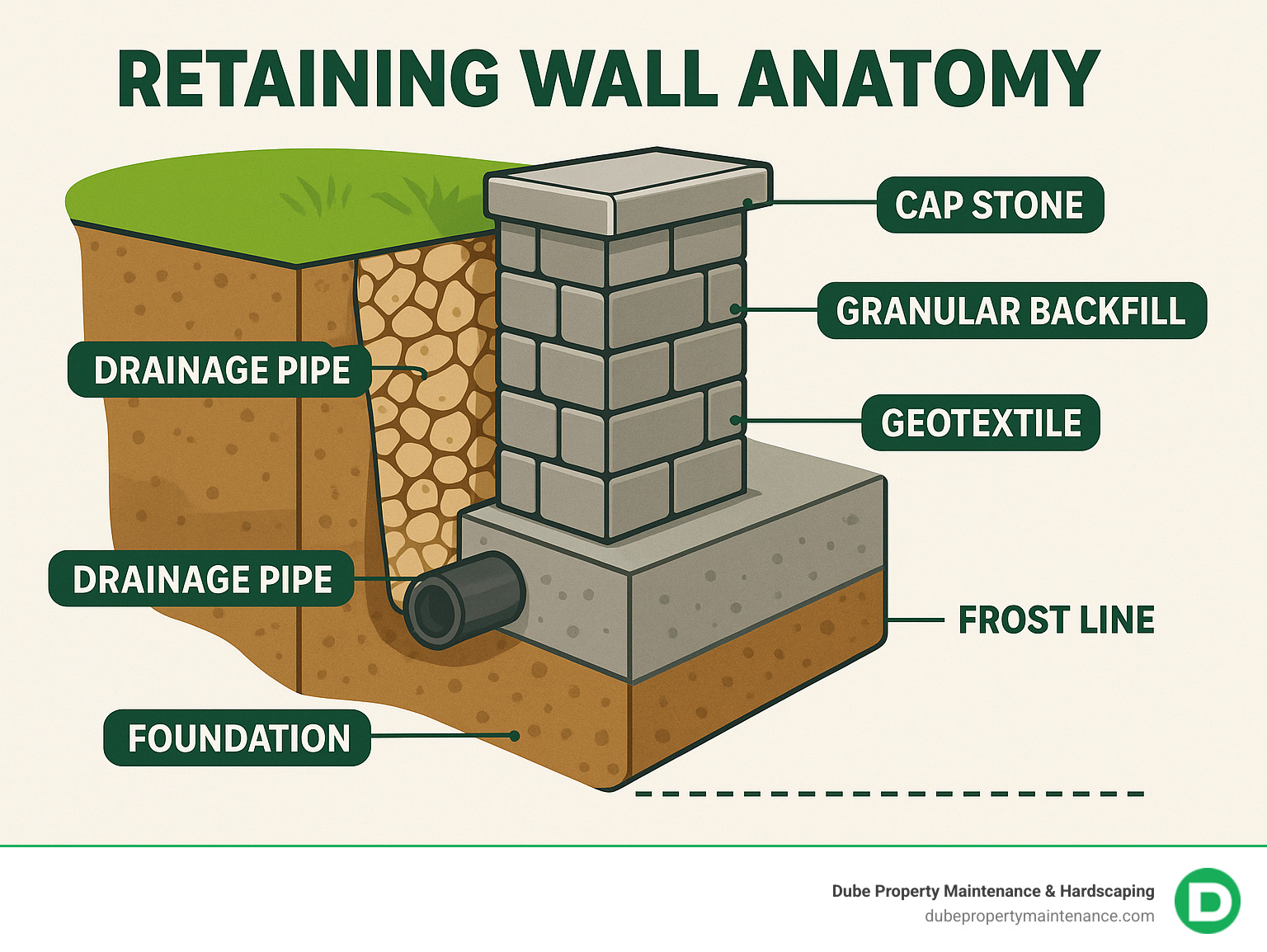
The foundation depth makes or breaks your entire project. You’ll need to dig at least 12 inches below your local frost line for mortared walls – this prevents the freeze-thaw cycle from cracking your beautiful work apart. For a typical 3-foot wall in our Massachusetts climate, that means excavating 18-24 inches deep. It might seem like overkill, but trust us – shortcuts here lead to expensive do-overs later.
Drainage pipe installation behind your wall isn’t optional, even for smaller backyard designs with retaining walls. Water pressure buildup is the silent killer of retaining walls. Install proper drainage pipe with gravel backfill, and use geotextile fabric on walls 4 feet and taller. This fabric acts like a coffee filter – it lets water through while keeping soil where it belongs.
Here’s something many DIYers don’t realize: walls over 4 feet in height often require structural engineering and building permits. Geogrid reinforcement becomes crucial at these heights, helping distribute loads and prevent catastrophic failure. It’s not red tape – it’s safety.
Before you dig even one shovelful of dirt, call 811 to mark buried utilities. This free service prevents you from accidentally hitting gas, electric, or water lines. We’ve seen too many weekend projects turn into emergency repairs because someone skipped this step.
Let’s talk money – because retaining wall costs can surprise you if you’re not prepared. Wall height has the biggest impact on your budget. Doubling the height doesn’t just double the cost – it more than doubles it due to deeper foundations, reinforcement requirements, and exponentially more materials.
Material choices create a wide pricing spectrum. Wood offers the friendliest upfront cost but needs replacement every 5-10 years. Concrete blocks hit the sweet spot for most homeowners with 50+ year lifespans and reasonable costs. Natural stone commands premium pricing but can outlast your great-grandchildren with proper installation.
Don’t underestimate how site access affects your budget. If we can’t get equipment close to your project area, hand-carrying materials and using smaller tools increases labor time significantly. Plan for this when setting your timeline and budget expectations.
Bulk purchasing can slash material costs if you’re planning multiple landscape phases. Coordinate with neighbors who might need similar work, or bundle your retaining wall project with other hardscaping elements.
Based on general market research, total project costs including materials and professional installation typically range from $25-150 per square foot for standard installations, with complex or premium projects reaching $200-500 per square foot. These are average market estimates based on internet data and not specific to Dube Property Maintenance & Hardscaping pricing.
Poor drainage causes more retaining wall failures than all other factors combined. Even short walls need proper drainage pipe and gravel backfill. Water doesn’t care if your wall is 2 feet or 8 feet tall – it will find a way to cause problems if you don’t give it a proper exit route.
Under-engineered foundations might save money initially, but they cost far more in the long run. Skimping on foundation depth or quality leads to wall movement, cracking, and eventual complete failure. Follow local building codes and frost line requirements religiously.
Ignoring utilities creates dangerous and expensive situations. Damaged gas lines can be life-threatening, while severed electrical or water lines turn your landscape project into a costly emergency repair. Always call 811 before digging.
Inadequate compaction of base materials leads to settling and gradual wall movement over time. Each lift of base material needs proper compaction – it’s tedious work, but essential for long-term success.
Your retaining wall investment deserves ongoing attention to maximize its lifespan. Annual spring inspections help catch small problems before they become major headaches. Look for signs of movement, cracking, or drainage issues after winter freeze-thaw cycles.
Vegetation control around your wall prevents root damage and maintains structural integrity. Remove aggressive plants and tree roots that threaten the wall, while maintaining appropriate plantings that actually improve stability through soil binding.
Cleaning methods vary by material type. Pressure washing works beautifully for concrete blocks but can damage mortar joints in stone walls. Use gentle techniques that preserve your wall’s appearance without compromising its structure.
Mortared stone walls may need repointing every 10-15 years depending on weather exposure and original construction quality. This maintenance preserves both appearance and structural integrity.
Regular maintenance keeps your wall looking great while protecting your investment for decades to come.
More info about building a retaining wall
For professional guidance on retaining wall materials and construction techniques, Belgard offers excellent technical resources and product specifications.
The magic number for most areas is 4 feet – that’s typically the maximum height you can build without pulling permits or hiring a structural engineer. But here’s the catch: regulations change from town to town, and some are stricter than others.
Here in Massachusetts and New Hampshire where we work, many communities actually drop that limit to 3 feet. We’ve seen homeowners get excited about a DIY project only to find they need permits, engineering plans, and inspections for what seemed like a simple wall.
Always check with your local building department first – it’s a quick phone call that can save you from costly headaches later. Trust us, we’ve seen people have to tear down and rebuild walls that didn’t meet code. That’s nobody’s idea of fun, and it definitely doesn’t help the budget.
Interlocking concrete blocks hit that sweet spot between affordability and longevity that most homeowners are looking for. You’ll spend less upfront than you would on natural stone, but you’re still getting a wall that can last 50+ years with minimal fuss.
What makes concrete blocks especially attractive is their DIY potential. If you’re handy and have some weekend time, you can tackle the installation yourself and save significantly on labor costs. Compare that to mortared stone walls, which really need professional installation to look right and perform well.
Timber walls cost less initially, but you’ll be replacing them every 5-10 years. When you factor in that ongoing expense, concrete blocks often come out ahead financially over the long run. Plus, you won’t be dealing with rot, insect damage, or constant maintenance.
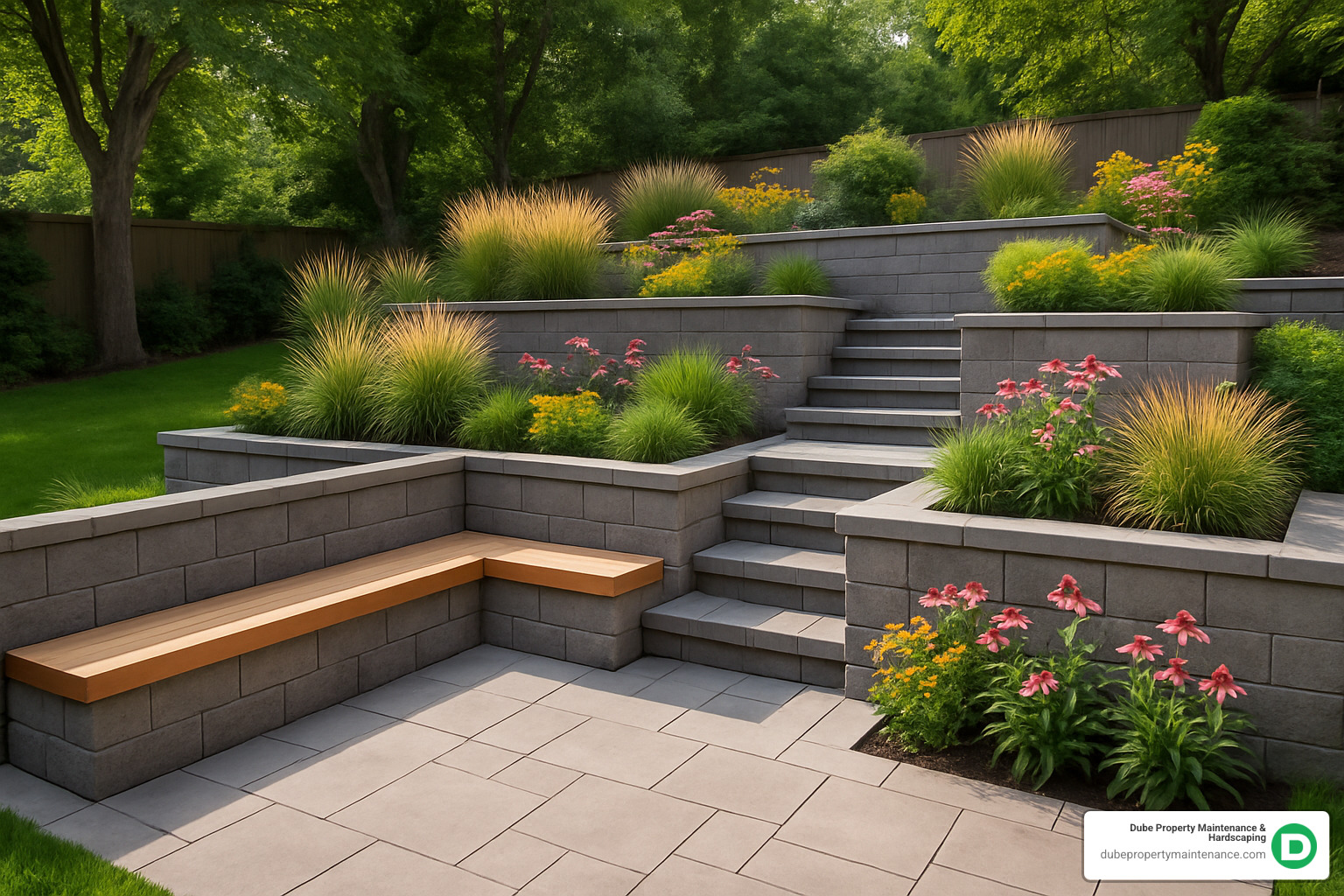
Absolutely! This is one of our favorite ways to maximize value from backyard designs with retaining walls. A wall built at 18-24 inches high creates perfect bench seating – no need for separate outdoor furniture that might blow around or need winter storage.
Integrated planters work beautifully too, especially for herbs and vegetables that benefit from the improved drainage and soil depth. We’ve built walls with built-in planting pockets that become gorgeous focal points while serving their structural purpose.
The key is planning these functions from the beginning. Seating loads and soil weight from planters need to be factored into the wall design and foundation. It’s not something you want to add as an afterthought – but when done right, you get multiple functions from a single investment.
Many of our clients tell us their multi-purpose walls become their favorite outdoor feature. They love having built-in seating that never needs to be moved or stored, and planter walls that bring gardening up to a comfortable working height.
Backyard designs with retaining walls offer incredible potential to transform challenging slopes into stunning, functional outdoor living spaces. Whether you’re dealing with erosion control, creating level areas for entertainment, or simply wanting to add visual interest to your landscape, the right retaining wall design can solve practical problems while dramatically boosting your property’s curb appeal and value.
The key to success lies in choosing appropriate materials for your budget and aesthetic goals, ensuring proper construction techniques, and integrating the wall seamlessly into your overall landscape design. From simple timber terraces to sophisticated stone installations with integrated lighting and water features, the possibilities are limited only by your imagination and budget.
At Dube Property Maintenance & Hardscaping, we’ve helped countless homeowners throughout Massachusetts and New Hampshire transform their outdoor spaces with expertly designed and constructed retaining walls. Our comprehensive approach ensures your project not only looks beautiful but performs reliably for decades to come.
Ready to explore how retaining walls can transform your backyard? Our experienced team provides professional design consultation, quality materials, and expert installation to bring your vision to life. From initial planning through final landscaping touches, we’re committed to delivering outdoor solutions that exceed your expectations.
Learn more about our retaining wall services and find how we can help you retain your excitement about your outdoor space for years to come.
