
A cheap outdoor covered area doesn’t have to look cheap. Whether you’re looking to escape the harsh New England sun, create a dry spot for rainy afternoons, or simply expand your living space into the yard, covering your patio is one of the smartest upgrades you can make.
Quick Answer: Most Affordable Patio Cover Options
The beauty of creating covered outdoor space is that you don’t need a massive budget to see impressive results. According to research, many successful DIY enthusiasts achieve remarkable changes within the $300 to $1,000 range. Compare that to a professionally installed permanent roof, which can cost anywhere from $12,000 to $44,000 for a 20×20 patio.
Beyond the immediate comfort of shade and rain protection, a well-designed covered area adds real value to your property. It creates a true outdoor room where you can entertain guests, enjoy morning coffee, or simply relax without worrying about the weather. For homeowners in Methuen and surrounding areas who face both scorching summer days and unpredictable rain, this extra usable space quickly becomes the favorite spot in the house.
This guide will walk you through temporary fabric solutions, rewarding DIY projects, and smart planning strategies that deliver a high-end look without the high-end price tag.
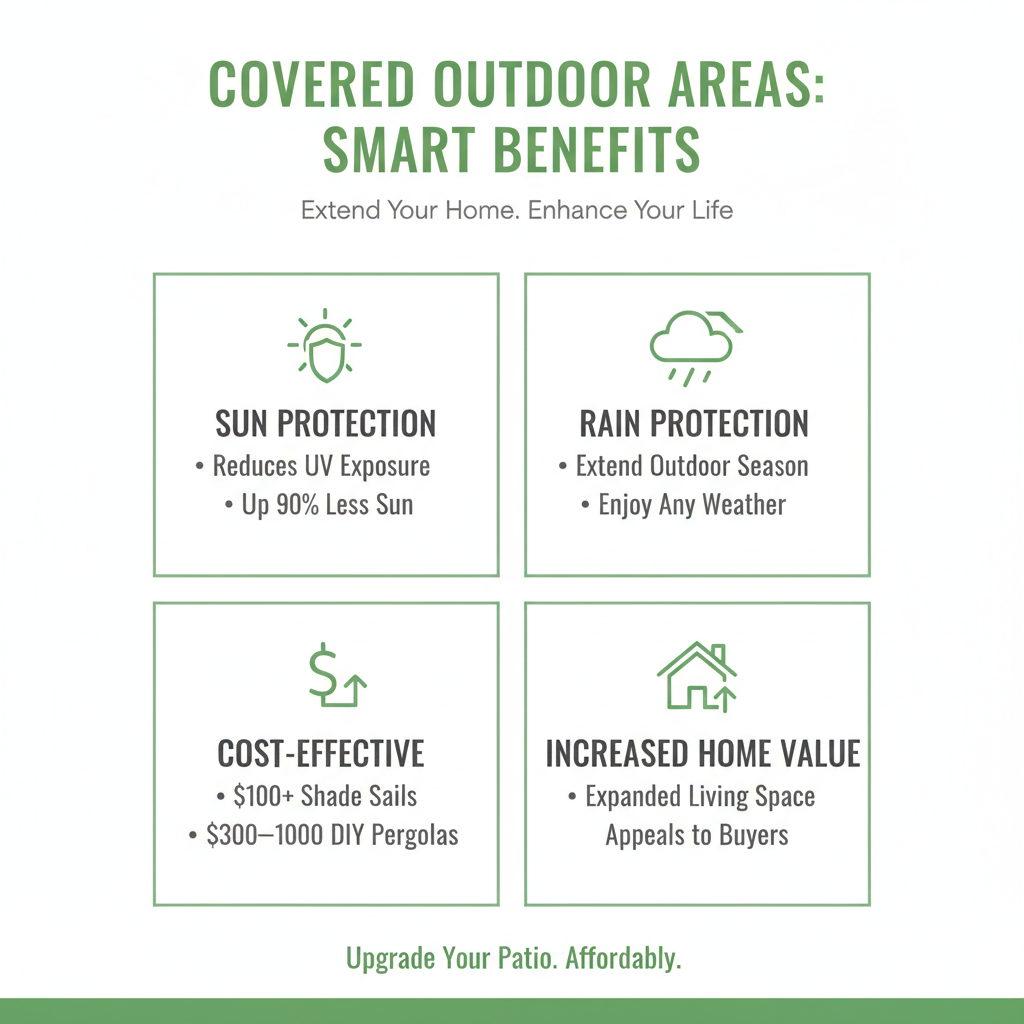
Simple guide to cheap outdoor covered area:
When you’re looking for a cheap outdoor covered area, temporary fabric solutions are often the perfect place to start. They deliver instant relief from the sun and light rain without requiring a major commitment or investment. The best part? Many are completely portable, which makes them ideal if you’re renting or simply want the flexibility to change things up as your needs evolve.
Now, let’s be realistic—these solutions won’t stand up to a major New England blizzard or hurricane-force winds. But for everyday sun protection, light rain coverage, and creating a comfortable outdoor space for gatherings? They’re absolutely fantastic.

The humble patio umbrella deserves its reputation as a backyard staple. It’s one of the most affordable and straightforward ways to create instant shade, and you can have it set up in minutes.
Patio umbrellas are wonderfully portable and come in an impressive variety of styles, colors, and sizes. Whether you prefer a traditional market umbrella that sits through your dining table or a modern cantilever design that hangs overhead, there’s an option for every space and budget. A standing umbrella on a solid base can transform any corner of your outdoor patio into a comfortable retreat.
Of course, umbrellas do have their limitations. They provide limited coverage—typically just enough for a small seating area or dining table. They’re also somewhat vulnerable to wind, especially the larger models. You’ll likely find yourself adjusting the angle throughout the day as the sun shifts across your yard.
Here’s a simple styling tip that makes a surprising difference: match your umbrella to your decor for a cohesive, intentional look. A well-chosen umbrella isn’t just functional—it becomes part of your outdoor design. A white umbrella with tasseled details can beautifully complement a boho-style patio, while a sleek black umbrella with crisp white piping lifts a modern, graphic space. For more inspiration on pulling together your outdoor aesthetic, check out our guide on Simple Patio Ideas.
If you’re after something with a more contemporary vibe, shade sails are an excellent choice. These large fabric panels stretch taut between multiple anchor points, creating broad coverage with a sleek, architectural look. They’re honestly one of the simplest and most affordable patio cover ideas you can implement.
Shade sails bring a distinctly modern aesthetic to any outdoor space, and they excel at covering large or unusually shaped areas where a traditional umbrella just won’t cut it. They’re also relatively affordable compared to permanent structures, making them a smart middle ground. As a bonus, when positioned strategically, they can provide privacy from neighboring yards—a feature many homeowners appreciate.
The main thing to know is that while most shade sails offer excellent UV protection, not all are fully waterproof. They’ll handle light rain just fine, but they’re not designed to be a heavy-duty rain shelter. You’ll also need strong anchor points—whether that’s existing structures like your house or garage, robust poles you install specifically for the sail, or sturdy trees. The installation requires some planning, but the result is worth it.
Picture a large shade sail providing sun protection and privacy stretched over your outdoor dining area, creating a comfortable oasis even during the hottest part of the day. It’s a simple upgrade that makes a dramatic difference in how often you actually use your outdoor space. Learn more about creating inviting Outdoor Living Spaces that your family will love.
For maximum flexibility, it’s hard to beat a pop-up canopy. These temporary structures are designed for quick assembly and disassembly, making them perfect for parties, weekend gatherings, or anytime you need shade on demand.
Pop-up canopies create an instant outdoor room that transforms your backyard in minutes. They’re highly portable, so you can move them around your property as needed or pack them away entirely during the off-season. They’re particularly great for events—think graduation parties, birthday celebrations, or casual weekend barbecues where you need to accommodate extra guests.
The trade-off? They can sometimes look a bit, well, temporary. They also tend to be less durable in strong winds or storms compared to more permanent structures. You wouldn’t want to leave one up during a typical New England thunderstorm.
But here’s a pro-tip that makes all the difference: add outdoor curtains to your pop-up canopy. This simple addition gives it a much more refined and permanent feel while adding practical benefits. You can tie the curtains back for an open, airy atmosphere or close them completely for extra privacy and protection from sun, wind, or light rain. It’s an easy way to transform a basic canopy into a cozy outdoor room that feels intentional and inviting.
If you’re willing to roll up your sleeves and put in a little elbow grease, DIY projects can transform your outdoor space into something truly special. The best part? Many successful DIY changes happen within the $300 to $1,000 range, offering massive savings compared to professional installations that can run into the tens of thousands. Building your own cheap outdoor covered area doesn’t mean sacrificing style—it means getting creative with materials and techniques to achieve that high-end look without the high-end price tag.
Before you grab your tools, safety and planning go hand in hand. Take time to measure twice, cut once, and don’t hesitate to ask for help with heavy lifting or complex cuts. A well-planned project not only looks better but also lasts longer.

There’s something undeniably charming about a pergola. These open-sided structures with their distinctive slatted roofs provide beautiful dappled shade while adding architectural interest to any backyard. While redwood pergolas can cost a small fortune, choosing cost-effective materials like pressure-treated wood keeps your budget in check. Pressure-treated pine is designed to withstand New England’s varied weather and costs significantly less than cedar or redwood. If you want an even lower-maintenance option, vinyl kits offer a clean look that won’t need staining or sealing.
Here’s a smart cost-saving tip: widen the spacing between your rafters to use less timber. You can always add a fabric cover over the top for additional shade, and the beauty is that you can remove it or swap it out seasonally. Want to take your pergola from simple to stunning? Grow climbing plants like wisteria, jasmine, or ivy over the structure. As these plants mature, they create a lush, natural canopy that provides gorgeous filtered light and transforms your cheap outdoor covered area into a romantic garden retreat.
For more guidance on building outdoor structures, check out our Deck and Patio Builder services.
A lean-to awning is one of the smartest investments you can make if you want semi-permanent coverage that’s attached directly to your house. It’s less expensive than a full roof extension while offering sturdy protection from both sun and rain. The basic structure is straightforward: a wooden frame attached to your home’s exterior, topped with corrugated polycarbonate or metal panels.
Corrugated galvanized steel brings a blend of rustic and modern aesthetics and is incredibly durable. Alternatively, acrylic roof systems block harmful UV rays while letting in about 90% of natural light—and they’re built to withstand various weather conditions. The bonus? Acrylic is less expensive than glass and won’t yellow over time like some other plastic options.
The real magic happens when you add ambiance with string lights on the underside of your awning. This simple touch creates a warm, inviting glow for evening gatherings or cozy afternoon reading sessions. It’s these little details that make your DIY backyard patio awning feel less like a budget project and more like a carefully designed outdoor room. For inspiration, take a look at this DIY backyard patio awning with cozy lighting.
Sometimes the best cheap outdoor covered area is hiding right under your nose. If you already have a pergola or pavilion, giving it a thoughtful upgrade can yield impressive results without starting from scratch.
Adding wood lattice panels to the sides or top creates beautiful dappled light while offering a touch of privacy. Stain them to match your existing fence or home exterior for a cohesive, polished look. For instant softness and drama, hang outdoor curtains made from weather-resistant fabrics. These can be tied back when you want an open feel or closed completely for extra protection from sun, wind, and prying eyes.
For a natural, bohemian vibe that’s incredibly budget-friendly, consider topping your structure with a reed or bamboo mat roof. These materials add warmth and filter light beautifully, creating that vacation-at-home feeling. If you prefer to keep an open, airy feel while still blocking harsh UV rays, clear acrylic sheeting is an excellent choice. This type of plexiglass is durable, weather-resistant, and less expensive than glass. Unlike fiberglass or cheaper polycarbonate, quality acrylic won’t yellow over time, keeping your space bright and inviting for years to come.
These creative upgrades prove that you don’t need a massive budget to transform an ordinary structure into your favorite spot in the yard.
Creating a beautiful and functional cheap outdoor covered area isn’t just about finding inexpensive materials—it’s about smart planning that makes every dollar count. A well-thought-out design ensures your budget stretches further and delivers a result that looks polished and intentional, not thrown together.

The materials you choose will make or break your project—both in terms of upfront cost and long-term satisfaction. The trick is finding that sweet spot where affordability meets durability.
Pressure-treated pine is often the most budget-friendly option for structural framing. It’s treated to resist rot and insects, making it suitable for our New England weather. The trade-off? You’ll need to seal or stain it regularly to maintain its appearance and protection.
Cedar costs a bit more upfront, but many homeowners find it worthwhile for its natural beauty and aromatic qualities. It’s naturally resistant to rot and pests, though it still benefits from occasional sealing. The gorgeous grain and rustic appeal can lift even a simple structure.
For roofing, corrugated metal offers excellent bang for your buck. It’s incredibly durable, handles snow loads beautifully, and requires minimal maintenance. The industrial-meets-rustic aesthetic has become quite popular, and it pairs surprisingly well with both modern and traditional homes. Plain, cold-rolled mild steel offers significant corrosion resistance over many years, making it a smart investment.
Polycarbonate panels are another affordable roofing choice, especially if you want to maintain natural light. They’re impact-resistant, easy to install, and come in clear or translucent options. They require little more than occasional cleaning and won’t break the bank.
Finally, fabric solutions like shade sails and canopies are the most budget-friendly of all. UV-resistant fabrics can last several seasons, and when they eventually wear out, they’re inexpensive to replace. The flexibility in colors and patterns means you can change your look without a major investment.
| Material | Cost (Upfront) | Durability | Maintenance | Aesthetic |
|---|---|---|---|---|
| Pressure-Treated Pine | Low | Good, resists rot and insects | Requires sealing/staining | Natural wood, can be painted or stained |
| Cedar | Medium | Excellent, naturally resistant to rot/pests | Requires sealing/staining | Beautiful grain, aromatic, rustic/natural |
| Corrugated Metal | Low-Medium | Excellent, very long-lasting | Low | Industrial, modern, rustic |
| Polycarbonate Panels | Low | Good, impact-resistant | Low, occasional cleaning | Transparent/translucent, modern, allows light |
| Fabric (Sails/Canopies) | Very Low | Varies, UV-resistant fabrics last longer | Washable, replaceable | Modern, flexible, wide color/pattern range |
When selecting materials for your cheap outdoor covered area, think about our local climate here in Massachusetts and New Hampshire. Materials that can handle snow loads, driving rain, and those unpredictable wind gusts will save you headaches and money over time, even if they cost slightly more at the start.
This is where the magic happens. Even on a tight budget, thoughtful design choices can make your outdoor space feel like a high-end retreat.
Start by defining how you’ll actually use the space. Will you be hosting weekend barbecues with friends? Creating a quiet morning coffee spot? Setting up an outdoor dining room? Your intended function should drive every other decision. A dining area needs different coverage and layout than a lounging nook or outdoor kitchen zone.
Next, consider the practical details. Watch how the sun moves across your yard throughout the day. Position your cover to block the harshest afternoon rays while still allowing pleasant morning light. Think about traffic flow—you don’t want people constantly walking through your relaxation zone to reach the garden shed.
Here’s where you can really make a budget-friendly space shine: decor. A weatherproof outdoor rug instantly grounds a seating area and makes it feel intentional. Throw pillows in weather-resistant fabrics add comfort and personality without breaking the bank. Container gardens bring life, color, and freshness—and they’re easy to rearrange when you want a new look.
String lights are your secret weapon for ambiance. They transform even the simplest structure into a magical evening retreat. Add a few candles or solar lanterns, and suddenly your DIY cheap outdoor covered area feels like a destination.
More info about Mastering Patio Design A Beginners Guide
Saving money is smart, but cutting the wrong corners can cost you more in the long run. Here are the pitfalls to watch out for.
Skipping permits is probably the most common—and costly—mistake. Even simple structures like pergolas or lean-to awnings often require permits, especially in Massachusetts and New Hampshire. Check with your local municipality before you start. The small fee for a permit is nothing compared to the expense of tearing down unpermitted work or paying fines.
Another rookie error is using interior-grade materials outdoors. That regular lumber from the hardware store? It’ll rot within a season. Interior paint? It’ll peel and fade. Non-weatherproof fabric? Mildew. Always invest in materials specifically designed for outdoor use—pressure-treated wood, exterior-grade finishes, marine-grade fasteners, and UV-resistant fabrics. Your project will last years instead of months.
Weak anchor points are dangerous, not just ineffective. Shade sails and larger structures pull with surprising force, especially when the wind picks up. Every anchor point needs to be rock-solid—secured into concrete footings, house studs, or purpose-built posts. A shade sail ripping loose in a storm can damage property or hurt someone.
Finally, don’t forget about the small stuff in your budget. It’s easy to price out lumber and fabric while overlooking screws, bolts, paint, stain, sealants, and tools. These items add up quickly. Factor them in from the start so you’re not scrambling for extra cash halfway through. Quality hardware like stainless steel screws prevents rust and ensures your cheap outdoor covered area stays beautiful and functional for years to come.
If you’re looking for immediate shade and working with a tight budget, temporary solutions are your best friends. A large patio umbrella or a shade sail can typically be purchased for under $500, giving you instant relief from the sun without breaking the bank. These options are perfect for testing out where you want coverage before committing to something more permanent.
When you’re ready for a more lasting solution that can handle our unpredictable New England weather, a DIY lean-to awning or a simple wooden pergola are the most cost-effective projects to tackle yourself. Depending on the size of your space and your material choices, you can create a beautiful cheap outdoor covered area for anywhere between $300 and $1,500. The satisfaction of building it yourself is just a bonus.
The honest answer? It depends on what you’re envisioning and whether you’re comfortable with a hammer and drill. The cost to build a covered patio can swing dramatically based on the type of cover, your material selections, and whether you’re going the DIY route or hiring professionals.
For DIY enthusiasts, as we’ve mentioned throughout this guide, many successful projects happen within the $300 to $1,000 range. This budget can get you a respectable pergola or lean-to structure with basic but durable materials.
If you prefer to have experts handle the installation, professionally installed awnings are a popular middle-ground option. As of 2024, the estimated cost to install an awning averages around $2,940, though this can vary quite a bit. You might find simpler installations starting around $1,500, while more elaborate retractable systems with motorization can climb to $7,000 or higher.
For a permanent roof addition that’s fully integrated with your home—think a true extension of your living space with a solid roof structure—costs increase significantly. For a 20×20 patio area, you could expect to pay anywhere between $12,000 to $44,000 or more. This wide range reflects differences in construction complexity, premium materials like tongue-and-groove ceiling boards or architectural shingles, and custom design elements.
Please note: These are national average costs based on internet data and not actual costs for Dube Property Maintenance & Hardscaping services. For a precise estimate custom to your specific project and location in the Methuen area, we recommend contacting us for a consultation.
Rain protection doesn’t have to cost a fortune. There are several budget-friendly ways to keep your outdoor space dry and usable, even during those surprise summer showers we get here in Massachusetts.
Waterproof shade sails are an excellent starting point. While not every shade sail is designed to handle water, many are made from water-resistant or fully waterproof fabrics specifically designed to shed rain. When shopping, look for specifications that clearly indicate water resistance—this small detail makes all the difference between a damp disappointment and a dry haven.
Retractable awnings offer fantastic flexibility, allowing you to cover your patio when rain threatens and retract it on sunny days. While professionally installed retractable awnings can be a larger investment, you might find more budget-friendly manual versions or even DIY kits that work beautifully for smaller spaces.
For the most robust rain protection on a budget, consider building a DIY lean-to structure topped with corrugated polycarbonate or metal roofing panels. These materials are specifically designed to shed water effectively and can withstand heavy downpours. Acrylic roof systems are another excellent choice—they’re built to handle rain, hail, and even our notorious New England snowstorms, all while being less expensive than glass and letting in plenty of natural light.
As we’ve explored throughout this guide, creating a comfortable and stylish cheap outdoor covered area is entirely within reach, no matter what your budget looks like. Whether you’re drawn to the instant gratification of a shade sail or umbrella, or you’re ready to roll up your sleeves for a rewarding DIY pergola or lean-to awning project, the options are as diverse as they are affordable.
The secret to success? Smart planning, choosing materials that balance cost with durability, and focusing on those design touches that truly lift your space. A fresh coat of stain, some string lights, a few well-placed container gardens, and suddenly your budget-friendly structure looks like something out of a design magazine.
A beautiful covered outdoor area is so much more than just protection from the elements. It’s about extending your living space into the fresh air, creating a spot where you can sip your morning coffee in peace, host summer barbecues without worrying about sudden rain showers, or simply unwind after a long day. For homeowners throughout Methuen, Andover, and our surrounding service areas in Massachusetts and New Hampshire, this kind of outdoor retreat quickly becomes the heart of the home during the warmer months.
Now, while DIY projects and temporary solutions are fantastic for many situations, sometimes you want something more substantial. For larger or more permanent structures like custom-built pergolas, neat pavilions, or fully integrated patio covers, bringing in professional expertise makes all the difference. A professionally designed and built structure ensures everything is done safely, meets local building codes, and integrates seamlessly with your home’s architecture. The result is a durable, beautiful addition that will serve you well for decades.
At Dube Property Maintenance & Hardscaping, we understand that your outdoor space is an investment in your quality of life. Our experienced team can help you design and build the perfect covered structure for your needs and vision, whether that’s a charming pergola draped with climbing vines or a substantial pavilion for year-round entertaining. We’re committed to delivering high-quality craftsmanship that stands up to New England weather while boosting your home’s curb appeal and value.
Ready to transform your backyard into the shaded oasis you’ve been dreaming about? We’d love to help you bring your vision to life. Explore our Hardscaping Services to get started with a consultation, and let’s create an outdoor space you’ll love for years to come.
